

Judgment axis | detail |
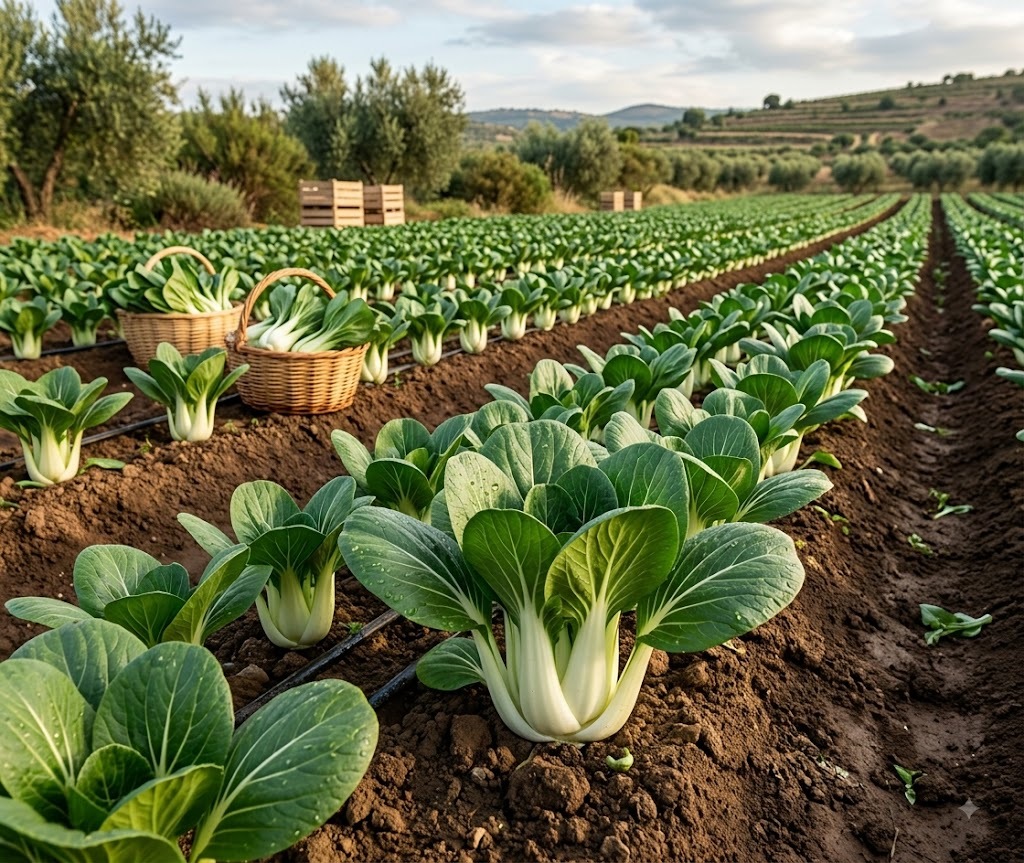
| Item Identity | Bok choy is a non-heading leafy vegetable belonging to the genus Brassica in the family Brassicaceae. The Rural Development Administration's *Nongsaroo* lists its scientific name as Brassica campestris L. ssp. chinensis and its English name as pak-choi. ( Nongsaroo ) |
| Key role | Both the leaves and thick leaf stalks are edible, and it is an item that can be used as a head-type fresh vegetable, for Chinese cooking, stir-frying, blanching, school meals, meal kits, HMR, and fresh-cut ingredients. |
| Growth characteristics | Nongsaroo suggests an optimal germination temperature of 15–20℃, an optimal daytime growth temperature of 20–25℃, and a soil pH of 6.5–7.0, and recommends a cultivation environment rich in organic matter with good ventilation, sunlight, and drainage. ( Nongsaroo ) |
| Harvesting principle | Check plant size, number of leaves, petiole width and thickness, color, weight, bolting, pests and diseases, wilting, wounds, and root condition, and create lots on a plant-by-plant basis or on a Baby Leaf/Baby Pak Choi basis. |
| Product separation | Regular whole bok choy, Baby Pak Choi, young leaves, root-removed products, washed products, halved/cut products, blanched/cooking ingredients, and fresh-cut products are managed as separate products. |
| Separation of similar items | No.042 Although it belongs to the same Brassica rapa family as Napa cabbage, Napa cabbage is a head type and bok choy is a non-head type. Socheongchae and Baby Pak Choi are classified as Product Types based on size and harvest stage, and leafy vegetables of a different species from bok choy are classified as separate Plant Entities. |
| Domestic statistics | Since independent formula figures for the 2025 or latest national bok choy cultivation area and production volume were not confirmed at this registration stage, they will be entered later after verification of raw data from national statistics and public agriculture statistics. |
| Quality Risk | High temperature, low temperature, excessive humidity, poor drainage, bolting, damage to leaves and petioles, yellowing and wilting, pests and diseases, soil and foreign matter, pesticide residues, and microbial management after washing are key variables. |
| Safety Management | According to data from the National Agricultural Products Quality Management Service, bok choy is classified as leafy vegetables. Regarding pesticide residue tolerance standards, individual and group standards are applied first; if no separate standard is applied, a uniform standard of 0.01 mg/kg is applied. ( National Agricultural Products Quality Management Service ) |
| Operating Principles | Separate and connect variety, cultivation method, sowing, planting, harvest date, plant weight, leaves, leaf stalk specifications, lot, pesticides, washing, cutting, blanching, and refrigerated distribution. |
| Final goal | Connects RFQs and delivery, inspection, claim, and repurchase data from farms, producer organizations, APCs/pre-processing facilities, lunch/dining out, catering, meal kits/HMR, distribution, and PB buyers. |
division | Registration details |
| Korean name | bok choy |
| English name | Pak-choi / Pak choi / Bok choy |
| Representative scientific names in domestic agricultural data | Brassica campestris L. ssp. chinensis lineage ( Nongsaroo ) |
| Taxonomy Management | Since the phylogenetic notation Brassica rapa subsp. chinensis may be used in international plant classification, domestic agricultural notation and international notation are listed side-by-side by source, and Master IDs are managed in an integrated manner. |
| classification | Brassicaceae, Brassica |
| Edible parts | Leaves, petioles, young plants, or the entire above-ground part of a marketable plant |
| Non-edible · Separate management | Roots, seeds, seedlings for cultivation, flower stalks and seed products after bolting, diseased and decayed parts |
| Major harvesting stages | Young leaves → Baby Pak Choi → Medium plant → Standard market plant → Overripening/bolting risk stage |
| Basic product form | Whole head, Baby Pak Choi, young leaves, root removed, trimmed bok choy, washed, half-cut, cut, blanched/cooking ingredients, Fresh-cut |
| Basic processing stage | Sowing/Seedling → Transplanting → Growth → Harvesting → Root/Leaf Trimming → Sorting → Cooling → Washing → Cutting/Half → Blanching → Cooling → Portioning/Packaging |
| Basic use | Chinese stir-fries, boiled dishes, soups, hot pots, home-style cooking, dining out, school/public meals, meal kits, HMR, fresh-cut, salads, private brand (PB) |
| Similarity Principle | Do not mix with other plant entities such as napa cabbage, lettuce, spinach, kale, or Swiss chard. The harvesting stage and specifications of Baby Pak Choi are managed separately within the Bok Choy product. |
Product Master
Product Master | Key Management Standards |
| Regular whole bok choy | Variety · Origin · Sowing · Planting · Harvest Date · Plant Weight · Number of Leaves |
| Baby Pak Choi | Variety, harvest stage, plant size, weight, uniformity |
| Young bok choy leaves | Harvest age, leaf size, color, hygiene, and fresh-cut suitability |
| Small abandonment | Specifications · Head Weight · Cooking Use · Packaging |
| Large abandonment | Plant weight, leaf stalk width, weight, feeding suitability |
| Root attachments | Root condition, soil, foreign matter, harvest date |
| Root removers | Cutting location, trimming rate, wounds, weight |
| Trimmed bok choy | Outer leaf removal, standardization, and commercialization rate |
| Washed bok choy | Raw Material Lot · Washing Water · Washing Process · Dehydration · Microorganisms |
| Half a bok choy | Raw Material Lot · Cut Surface · Dimensions · Packaging |
| Cut bok choy | Cutting size · Washing · Packaging · Refrigeration |
| Ingredients for blanching | Head size, texture, and blanching rate |
| Chinese food for dining out | Head weight, leaf stalk thickness, freshness, delivery cycle |
| For school meals | Safety, Standards, Finishing Rate, Inspection, Delivery Time |
| For meal kits | Washing, cutting, portioning, refrigeration, and expiration date |
| HMR ingredients | Heatability, Texture, Processing Yield |
| Fresh-cut | Washing, cutting, microorganisms, refrigeration, expiration date |
| PB small packaging | Origin, Weight, Packaging, Brand, Supply Cycle |
| Selected items | Yellowing, wounds, disease, decay, and potential for resource recovery |
Classification criteria | Subdivision type | Management principles |
| Plant classification | Bok choy / Napa cabbage / Other Brassica rapa varieties | Even within the same herd, harvest type and product role are separated. |
| Harvesting stage | Young leaves / Baby Pak Choi / Standard clump / Large clump / Before bolting | Separation of standards and uses by stage |
| Abandonment standard | Small / Medium / Large | Separation of weight and abandonment requirements by buyer |
| Cultivation type | Open Field / Facility / Hydroponics/Nutrient Solution / Smart Farm | Separation of environment, production costs, and quality |
| Cultivation method | Spring / Summer / Autumn / Winter · Facilities | Register after verifying actual cultivation calendars by region |
| Product type | Root attached / Root removed / Trimmed plants / Small packaging | Lot inheritance by trimming stage |
| Distribution methods | Raw materials from the source / Sorting / Refrigeration / Washing / Pre-processing | Separation of quality responsibility by stage |
| Processing form | Wash / Cut in half / Cut / Blanch / Cook / Fresh-cut | Separation of process, hygiene, and yield |
| Final use | Home / Chinese Food / Dining Out / School Meals / Meal Kit / HMR / Fresh-cut | Separation of Buyer Specification |
| Transaction type | Direct Procurement / Regular Supply / Contract Farming / Pre-processed Delivery / Private Brand (PB) | Quantity, unit price, and contract are Verified/NDA |
| Packaging type | Bulk / Box / Bundle / Tray / Small Packaging | Separation of weight, ventilation, pressure, and refrigeration conditions |
The Rural Development Administration's *Nongsaroo* suggests an optimal germination temperature of 15–20°C and a daytime temperature of 20–25°C for optimal growth of bok choy, recommending soil rich in organic matter with good ventilation, sunlight, and drainage, and a pH of 6.5–7.0. Therefore, temperature, soil, drainage, and irrigation must be managed as essential parameters of the production runtime. ( Nongsaroo )
step | Essential Dataset | Management purpose |
| Cultivation plan | Region, variety, cultivation type, area, expected shipment, contract status | Determining supply volume and shipment timing |
| satellite | Variety · Seed Company · Seed Lot | Variety Traceability |
| Seedling cultivation | Sowing date, germination, nursery, seedling condition | Production history |
| formula | Official Date · Planting Distance · Farm/Bed ID | Cultivation site connection |
| soil | pH, organic matter, drainage, soil testing | Management of the growing environment |
| Hydroponics/Nutrient Solution | EC·pH·water temperature·supply·drainage | Facility production verification |
| Watering | Water source, irrigation day, and amount of water | Moisture and growth management |
| dispute | Fertilizer, nutrient solution, input date, input amount | Production and Environmental Management |
| rising | Temperature, rainfall, humidity, sunshine | Growth and harvest prediction |
| Facility Environment | Temperature, humidity, light, ventilation | Year-round production and quality |
| Growth | Number of leaves, leaf length, plant size, petiole width, image | Determining harvest time |
| bolting | Date of occurrence, variety, temperature, day length | Management of marketability degradation |
| pests | Occurrence, Damage, and Control | Quality and productivity |
| pesticide | Medication, Date of Use, Safe Use Period | Pesticide residue verification |
| Harvest judgment | Plant size, weight, leaf color, leaf stalk, wounds | Buyer suitability |
| harvest | Harvest date, packaging, farm, quantity, worker | Raw Material Lot Creation |
| Root trimming | Retention/Removal · Cutting Position · Trimming Rate | Product Separation |
| Leaf trimming | Removal amount · Yellowing · Wounds | Commercialization rate |
| Selection | Plant weight, size, color, wounds, and diseases | Standard separation |
| cooling | Temperature and time | Maintaining freshness |
| purifying | Washing water, method, time, foreign matter | Pre-treatment hygiene |
| dehydration | Method and Time | Fresh-cut quality |
| Half/sever | Cutting specifications and working time | Meal kits and school meals |
| blanching | Temperature, Time, Yield | HMR · Cooking Ingredients |
| packaging | Weight, Packaging, Date | Traceability |
| save | Temperature, humidity, and period | Wilting and Yellowing Management |
| refrigerated delivery | Vehicle, Temperature, Delivery Time | Cold-chain |
| Incoming inspection | Quantity, specifications, freshness, foreign matter | Delivery evaluation |
| Claim | Reason, Quantity, and Responsibility Section | Supplier Score |
| Repurchase | Buyer · Product · Quantity | Next production plan |
In official food safety classifications, bok choy is classified as leafy vegetables along with lettuce and iceberg lettuce. For pesticide residues in agricultural products, individual and group standards are applied preferentially, and a uniform standard of 0.01 mg/kg is applied to pesticides for which no separate tolerance limit exists. ( National Agricultural Products Quality Management Service )
Quality items | Tongpogi | Washed and cut parts | School meal and lunch ingredients | HMR·Fresh-cut | Public rating |
| Origin·Variety·Farm·Lot | core | core | core | core | Verified |
| Sowing, planting, and harvesting dates | core | core | importance | importance | Verified |
| abandonment weight | core | core | core | importance | Verified/NDA |
| Pouch size | core | core | core | importance | Verified/NDA |
| ground game | importance | importance | importance | importance | Verified/NDA |
| Leaf color | core | core | core | core | Verified/NDA |
| Leaf stalk thickness and width | core | core | core | core | Verified/NDA |
| texture | importance | core | core | core | Verified/NDA |
| bolting | core | importance | importance | importance | Verified/NDA |
| Yellowing and wilting | core | core | core | core | Verified/NDA |
| Wounds/Compression | core | core | core | core | Verified/NDA |
| pests | core | core | core | core | Verified/NDA |
| Soil and foreign matter | core | core | core | core | Verified/NDA |
| Pesticide usage records | core | core | core | core | NDA |
| Pesticide Residue Test Report | core | core | core | core | NDA |
| Cleaning history | Not applicable | core | By product | core | NDA |
| Washing water | Not applicable | core | By product | core | NDA |
| microorganism | importance | core | core | core | NDA |
| Cutting history | Not applicable | core | By product | core | NDA |
| Blanching history | Not applicable | Not applicable | By product | By product | NDA |
| Packaging weight | core | core | core | core | Verified/NDA |
| refrigeration conditions | importance | core | core | core | Verified/NDA |
| Expiration date | By product | core | By product | core | Verified/NDA |
| Shipment and Inspection | importance | core | core | core | NDA |
| Returns and Claims | importance | core | core | core | NDA |
| Repurchase | importance | core | core | core | NDA |
Lot Master Required Field
Lot ID · Item/Product Type · Domestic Agricultural Scientific Name/Taxonomy Standard Name · Variety · Cultivation Type · Origin/Cultivation Area · Producer · Sowing Date · Planting Date · Harvesting Stage · Harvesting Date · Plant Weight/Plant Size/Number of Leaves · Leaf Color/Petal Width/Texture · Bolting · Yellowing · Wilting · Damage · Pests/Diseases · Foreign Matter · Presence of Roots · Weight · Specifications · Grade · Pesticide Usage Records · Pesticide Residue/Microbiological Test Report · Raw Material Lot · Root Trimming · Washing · Dehydration · Halving · Cutting · Blanching History · Packaging Date · Use-by Date · Storage Conditions · Shipper · Refrigerated Delivery · Incoming Inspection · Returns/Claims · Repurchase
Customers | Purchase criteria | Cooperation opportunities |
| Farm and Producer Organizations | Variety, Specifications, Expected Harvest, Quantity | Joint shipment and contract farming |
| Nonghyup · Production Area Distribution | Specifications for abandonment · Shipment date · Sorting · Quantity | Joint Selection RFQ |
| wholesale market | Freshness, Head Weight, Color, Packaging | Shipment from the production area |
| local food | Regionality, Producer, Harvest Date | Local direct transaction |
| Large-scale distribution | Uniformity, small packaging, supply stability | PB · Regular supply |
| food ingredient company | Cutting size, freshness, delivery time | Foodservice and catering supply |
| Chinese restaurant | Plant size, leaf stalk texture, and freshness | RFQ for Chinese food only |
| Chinese food franchise | Standardization of specifications, bulk supply, delivery cycle | Contract farming and central procurement |
| Korean food · General dining out | Quality for blanching, stir-frying, and soup | Restaurant ingredients |
| School and public meals | Safety, Standards, Foreign Matter, Delivery Time | School Meal RFQ |
| Hospital and welfare meals | Hygiene, cleaning rate, standards, regular supply | Regular contract |
| Meal kit | Washing, halving, cutting, and portioning | Preprocessed Product |
| HMR | Heatability, Texture, Processing Yield | HMR Ingredient RFQ |
| Fresh-cut companies | Young plants · Washing · Cutting · Microorganisms | Fresh-cut RFQ |
| salad maker | Baby Pak Choi · Young leaves · Color | Salad Mix |
| Online distribution | Origin · Packaging · Freshness · Delivery | Direct from the farm |
| PB business operator | Product type, packaging, region, and supply cycle | Distribution Private Brand |
| Smart farm companies | Uniform growth, environmental control, and year-round production | Demonstration cooperation |
| Seed company | Variety, Heat Tolerance, Bolting, Specifications | Variety Verification |
| Research Institute | Variety, Environment, Harvest, Storage, Processing | joint research |
| local government | Local production, facility farming, sales channels, and processing | Local Bok Choy AX Business |
step | Key variables | Operational judgment |
| satellite | Variety/Seed Lot | Product conformity |
| Seedling cultivation | Germination and seedling status | Official stability |
| production | Cultivation type, temperature, soil, growth | Supply risk |
| Harvest forecasting | Plant size, growth, and planting date | Shipping time |
| harvest | Abandonment · Weight · Quantity | Lot creation |
| trim | Removal of roots and outer leaves | Commercialization rate |
| Selection | Size, Color, Damage, Wither | Buyer suitability |
| Cooling and packaging | Temperature, Weight, Packaging | Freshness |
| purifying | water, foreign matter, microorganisms | School Meals · Fresh-cut Transition |
| Cut in half | Specifications and Yield | Shift to Meal Kits and Dining Out |
| blanching | Time, Temperature, Yield | HMR conversion |
| circulation | Refrigeration, delivery, and inspection | Quality responsibility |
| RFQ | Product · Specifications · MOQ · Delivery Time | AI Match |
| contract | Quantity, Unit Price, Inspection, Responsibility | Terms of trade |
| delivery | Lot · Quantity · Time | Implementation verification |
| Buyer rating | Cookability, waste rate, freshness | Supplier evaluation |
| Repurchase | Reorders/Contract Extensions | Production planning feedback |
Products and processes | Key conditions | RFQ conversion |
| General air purifier | Variety, Harvest Date, Head Weight, Freshness | Food Service & Distribution RFQ |
| Baby Pak Choi | Size, uniformity, and color | Salad & Dining RFQ |
| young leaves | Leaf size, harvesting stage, hygiene | Baby Leaf RFQ |
| Trimmed bok choy | Root and outer leaf removal · Weight | Food Ingredient RFQ |
| Washed bok choy | Washing, dehydration, microorganisms | School meals · Meal kits |
| Half a bok choy | Cut surface, dimensions, packaging | Chinese food · Meal kits |
| Cut bok choy | Cutting size · Washing · Refrigeration | HMR · School Meals |
| Ingredients for blanching | Abandonment, Texture, Processing Yield | School Meals · HMR |
| semi-finished cooking products | Blanching, stir-frying, pretreatment, cooling | Dining Out · HMR |
| Fresh-cut | Washing, cutting, packaging, and expiration date | Salad/Fresh-cut RFQ |
| Meal kit ingredients | Cut in half, cut into portions, portion, package | Meal kit OEM |
| frozen ingredient candidates | Blanching, freezing, and thawing quality | RFQ after demonstration |
| Leaves excluded from selection | Status, Safety, and Generation Amount | Separate verification of food conversion |
| Roots and cultivation residues | Generation, Pollution, and Treatment | Compost and Biomass Review |
PRP — Product Research Profile
PRP items | Details of investigation and verification |
| PRP-01 variety | Plant size, leaf stalk, color, quantity |
| PRP-02 Baby Pak Choi | Harvesting stage, uniformity, and marketability |
| PRP-03 type | Season, Facilities, and Shipping Time |
| PRP-04 Greenhouse cultivation | Environment, Productivity, and Year-round Supply |
| PRP-05 hydroponics | EC, pH, growth, quality |
| PRP-06 abandonment specifications | Small, medium, and large size abandonment and Buyer use |
| PRP-07 lunch | Texture and yield after stir-frying and blanching |
| PRP-08 meal service | Trimming rate, foreign matter, cooking yield |
| PRP-09 Fresh-cut | Washing, cutting, microorganisms, refrigeration |
| PRP-10 Meal Kit | Suitability for halving, cutting, and portioning |
| PRP-11 HMR | Blanching, heating, cooling, product quality |
| PRP-12 storage | Withering, yellowing, and loss |
| PRP-13 Cold-chain | Temperature, Delivery Time, Quality |
| PRP-14 Buyer | Specifications · MOQ · Delivery · Inspection |
| PRP-15 Reorder | Quality · Waste Rate · Claims · Repurchase |
| PRP-16 byproduct | Processing of outer leaves, roots, and sorted exclusions |
first of all | Execution item | Performance indicators |
| 1 | Make Variety, Cultivation Type, Harvest Stage, Harvest Date, and Lot mandatory | Required value input rate |
| 2 | General Disposal – Baby Pak Choi – Washing – Cutting – Fresh-cut Product Separation | Misclassification reduction rate |
| 3 | Connecting weather, facility environment, and growth data | Environmental data connection rate |
| 4 | Automatic prediction of abandonment size and weight | Return forecasting accuracy |
| 5 | Image-based determination of leaf, petiole size, color, and wounds | AI judgment agreement rate |
| 6 | Video detection of bolting, yellowing, and wilting | Defect early detection rate |
| 7 | Pesticide Use – Harvest Date – Residual Pesticide Test Report Link | Lot document linkage rate |
| 8 | Datafication of cleaning and microbiology | Hygiene history rate |
| 9 | Data conversion of cutting and blanching process yields | Processing yield prediction |
| 10 | Cold-chain temperature and time tracking | Refrigeration compliance rate |
| 11 | Farm-Lunch-School Meals-HMR Buyer RFQ Match | Match rate |
| 12 | Buyer incorporates cooking yield and waste rate into producer evaluation | Delivery conformity rate |
| 13 | Feedback of repurchase data into the next cultivation plan | Repurchase linkage rate |
| 14 | Linking regional crop types, market prices, and buyer demand | Supply forecasting accuracy |
Problem group | Problem Definition | Required data |
| Conflict in scientific name notation | The notation of scientific names in domestic agricultural data and international taxonomy may differ. | Taxonomy · Source · Version |
| Mixing of cabbage and seed varieties | Mixed with cabbage heads due to being of the same B. rapa lineage | Scientific name · Harvesting type · Product |
| Baby Pak Choi mixed | The possibility of not distinguishing between small varieties and simple early-harvested products | Variety, Harvest Stage, Specifications |
| Varieties and specification deviations | Variation in clump and leaf stalk size and color | Variety · Weight · Buyer |
| High temperature growth risk | Quality and growth instability at temperatures outside the optimal range | Temperature, Growth, and Yield |
| Drainage and excessive moisture | Poor drainage undermines production stability | Rainfall, irrigation, soil, and diseases |
| bolting | Marketability declines depending on cultivation environment | Temperature, day length, variety, bolting |
| pests | Reduced marketability of leaves and leaf stalks | Occurrence, Control, and Damage |
| pesticide residues | Safety management for fresh food and school meals is necessary | Pesticides Used · Harvest Date · Inspection |
| Soil and foreign matter | Claim regarding foreign matter between the base of the plant and the leaves | Sorting, washing, and inspection |
| Wither | Marketability declines due to moisture loss after harvest | Temperature, humidity, time, and packaging |
| Pressure wounds | Soft leaf stalks damaged during transport | Packaging, Loading, and Shipping |
| Washing hygiene | Microbial management is necessary after pretreatment. | Washing water, microorganisms, and processes |
| Discrepancy in abandonment specifications | Middle school, catering, and retail require different sizes | Buyer Specification |
| Processing yield deviation | Yield difference during trimming, cutting, and blanching processes | Raw material weight · Finished product weight |
| supply forecasting | It is difficult for the buyer to verify the expected yield in advance. | Planting, Growth, and Harvest Scheduled |
| Contract farming error | Difference between contract quantity and actual yield | Area · Production · Delivery |
| Breaking the cold chain | Lack of temperature management between the production site and the buyer | Temperature, Time, Inspection |
| Raw Material–Processed Lot Disconnection | Difficulty tracing the producer after washing and cutting | Raw Material Lot · Processed Lot |
| Repurchase not reflected | Buyer evaluation not linked to next production | Evaluation · Claims · Reorders |
RFQ Type | Public Registration | Verify/NDA |
| Regular bok choy sourced from the producer | Origin, Head Size, Shipment Time | Farm · Quantity · Unit Price · Lot |
| Baby Pak Choi | Plant size · Product use · Packaging | Variety, Quantity, Price |
| Regular supply | Product, Period, Delivery Area | Weekly Volume, Unit Price, and Contract |
| contract farming | Variety, Use, Delivery Period, Quality Standards | Area, Quantity, Price |
| greenhouse cultivation | Facility type, shipment time, specifications | Capacity · Actual Quantity · Price |
| Smart Farm | Cultivation type, quality, and product specifications | Environmental data, production volume, and unit price |
| Chinese food | Head weight · Leaf stalk · Freshness · Delivery | Quantity, Unit Price, Claims |
| franchise | Specifications, Delivery Cycle, Supply Area | Contract, Volume, Price |
| School and public meals | Safety, Standards, Inspection, Delivery Time | Test Reports, Contracts, and Quantities |
| Washed bok choy | Washing, Packaging, Refrigeration | Hygiene Data · MOQ · Unit Price |
| Cut in half | Standardization, Subdivision, Delivery | Facilities, Yield, Price |
| Meal kit | Cut in half, cut, wash, and package | Sample · Unit Price · Contract |
| HMR | Heating suitability, pretreatment, and specifications | Yield, Process, Price |
| Fresh-cut | Young plants, washing, cutting | Microorganisms · Use-by date · MOQ |
| Distribution Private Brand | Origin·Package·Weight | MOQ · Brand · Price |
| online | Origin · Packaging · Delivery | Producer, Inventory, Unit Price |
| export | Product type · Target country · Standards | HS·Quarantine·Test Report |
| Technology demonstration | Cultivation, quality, and sorting issues | Sensors, AI, Test Results |
| Research cooperation | Variety, Cultivation, Storage, Processing | Samples and test results |
| local government cooperation | Local production, smart farms, and sales channels | Farms, Facilities, and Business Conditions |
① Need Products & Materials
Companies and institutions seeking necessary products, agricultural products, raw materials, and processed goods register purchasing demands. Registered requests are utilized to review cooperation with potential suppliers and producers based on the RFQ Intelligence Library.
Process:
RFQ Registration → Supplier/Product Review → Collaboration Connection → Future AI Matching
Register
② We are looking for production and manufacturing partners. (Need Suppliers & Manufacturers)
Register a request to find necessary production and supply partners, ranging from farms and producer organizations to processing companies, OEM, ODM, and private label manufacturers.
Process:
RFQ Registration → Review of Production & Manufacturing Capabilities → Collaboration Connection → Future AI Partner Matching
Register
③ We are looking for domestic and international buyers. (Need Buyers)
Farmers, producer organizations, and manufacturing companies are requesting cooperation with new buyers, such as domestic and international distributors, importers, brand companies, and food service and catering businesses.
Process:
RFQ Registration → Product & Supply Capability Review → Market & Buyer Connection → Future AI Buyer Matching
Register
Contact : mail@markethub.org
Version | Main contents | situation |
| v1.0 | Bok Choy Plant Identity · Clump · Baby Pak Choi · Washing · Cutting · Food Service · Feeding · RFQ Basic Structure Registration | complete |
| v1.1 | Verification of official raw data on production, price, and supply by nation and region | expected |
| v2.0 | General Pork · Baby Pak Choi · Washing · Cutting · Fresh-cut · HMR Product Specification Separation | expected |
| v3.0 | Farm – Facility/Smart Farm – Pre-processing – Lunch/School Meals – HMR/PB Buyer Verified Container Combination | expected |