

Judgment axis | detail |
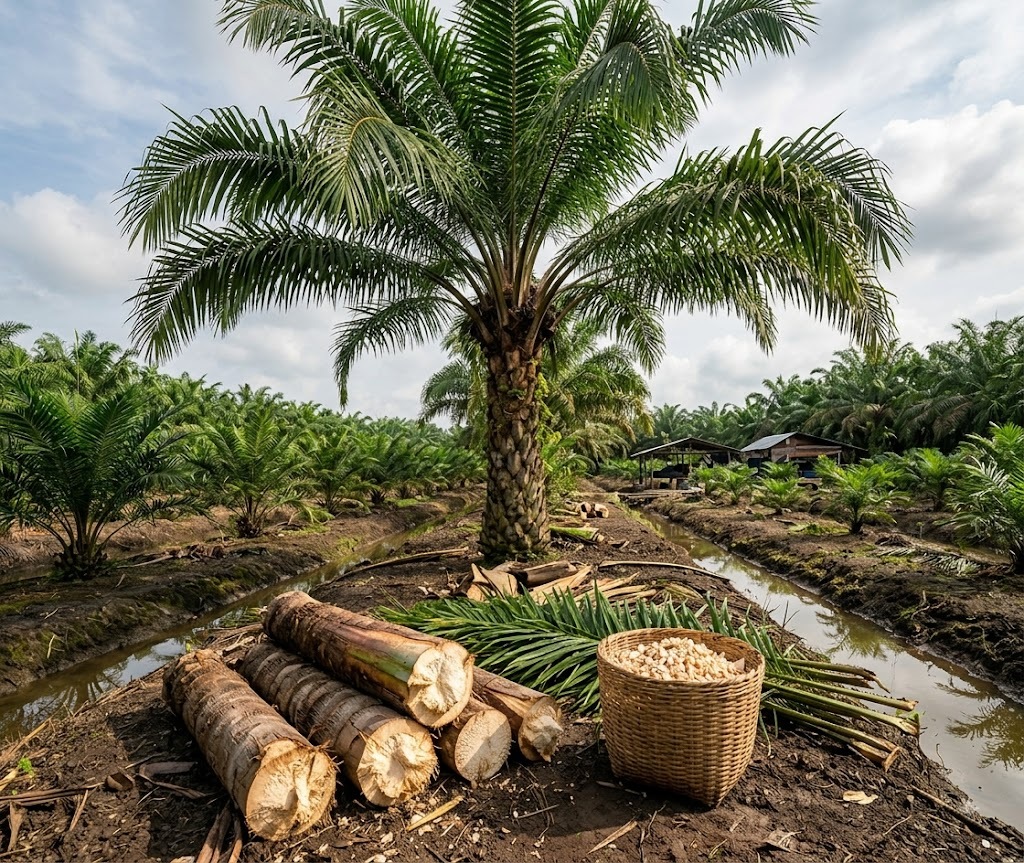
| Item Identity | Sago palm is a food material obtained by separating, washing, precipitating, dehydrating, and drying starch from the water inside the mature stems of Metroxylon sagu Rottb. |
| Basic registration range | Separate the sago logs/stems, wet starch, dry sago starch, pearls/powders/mixed materials, and final processed food. |
| Principles of Edible Parts | The starchy water inside the stem, rather than the fruit, oil, or sap, is the raw material for food starch. |
| Harvest Key | It targets mature stems in which starch accumulation has been confirmed, and verifies the pre- and post-flowering stages, stem condition, and raw material lot. |
| Quality Core | Check the test reports for plant species, country of origin, harvest stage, stem section, starch extraction history, moisture content, particle size, foreign matter, microorganisms, residual substances, and heavy metals. |
| Processing core | Cutting, water separation, crushing, washing, sieving, sedimentation, dehydration, drying, grinding, and pearl molding are managed as different product transition stages. |
| Customers | These include starch food ingredients, desserts and beverages, noodles, dough and sauces, gluten-free blended foods, dining out and catering, and OEM and PB. |
| Operating Principles | The raw material is not determined solely by the name 'sago'; the scientific name, origin of the stem, country of origin, composition of the raw material, and lot are verified. |
| Operational direction | Connects production, raw wood/starch separation, quality verification, commercialization, RFQ, and repurchase data. |
division | Registration details |
| Korean name | Accidental |
| English name | Sago palm / Sago |
| Representative scientific name | Metroxylon sagu Rottb. |
| classification | Arecales, Arecaceae, Metaroxylon |
| Edible and processed parts | pith inside mature stems and starch isolated from this raw material |
| Excluded/Separately Managed Areas | Fruit, seeds, oil, sap, leaves, stem bark, construction material, planting material |
| Harvesting stage | Confirmation of stem starch accumulation → Cutting → Stem cutting → Separation of water and crushing |
| Product form | Log/stem count, wet starch, dry starch, sago pearl, starch powder, complex powder, final processed food |
| Processing stage | Logging, cutting, water separation, crushing, washing, sieving, sedimentation, dehydration, drying, grinding, sieving, pearl molding, packaging |
| Basic use | Starch food ingredients, desserts and beverages, noodles, dough and sauces, mixed foods, OEM and PB |
| Separation of similar items | Maranta, tapioca, potato, sweet potato, corn starch, palm oil, coconut products and a separate entity |
Kew Plants of the World Online presents Metroxylon sagu Rottb. as the recognized scientific name and indicates its natural range as extending from Maluku to New Guinea.
Product Master | Key Management Standards |
| Number of accident logs/stems | Scientific name · Country of origin · Harvest date · Stem section · Maturity · Foreign matter |
| Accidental wet starch | Log Lot · Crushing · Washing · Sieving · Sedimentation · Dehydration History |
| Accidental dry starch | Raw material, country of origin, moisture, particle size, foreign matter, microorganisms, packaging |
| Accident Pearl | Starch Lot · Particle Size · Pearl Size · Dryness · Cookability · Packaging |
| Accidental starch powder | Moisture, particle size, whiteness, dispersibility, packaging, and storage conditions |
| Composite powder | Starch Ratio · Mixed Ingredients · Allergens · Uses · Labeling Information |
| Final food | Ingredient content, blend, sensory evaluation, shelf life, and distribution stability |
| OEM/PB products | Product Specifications · Packaging · MOQ · Delivery Time · Claims · Repurchase |
Classification criteria | Subdivision type | Management principles |
| plant species | Metroxylon sagu Rottb. | Raw materials without a scientific name or equivalent basis for plant identification are not definitively registered. |
| Area of use | Number of stems / Isolated starch / Fruit, oil, sap / Food ingredients | Separation of food starch raw materials and non-starch palm products |
| Raw material stage | Raw wood/Water / Wet starch / Dry starch / Pearl / Powder | Lot connection at every stage transition |
| Processing type | Starch separation / Drying/Grinding / Pearl molding / Mixing/Filling | Separation of processes and quality indicators |
| Product form | Starch powder / Pearls / Baking mix / Sauce ingredients / Final food products | Separation of specifications, labeling, and storage by product |
| Final use | Household / Foodservice / Catering / Food Ingredients / Specialty Products / Private Brand | Separation of required specifications by buyer |
| Transaction type | Raw Material Procurement / Starch Materials / OEM·PB / Buyer RFQ | Quantity, unit price, and contract are Verified/NDA |
step | Essential Dataset | Management purpose |
| Cultivation and Procurement | Scientific name, country of origin, cultivation area, producer, cultivation method, planting history | Confirmation of raw material identity and procurement feasibility |
| Maturity assessment | Stem formation, flowering stage, stem condition, and starch verification methods | Verification of optimal harvest time and starch yield |
| Harvesting and logging | Harvest date · Stem size · Section · Damage · Foreign matter | Create Raw Wood Lot |
| Water separation and transport | Log Lot · Separation Time · Transportation Time · Contamination Prevention | Prevention of raw material spoilage and mixing |
| Starch separation | Crushing, washing, sieving, sedimentation, and dehydration records | Starch Product Tracking |
| Drying and molding | Drying method, moisture, particle size, pearl size, grinding, sieving | Product-specific quality control |
| Packaging and shipping | Packaging material · Packaging date · Storage · Use-by date · Release Lot | Tracking recalls, claims, and repurchases |
Quality items | Number of logs/stems | Wet starch and dry starch | Pearl, Powder, Composite Powder | Final food | Public rating |
| Scientific Name · Country of Origin · Raw Material Lot | core | core | core | importance | Verified |
| Harvesting stage · Stem section · Separation history | core | core | importance | importance | Verified/NDA |
| Appearance, decay, foreign matter, contamination | core | core | core | core | Verified/NDA |
| Analysis of moisture, particle size, whiteness, and starch | importance | core | core | importance | Verified/NDA |
| Crushing, washing, sedimentation, and drying conditions | Not applicable | core | importance | importance | NDA |
| Microbial, Residual, and Heavy Metal Test Report | importance | core | core | core | NDA |
| Ingredients, Allergens, and Labeling | Not applicable | importance | core | core | Verified/NDA |
| Packaging, storage, and expiration date | importance | core | core | core | Verified/NDA |
Lot Master Required Field
Lot ID · Item Name · Basis for Scientific Name Verification · Part Used · Country of Origin/Cultivation Area · Producer/Importer · Harvest Date/Arrival Date · Maturity/Stem Section · Product Form · Log Lot · Crushing/Washing/Sieving/Soaking/Dehydration/Drying/Molding/Grinding History · Moisture/Particle Size/Whiteness/Starch Analysis · Microbial/Residual Substance/Heavy Metal Test Report · Raw Material Composition/Allergens · Packaging Date · Use-by Date · Shipment/Return/Claim
Customers | Purchase criteria | Cooperation opportunities |
| Import and food ingredient distributors | Scientific name, country of origin, starch origin, customs clearance, test report | RFQ for Sago Starch Raw Material |
| Bakery and dessert manufacturer | Review of particle size, moisture, composition, color, texture, and labeling | Pearl, Blended Powder, Dessert OEM |
| Noodle, dough, and sauce manufacturers | Viscosity, gelatinization characteristics, heating stability, and mixing tests | Food material development |
| Beverage and dessert franchise | Pearl Specifications · Cookability · Storage · Delivery Time | Accident Pearl RFQ |
| food ingredient companies | Raw material composition, analysis values, and supply stability | B2B starch material |
| Foodservice and catering business operators | Cookability, Weight, Storage, Labeling, Delivery Time | Cooking materials and products |
| Tourism and local specialty operators | Raw material history, product concept, packaging | Local specialties, gift sets, and private brands |
| Research and development institutions | Starch separation, blending, and commercialization data | Testing and joint development |
step | Key variables | Operational judgment |
| Raw material production and procurement | Scientific name · Stem origin · Country of origin · Harvesting stage | Verification of raw material identity and supply availability |
| Import and Customs Clearance | HS Item, Product Type, Customs Clearance Date, Quarantine, Quantity, Value | Separation of raw wood, starch, pearl, and complex preparations |
| Receiving and Storage | Packaging condition, moisture, foreign matter, storage, expiration date | Quality maintenance and lot tracking |
| Starch separation and processing | Crushing, washing, sieving, sedimentation, and drying conditions | Quality, Yield, and Contamination Control |
| Formulation and Productization | Formulation ratio, viscosity, heat stability, sensory properties, packaging | Final product conformity assessment |
| Quality and Safety | Microorganisms, Residual Substances, Heavy Metals, Test Reports | Buyer Submission and Claim Prevention |
| Buyer RFQ | Raw Material Type · Country of Origin · Specifications · MOQ · Packaging · Delivery Time | Matching suitability other than price |
| Repurchase | Delivery · Cookability · Quality Variation · Returns · Reorders | Supplier & Lot Evaluation Update |
Raw import and export data should be entered after verifying the HS item description, base year, and quantity and value units together from the Korea Customs Service's Import and Export Trade Statistics. The volume of goods originating from M. sagu is not determined solely by the full classification or processed product classification during customs clearance. Korea Customs Service Import and Export Trade Statistics
Products and processes | Key conditions | RFQ conversion |
| Number of accident logs/stems | Scientific name · Country of origin · Harvest date · Maturity · Stem section · Foreign matter | Raw Material Procurement & Starch Separation RFQ |
| Separated and crushed raw materials | Log Lot · Separation Point · Crushing · Contamination Management | Processed Raw Material RFQ |
| Accidental wet starch | Sieve separation, washing, sedimentation, dehydration, moisture | Processing & Material RFQ |
| Accidental dry starch | Raw material composition, moisture, particle size, foreign matter, microorganisms | Food Material RFQ |
| Accident Pearl | Starch Lot · Pearl Size · Dryness · Cookability · Packaging | Beverage & Dessert RFQ |
| Accidental starch powder | Particle size, moisture content, dispersibility, formulation, and test report | Bakery, Noodles, and Sauces RFQ |
| Composite powder | Sago starch ratio · Mixed ingredients · Allergens · Uses | OEM·PB RFQ |
| by-product | Stem fibers and washing by-products | Utilization for purposes other than food is a separate entity after verification of laws and safety. |
first of all | Execution item | Performance indicators |
| 1 | Scientific Name, Stem Origin, Country of Origin, Harvest Stage, Lot ID required | Required value input rate |
| 2 | Raw Wood · Water – Wet Starch – Dry Starch – Pearl – Powder – Final Product Separation | Misclassification reduction rate |
| 3 | Procurement–Starch Separation–Drying–Blending–Outbound History Link | Lot tracking rate |
| 4 | Data conversion of moisture, particle size, microorganisms, residues, and heavy metal test reports | Quality document connection rate |
| 5 | Connecting Material Suppliers – OEMs – Food Service, Catering, and Private Brand RFQs with Repurchase | Matching rate · Repurchase rate |
Problem group | Problem Definition | Required data |
| Name-centered mixed use | Palm species, raw parts, starch products, and processed products are mixed together solely by the name 'Sago' | Scientific name · Stem origin · Composition of ingredients · Country of origin |
| Confusion regarding coconut products | Mistaking sago starch for the same item as coconut, palm oil, dates, etc. | Plant species, part used, processing type |
| Harvesting stage unconfirmed | It is difficult to assess starch quality and yield because maturity and stem condition are not confirmed. | Harvesting Stage · Stem Section · Log Lot |
| Lack of process history | Raw materials cannot be traced due to the lack of records for crushing, washing, sedimentation, and drying. | Process Records · Lot · Test Report |
| Starch and pearl mixture | Treat starch powder and pearls as the same specifications | Product form, particle size, cookability, and storage conditions |
| Unused repurchase information | Cookability, viscosity, pearl quality, and claim information are not fed back into supplier evaluations | Delivery · Claim · Reorder · Lot |
RFQ Type | Public Registration | Verify/NDA |
| Procurement of accident logs and stems | Scientific name · Country of origin · Harvest stage · Use · Packaging · Delivery time | Cultivation location, harvest date, quantity, unit price |
| Wood-based starch separation cooperation | Product form, processing purpose, and required specifications | Processing facilities, yield, process conditions, test reports |
| imported sago starch | Ingredient Name · Country of Origin · Product Type · Use · Packaging | Customs Clearance · Test Report · Lot · Quantity · Unit Price |
| Wet starch and dry starch | Moisture · Particle Size · Applications · Packaging · MOQ | Process conditions, test reports, and unit prices |
| Accident Pearl | Pearl size, cooking method, packaging, and delivery time | Actual Lot · Cooking Test · Unit Price |
| starch powder | Particle Size · Moisture · Mixing Application · MOQ | Test Report, Quantity, Unit Price |
| Bakery & Dessert OEM | Product Type · Package · Delivery Time | Prescription, Sample, Cost, Contract |
| Products for the food service and catering industry | Specifications, Weight, Cooking Method, Storage Conditions | Quantity, Unit Price, and Test Report |
| Local specialties · Private brand | Product concept, sales channels, and packaging | MOQ · Trademark · Contract · Inventory |
| Research and development cooperation | Test Objective, Evaluation Criteria, and Expected Product Group | Samples, Test Results, and Joint Development Conditions |
① Need Products & Materials
Companies and institutions seeking necessary products, agricultural products, raw materials, and processed goods register purchasing demands. Registered requests are utilized to review cooperation with potential suppliers and producers based on the RFQ Intelligence Library.
Process:
RFQ Registration → Supplier/Product Review → Collaboration Connection → Future AI Matching
Register
② We are looking for production and manufacturing partners. (Need Suppliers & Manufacturers)
Register a request to find necessary production and supply partners, ranging from farms and producer organizations to processing companies, OEM, ODM, and private label manufacturers.
Process:
RFQ Registration → Review of Production & Manufacturing Capabilities → Collaboration Connection → Future AI Partner Matching
Register
③ We are looking for domestic and international buyers. (Need Buyers)
Farmers, producer organizations, and manufacturing companies are requesting cooperation with new buyers, such as domestic and international distributors, importers, brand companies, and food service and catering businesses.
Process:
RFQ Registration → Product & Supply Capability Review → Market & Buyer Connection → Future AI Buyer Matching
Register
Contact : mail@markethub.org
Version | Main contents | situation |
| v1.0 | Sago palm logs, number of stems, starch separation, processing, RFQ basic structure registration | complete |
| v1.1 | Verification of official production, import, and domestic distribution structure | expected |
| v2.0 | Separation of specifications for raw wood, wet starch, dry starch, pearl, powder, and composite powder | expected |
| v3.0 | Procurement–Processing–Food Service·Catering·Specialty Products·PB Buyer Verified Container Combination | expected |