


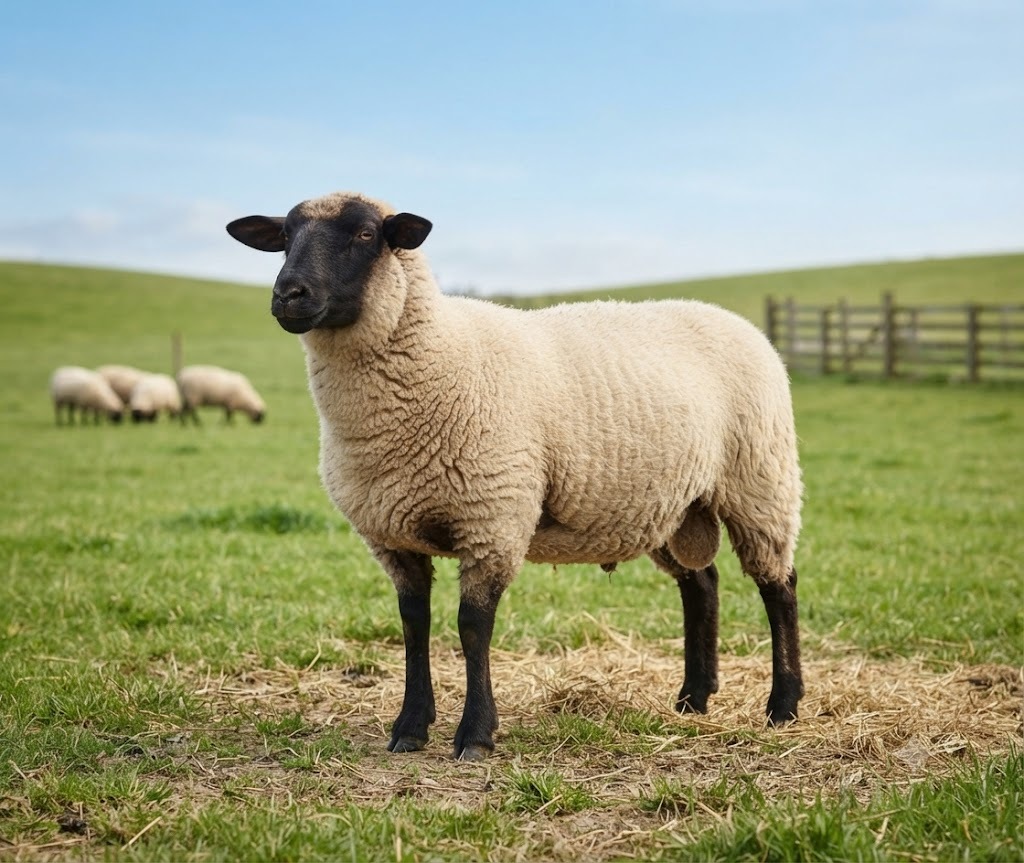
Sheep are a representative ruminant livestock widely raised globally for meat, dairy, and wool. In Korea, while they are not a major livestock species on a large scale like cattle or pigs, it is realistic to view them as a species where the import supply chain is more important than domestic production, given the established consumption of lamb and the dining-out market.
MarketHub does not view sheep simply as a product of lamb. It views the entire process —breeding → sheep production → feed/grazing → growth → health → shipment → slaughter/processing → lamb/wool/dairy products → Buyer— as a single industry flow and analyzes both domestic production potential and global procurement.
Judgment axis | Key points |
| production purpose | Meat, useful, wool, breeding |
| Domestic characteristics | Small-scale production + imported lamb market |
| production core | Breeding, nourishment, survival, feed, grazing, growth |
| Major risks | Foot-and-mouth disease, PPR, blue tongue, scrapie, etc. |
| quality | Age · Weight · Carcass · Part · Fat · Refrigerated/Frozen |
| market | Foodservice, Hotel, Food, Import Distribution |
| trade | Australia and New Zealand-centered quarantine and procurement structure |
| AX | Individual, grazing, weight, feed, and health data |
| RFQ | Live Livestock · Breeding Stock · Lamb · Feed · Processing · Buyer |
| Final goal | Connecting domestic productivity and global procurement |
The Korean lamb market is significantly influenced by international prices and import supply. According to FAO data cited by the Ministry of Agriculture, Food and Rural Affairs, international lamb prices in June 2025 are projected to rise due to reduced export supply from Oceania and sustained international demand; as these changes can affect domestic import prices and restaurant costs, they require runtime management. ( Mafra )
Sheep are livestock centered around Ovis aries and produce meat, milk, wool, and breeding resources. Since the distinction between meat, wool, and utility breeds is clear overseas, global RFQs must not simply register as "sheep" but must verify the actual production purpose and breed together.
In Korea, lamb consumption is the most direct industrial market, but MarketHub Global trading can be expanded to include breeding stock, live animals, wool, and sheep's milk. Therefore, sheep and lamb meat are not treated as the same item but are managed separately by product type.
division | Main purpose | major products |
| Yukyongyang | meat | Live meat · Lamb |
| Yoo Yong-yang | dairy | Sheep's milk and dairy processing raw materials |
| Moyongyang | fiber | wool |
| breeding stock | Breeding and improvement | Bell-shaped breeding ewe |
| by-product | Food and Industry | Organs, skin, and fat |
| excretions | Resource circulation | Compost and organic resources |
In other words, the sheep is set as the Livestock Master, and Lamb, Mutton, Milk, Wool, Breeding Stock, etc. are connected as Product Entities.
Sheep are a livestock species whose production objectives and management methods vary significantly depending on the breed. Since there are breeds that prioritize meat yield, breeds suitable for wool production, and breeds specialized for milk production, it is difficult to compare actual productivity and trading conditions if breeds and production objectives are mixed.
Furthermore, regarding lamb, Lamb produced from young sheep and Mutton produced from mature sheep can be treated as different products in the market. Therefore, it is important to consider the relationship between age, weight, breed, production method, and the final product together.
division | example | On-site management |
| livestock species | sheep | Sheep |
| Variety/Lineage | Meat, wool, and useful breeds | Genetics/Traits |
| production purpose | Meat, meat, and wool | Rearing methods |
| production stage | Nutrition, Growing, Fattening, Breeding | Step-by-step management |
| product | Lamb·Mutton·Milk·Wool | Quality and Standards |
| Buyer | Food service, processing, textiles, and dairy processing | Purchase conditions |
The basic structure is livestock type → breed → production purpose → production stage → product → Buyer .
In sheep farming, the fundamentals are to stably produce healthy sheep and ensure they grow without loss after weaning. Particularly in production systems centered on grazing or roughage, pasture conditions, the season, and feed quality directly influence growth rate and timing of shipment.
In intensive farming, the balance of roughage and concentrate, stocking density, and hygiene management are important, whereas in grazing farming, pasture utilization, parasite control, and climate management may become more critical. Therefore, productivity should be compared after first classifying the farming methods of each farm.
Management area | Things to see at a farm |
| breeding | Mating · Pregnancy · Childbirth · Number of Offspring |
| Jayang | Birth weight, colostrum, weaning, death |
| feedstuff | Pasture, hay, silage, and concentrate |
| grazing | Pasture, Grazing Period, Density |
| growth | Weight, Weight Gain, and Shipment Age |
| health | Parasites, respiratory system, hooves, etc. |
| environment | Temperature, humidity, barn, and grazing environment |
| expense | Feed, Labor, Veterinary, Facilities |
While sheep farming offers the potential to utilize local idle pastures or agricultural byproducts, it should not be simply regarded as "low-cost grazing." Actual economic feasibility must be evaluated by considering land, feed, labor, disease control, slaughterhouses, and sales outlets together.
Since sheep are small ruminants, they share some disease risks with goats, but susceptibility and management standards for each species must be checked separately. Notably, not only Foot-and-Mouth Disease but also PPR, Blue-tongued, and Scrapie are managed as important diseases in international trade and disease control.
WOAH describes PPR as an acute infectious disease primarily affecting sheep and goats, citing fever and respiratory and gastrointestinal symptoms as its main characteristics. Therefore, in the international trade of live animals or breeding resources, the disease status and quarantine conditions of the country of origin must be verified according to the latest standards. ( WOAH )
step | Key Management |
| birth | Individual · Mother · Date of Birth |
| breeding | Feed, weight, and grazing |
| breeding | Mating, pregnancy, and childbirth |
| health | Parasites, vaccines, and diseases |
| movement | Farm, Market, Shipment |
| slaughter | Slaughter Date · Carcass · Lot |
| process | Cuts · Refrigerated · Frozen |
| circulation | Origin · Buyer |
MarketHub is based on connecting Farm → Individual/Herd → Movement → Slaughter → Product Lot . Disease information is managed not as fixed phrases, but as Runtime information including country, region, date of occurrence, and date of release.
Korea's sheep industry needs to be approached as a market where lamb consumption and import distribution are more important than domestic production volume. Since the core livestock species reported in general livestock trend surveys are centered on beef cattle, dairy cows, pigs, chickens, and ducks, it is difficult to obtain detailed periodic statistics for sheep at the same level as those for major reported species. ( KOSIS )
On the other hand, there is a real demand market for lamb centered around the food service industry, hotels, and specialty restaurants. Therefore, when considering the potential for expanding production by domestic farms, it is more realistic to first analyze which buyer markets domestic products can compete with imported ones in terms of price, specifications, and quality, rather than simply focusing on the number of livestock.
Participants | Things needed | Possibility of cooperation |
| livestock farms | Breeding stock, feed, and shipping destinations | Producer RFQ |
| slaughter and processing | stable livestock | Processing |
| importer | Overseas suppliers and quarantine | Import RFQ |
| Dining & Hotel | Part, Specifications, Delivery Time | Buyer RFQ |
| food companies | Processed raw materials | Ingredient |
| distributors | Refrigerated and frozen products | Distribution |
| textile companies | wool | Material RFQ |
| local government | Pasture, Tourism, and Livestock Linkage | Regional AX |
MarketHub’s basic judgment is to look at the potential for domestic production, the potential for import substitution, and the demand from dining-out and premium buyers together , rather than exaggerating domestic sheep farming itself as a large-scale industry .
Imports account for a significant portion of Korea's lamb supply chain. Under domestic standards, lamb is a livestock product subject to country of origin labeling, and according to customs classification, fresh, chilled, and frozen meat of sheep and goats are categorized by product form under HS 0204. ( Mafra )
Quarantine conditions must be viewed more strictly. The Ministry of Agriculture, Food and Rural Affairs’ 2025 announcement on import-prohibited areas for designated quarantine items managed the import regions for ruminants and lamb restrictively; at the time, regions other than Australia and New Zealand were designated as import-prohibited areas for lamb. However, as quarantine conditions are subject to change, you must reconfirm the latest notice from the Animal and Plant Quarantine Agency for actual transactions. ( Kormia )
Overseas Farm → Slaughter/Processing → Export Quarantine → Refrigerated/Frozen Logistics → Korea Import Quarantine → Distribution → Buyer
Confirmation area | Main contents |
| product | Livestock · Lamb · Mutton · By-products |
| Country of origin | Country/region |
| form | Fresh, Refrigerated, and Frozen |
| trade | HS·Customs·FTA |
| Quarantine | Country, Disease, Approval Conditions |
| origin | Markings and proofs |
| distribution | Temperature and shipping time |
| Buyer | Part · Weight · Quantity · Delivery Date |
In an actual RFQ , accurate supplier matching is possible only if the request is not made with just lamb, but is specified to include Lamb/Mutton + Cut + Chilled/Frozen + Origin + Quantity + Buyer Application .
Sheep can produce not only meat but also milk and wool, resulting in a relatively diverse product structure. However, in Korea, rather than commercializing all products simultaneously, it is important to first determine the farm's production objectives and the markets where actual buyers exist, and then design the rearing system.
PRP is an analysis that designs the production method in reverse after identifying the age, weight, cut, fat content, origin, and supply cycle desired by the buyer , rather than finding a market based on what the farm wants to produce. In particular, since domestic lamb is directly compared with imported lamb, it is necessary to examine differentiation possibilities such as freshness, regional characteristics, and small-batch premium supply, in addition to price.
product | Main uses |
| Nutrition and breeding stock | Breeding and fattening |
| Lamb | Foodservice, Hotels, Retail |
| Mutton | Foodservice and Processing |
| Sheep milk | Dairy products and raw materials |
| wool | Textile and Industry |
| Leather and by-products | Food and Industry |
| excretions | Composting and resource recovery |
Key PRP questions include whether domestic production costs are competitive with imported products, which shipping age and weight are suitable for buyers, how free-range grazing affects quality and cost, and whether a premium domestic market can be established .
In both industries, AX should start by properly recording individual, herd, grazing, weight, and health data before installing many automated facilities. Given the limited scale of domestic production, it is realistic to start by applying mobile records and simple sensors rather than complex platforms in the beginning.
In particular, in free-range farming utilizing large pastures, the value of technology for remotely monitoring location, activity, weight, and signs of disease can increase. Conversely, in indoor intensive farms, feed, ventilation, temperature and humidity, and stocking density management become more important targets for AX.
Apply AX | farm effect |
| Individual/Parcel records | Securing production history |
| Automatic weight | Determining growth and shipment timing |
| GPS · Grazing Management | Movement and Pasture Management |
| Historical records | Production cost analysis |
| Health monitoring | Early detection of abnormalities |
| Parasite records | Management of recurrent diseases |
| Price · Revenue Runtime | Sales judgment |
| Buyer Matching | stable sales channels |
The key is recording → comparison → anomaly detection → production planning → market connection . In both domestic industries, it is particularly important to connect Buyer data to the beginning of the production planning stage.
To expand the sheep industry in Korea, we must first address the gap between the market and the production base, rather than simply increasing the number of farms. Without securing breeding stock, breeding technology, slaughtering and processing facilities, and stable buyers all in one place, it is difficult for farms to translate increased production into sales and profits.
Furthermore, differentiation of domestic products is necessary to compete with imported goods. Since changes in international lamb prices, exchange rates, and logistics costs alter the purchasing conditions of domestic buyers, production and market issues must be managed simultaneously within the Problem Bank.
problem | Data to verify |
| Lack of domestic production base | Farms, number of livestock, region |
| Securing breeding stock | Varieties/Suppliers |
| Jayang death | Birth, Health, and Parasites |
| feed costs | roughage and concentrate |
| Grazing management | Grassland, Climate, Density |
| slaughter and processing | Distance, Facilities, and Throughput |
| Competition from imported products | Country, Price, and Quantity |
| International price | Oceania Supply and Demand |
| outlet | Dining · Hotels · Buyers |
| Data shortage | Production, Price, and Shipment Information |
The basic solution structure is set as follows: Problem Discovery → Domestic/Overseas Benchmark → Farm Demonstration → Production Model Verification → Buyer RFQ .
The Sheep RFQ can be broadly applied not only to the sale of live livestock from domestic farms but also to the procurement of overseas breeding stock and lamb, feed, slaughtering and processing, and the identification of buyers for hotels and restaurants. Given the limited domestic industrial base, a cooperative structure connecting producers, processors, importers, and buyers is crucial, rather than a single farm handling the entire process.
Particularly when starting or expanding domestic production, it is safer to first verify buyer demand. A buyer-led production approach, in which breeding stock, feed, and production scale are determined after confirming target age, weight, product type, and purchase price, may be suitable.
RFQ Type | Collaboration Examples |
| breeding stock | Meat, meat, and wool |
| Jayang | Standing sales |
| feedstuff | roughage and compound feed |
| Happy Birthday | Shipment/Purchase |
| lamb | Lamb·Mutton |
| slaughter and processing | Partial meat · Packaging |
| import | Australia, New Zealand, etc. |
| Dining & Hotel | Regular supply |
| wool | Raw materials and processing |
| AX Pilot | Grazing, Weight, History |
| Research cooperation | Breeds, Specifications, Products |
Sensitive information, such as production volume, import price, and Buyer contract terms, is managed at the Verified or NDA stage.
The MarketHub Livestock Library does not stop at merely providing information on sheep. The key is that domestic farms and companies, as well as overseas suppliers and buyers, first register the items they need and cooperation conditions, and then review the feasibility of actual supply.
Since both industries involve both domestic production and overseas procurement, all three types of RFQs —product purchasing, production partners, and buyer securing— can be utilized.
① Find products/raw materials.
Need Products & Materials
Companies and institutions seeking necessary breeding stock, fodder, live animals, lamb, wool, feed, and raw materials register their purchase demands. MarketHub reviews available producers and companies by verifying basic conditions such as breed, product type, country of origin, and quantity.
RFQ Registration → Supply Feasibility Review → Connecting Producers and Companies → AI Matching
Register
② We are looking for production and manufacturing partners.
Need Suppliers & Manufacturers
We seek necessary production and supply partners, including sheep farms, producer organizations, slaughterhouses, and processing companies. We examine cooperation possibilities that include not only domestic production but also, if necessary, overseas supply chains.
RFQ Submission → Review of Production/Processing Capabilities → Partner Connection → AI Partner Matching
Register
③ We are looking for domestic and international buyers.
Need Buyers
Farms and production companies seek new buyers, including hotels, restaurants, food service companies, and distribution firms. We verify products, origins, supply volumes, and quality conditions to connect them with suitable buyers.
RFQ Submission → Product & Supply Capability Review → Buyer Connection → AI Buyer Matching
Register
Contact : mail@markethub.org
The sheep dataset is necessary to compare domestic and imported products simultaneously. To assess actual production competitiveness and market opportunities, it is essential to be able to compare the breed, weight, and production costs of domestic farms with the origin, specifications, and import prices of overseas lamb.
Farm data is also difficult to utilize if it is isolated. It must be linked to Buyer evaluations regarding which breed was raised on which farm under which feed and grazing conditions to produce a specific product, in order to improve future production plans.
Dataset | Simply put |
| Master | Livestock type, breed, and product standards |
| Entity | Farms, Sheep, Companies, Buyers |
| Relationship | Connecting production, processing, and distribution |
| Runtime | Change information regarding weight, price, disease, income, etc. |
The representative structure is as follows.
Farm → Sheep → Breeding → Feed & Grazing → Growth & Health → Shipment → Slaughter & Processing → Lamb → Buyer
Global procurement is separate:
Overseas Supplier → Product → Quarantine → Import → Distribution → Korean Buyer
Connect to.
Since official production statistics for sheep are more limited than those for major domestic livestock species, it is necessary to manage the level of evidence more strictly. In cases where it is difficult to verify the scale of domestic production, the principle is to leave it as "Verification Required" rather than creating an arbitrary market size.
On the other hand, the country of origin, HS code, quarantine conditions, and international prices of lamb can be verified through official data. This edition primarily uses data from the Ministry of Agriculture, Food and Rural Affairs, the Korea Customs Service, and WOAH, and did not use outdated import statistics as current market figures. ( Mafra )
Evidence | source |
| A | Government, International Organizations, Official Statistics |
| B | Papers · Research Institutes |
| C | Association/Verification Industry Data |
| D | Corporate and Market Data |
| E | Additional verification needed |
Key factual basis
- Ministry of Agriculture, Food and Rural Affairs 2026 Notice on Country of Origin Labeling — Designates lamb as meat subject to country of origin labeling and manages imported sheep and goat meat under the HS 0204 series. ( Mafra )
- Korea Customs Service FTA Commodity Data — Classifies 0204 detailed codes based on fresh, chilled, or frozen carcasses of young sheep and other sheep, as well as the presence or absence of bones. ( Korea Customs Service )
- Ministry of Agriculture, Food and Rural Affairs Notice on Import Ban Areas for Designated Quarantine Items — At the time, permitted lamb import regions were managed primarily around Australia and New Zealand. Reconfirmation of the latest notice is required for actual transactions. ( Kormia )
- WOAH — PPR is an important infectious disease of small ruminants that primarily affects sheep and goats. ( WOAH )
- Ministry of Agriculture, Food and Rural Affairs & FAO International Food Price Data — International lamb prices in June 2025 will rise due to reduced supply in Oceania and the influence of international demand. ( Mafra )
Version | Main contents | situation |
| v1.0 | First registration based on precise investigation of domestic production and global supply chains | complete |
| v1.1 | Reinforcement of raw data for domestic sheep breeding, slaughter, prices, and imports | expected |
| v2.0 | Grazing · Productivity · PRP · Buyer Runtime Connection | expected |
| v3.0 | Domestic Producer·Importer·Buyer Verified Matching | expected |