


Judgment axis | Key judgment |
| Item Identity | Fruit tree of Ficus carica L. of the Moraceae family. Identical scientific name and classification confirmed in official cultivation data from the Rural Development Administration's Nongsaroo. ( Nongsaroo ) |
| Key role | Fruits that can be expanded into processed ingredients for dried fruit, jam, puree, bakery, and desserts, focusing on fresh fruit and local specialties. |
| Harvesting principle | Since the fruit ripens rapidly and has a short shelf life, lot separation based on harvest time and intended use is important. |
| Product separation | Fresh raw materials, selected fresh fruit, commercial fruit, dried fruit, frozen fruit, purees, jams, and filling ingredients are managed as separate products. |
| Separation of similar items | Other Ficus species or imported dried figs are not treated as the same product as domestic fresh figs. |
| Domestic statistics | National cultivated area and production volume: To be entered after verification of official raw data. |
| Cultivation environment | Nongsaroo presents an average growth temperature of 13℃, an optimal growth temperature of 25–30℃, and an optimal storage temperature of 0–1℃ for open-field cultivation. These values are applied based on Nongsaroo technical data. ( Nongsaroo ) |
| Storage risk | Nongsaroo suggests a room temperature storage period of 1 to 2 days and explains that the skin is thin. ( Nongsaroo ) |
| Opportunity for the type of work | Nongsaroo explains that unheated facility cultivation can be utilized for early shipment, extended shipping periods, avoidance of weather disasters, and distribution of harvest labor. ( Nongsaroo ) |
| Supply and demand risk | Cold damage, rainfall, fruit cracking, spoilage, overripening, short shelf life, concentrated shipping period, quality variation |
| Operating Principles | Species–Variety–Cultivation Type–Origin–Harvest Date–Ripeness–Product–Lot–Buyer RFQ Connection |
| Final goal | Expanding short-term fresh fruit-centered distribution to storage, processing, and RFQ, and feeding buyer repurchase data back into production planning |
Basic fields | detail |
| Korean name | fig |
| English name | Fig |
| Representative scientific name | Ficus carica L. ( Nongsaroo ) |
| classification | Moraceae, genus Ficus |
| Edible parts | The edible part of a mature fruit |
| Non-edible · Separate management | Leaves, branches, sap, and pruning by-products are separated from general food products. |
| Major harvesting stages | Immature fruit → Harvest-ready ripe fruit → Fully ripe fresh fruit → Fruit for processing → Overripe fruit |
| Basic product form | Raw Fruit · Selected Fresh Fruit · Small Packaged Fresh Fruit · Sliced Fruit · Dried Fruit · Frozen Fruit · Puree · Jam |
| Basic processing stage | Sorting, pre-cooling, washing, cutting, drying, freezing, crushing, heating, concentration |
| Basic use | Raw Food · Dining Out · Bakery · Dessert · Jam · Puree · Dried Fruit · HMR · PB |
| Similarity Principle | Other Ficus species are classified as a separate Plant Entity, while imported dried figs are separated into Origin and Product. |
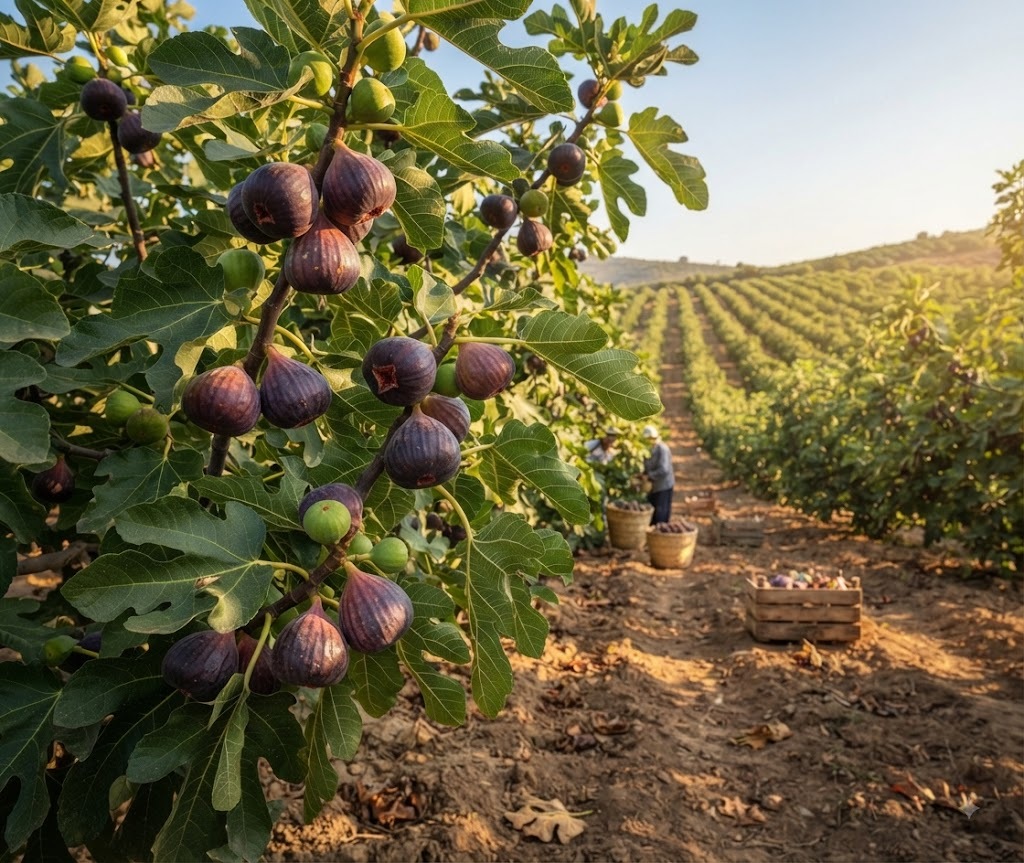
The Rural Development Administration describes the morphology in which figs set fruit from the leaf axils of new shoots and mature sequentially from the lower branches from late August to October. Furthermore, since it distinguishes the harvesting characteristics of so-called autumn and summer fruits, it is appropriate to manage Harvest Type as a separate field in actual datasets according to variety, cultivation method, and harvest time. ( Nongsaroo )
Product Master
Product ID | Actual product form | Key Management Standards |
| FIG-P01 | Raw materials from the source | Variety · Origin · Farm · Harvest Date · Ripening |
| FIG-P02 | Selected fresh fruit | Size, weight, color, peel damage, softening |
| FIG-P03 | Premium small-package fresh fruit | Uniformity, ripeness, packaging, and refrigerated delivery |
| FIG-P04 | Fresh fruit for dining out and bakeries | Degree of maturity, size, delivery time, and cutting suitability |
| FIG-P05 | Raw materials for processing | Safety, ripeness, damage range, and raw material yield |
| FIG-P06 | Cut figs | Cutting specifications · Drip · Hygiene · Refrigeration |
| FIG-P07 | dried figs | Raw Material Lot · Drying Conditions · Moisture · Packaging |
| FIG-P08 | frozen figs | Quality after freezing conditions and thawing |
| FIG-P09 | Fig puree | Input Lot · Crushing · Particle Size · Color · Product Specifications |
| FIG-P10 | Fig jam | Pulp, blending, heating, filling, best before date |
| FIG-P11 | Bakery and filling ingredients | Buyer specifications such as viscosity, particle size, and sugar content |
| FIG-P12 | PB · Locally processed finished products | Country of origin, processing method, labeling, and supply stability |
Classification criteria | Subdivision type | Management principles |
| Plant classification | Ficus carica L. | Species Master |
| varieties | Domestic cultivated varieties and introduced varieties | After confirming the official variety name, Variety |
| Harvesting type | Summer fruit, autumn fruit, etc. | Actual Harvest Type Records by Variety and Cultivation Type |
| Harvesting stage | Immature · Harvest ripe · Fully ripe · Overripe | Classification for fresh/processed use |
| Cultivation method | Open fields, unheated facilities, etc. | Connecting Nongsaroo classification with actual farm information |
| mountainous district | By domestic cultivation region | Region Entity |
| Distribution methods | Bulk, Tray, Small Packaging, Commercial Use | SKU separation |
| Processing form | Fresh fruit, sliced, dried, frozen, puree, jam | Separate Product ID |
| Final use | Raw Food · Dining Out · Bakery · Dessert · HMR · Food Manufacturing | Buyer Specification |
| Transaction type | In-kind · Regular supply · Contract farming · Processed procurement · OEM/PB | The contract is an NDA |
Nongsaroo open-field cultivation data presents an average growth temperature of 13℃, an optimal growth temperature of 25–30℃, a frost damage temperature of -7–-9℃, and an optimal storage temperature of 0–1℃ for figs. Suitable growing locations are explained using minimum winter temperatures and soil conditions as key variables. These values are used as general cultivation standards in the Rural Development Administration's technical data, but the optimal values for actual production regions and varieties are verified separately. ( Nongsaroo )
step | Essential Dataset | Management purpose |
| Cultivation plan | Variety, Cultivation Type, Area, Target Shipment, Use | Production plan |
| Seedlings and propagation | Variety, Seedling Source, and Propagation Information | Variety Tracking |
| formula | Official Date · Planting Information · Pack ID | Production history |
| Germination and full leafing | Germination date, temperature, and growth | Harvest time prediction |
| Result sheet management | Fruit index · Shoot growth | Fruit set and yield management |
| Fruit set | Node position, number of fruits, and timing | Production volume forecast |
| rising | Temperature, Rainfall, Humidity, Low Temperature | Cultivation risk |
| Watering | Period, frequency, quantity | Quality and Heat Management |
| dispute | Fertilizer, Input Amount, Timing | Production history |
| pests | Occurrence, Control, and Chemicals | Quality and Safety |
| Harvest judgment | Coloring, Softening, Appearance, Buyer's Specifications | Harvesting at the right time |
| harvest | Harvest date, time, shift, weight | Raw Lot |
| Selection | Ripeness, weight, appearance, cracks, decay | Fresh/Processed Branch |
| Pre-cooling | Start time, temperature, and time | Maintaining the lead |
| save | Storage temperature, period, and inventory | Loss management |
| packaging | Tray, container, shock protection | Pressure prevention |
| refrigerated shipment | Shipping temperature and delivery time | Maintaining fresh fruit quality |
| purifying | Hygienic process for raw materials used in processing | Processing Lot |
| cutting | Standards, Losses, Hygiene | Dining Out · HMR |
| dry | Raw materials, pretreatment, and drying conditions | Dry Product |
| freezing | Freezing and storage conditions | Year-round processed raw materials |
| Crushing and Puree | Input and Output | Processing yield |
| Jams · Heat-processed | Mixing, heating, and filling | finished product |
| shipment | Buyer · Lot · Delivery Date | Delivery |
Quality items | Fresh fruit | Pre-treated products | processed goods | finished product | Public rating |
| mountainous district | essential | succession | succession | tracking | Public |
| Cultivation method | Open field/facility | succession | succession | tracking | Member |
| varieties | essential | succession | Raw material standards | tracking | Public/Verified |
| farmhouse | ID | succession | tracking | tracking | Verified |
| Lot | essential | new | new | new | Verified/NDA |
| Harvest date and time | core | succession | succession | tracking | Verified |
| appearance | core | Selection | The relevant city | Product Standards | Member |
| weight | Individuals/Packaging | input | Output | Display amount | Member |
| size | Product specifications | Cutting specifications | The relevant city | Product Standards | Member |
| coloring | Accommodation index | Raw material selection | Color management | Product Standards | Member |
| Sukdo and Yeonhwa | core | Suitable for processing | Raw material standards | tracking | Verified |
| cracks in the peel | core | Remove/Branch | Raw Material Evaluation | tracking | Verified |
| Pressure and injury | core | eliminate | Raw material management | Quality Control | Verified |
| corruption | test | Non-conformity exclusion | Raw material management | Product Management | Verified |
| alien substance | check | essential | essential | essential | Verified |
| pesticide residues | Compliant with standards | succession | check | Legal standards | Verified/NDA |
| microorganism | If necessary | importance | importance | Product Standards | Verified/NDA |
| purifying | The relevant city | essential | record | tracking | Verified |
| drying yield | - | input | core | Cost linkage | NDA |
| Puree yield | - | input | core | Cost linkage | NDA |
| Processing history | - | essential | essential | essential | NDA |
| packaging | Pressure prevention | Hygienic packaging | Product packaging | Labeling packaging | Member |
| save | core | cold storage | By product | By product | Verified |
| refrigeration conditions | essential | essential | By product | By product | Verified |
| Expiration date | Distribution conditions | setting | setting | mark | Verified |
| Shipment | record | record | record | record | Verified |
| Returns | record | record | record | record | NDA |
| Claim | record | record | record | record | NDA |
| Repurchase | Buyer Connection | Buyer Connection | Buyer Connection | Buyer Connection | NDA |
Lot Master Required Field
Lot ID · Item/Product Type · Scientific Name or Variety · Cultivation Type · Origin/Cultivation Area · Producer · Cultivation Method · Planting Date · Germination/Fruit Setting Information · Harvest Date/Harvest Time · Quality Indicators · Weight/Specifications/Grade · Coloration/Ripeness/Softening · Cracks/Burnt/Pests/Appearance Check · Pesticide Use Records · Pesticide Residue/Microbiological Test Report · Pre-cooling Start Time/Storage History · Raw Material Lot · Processing History (Washing/Cutting/Drying/Freezing/Puree/Jam) · Packaging Date · Best Before Date · Shipper · Returns/Claims · Repurchase
Customers | Purchase criteria | Cooperation opportunities |
| Producer organizations in mountainous regions | Variety, Cultivation Type, Harvest Date, Marketability Rate | Joint screening and pre-cooling |
| Nonghyup · Production Area Distribution | Degree of ripeness, size, appearance, delivery time | Same-day and next-day shipping |
| wholesale market | Origin, Ripeness, Weight, Quality | Short-term fresh fruit distribution |
| Specialized fruit distribution | Freshness, Packaging, and Ripness | Premium Fresh Fruit |
| Online distribution | Pressure prevention · Cold shipping · Delivery time | Direct from the farm |
| Large-scale distribution | Uniformity, Packaging, Safety | PB · Local Products |
| Cafes & Dining Out | Degree of ripeness, size, delivery time | Desserts and Brunch |
| Bakery and Confectionery | Cutability, Color, Puree, and Jam Specifications | Fillings and toppings |
| Hotel · Dessert | Appearance, maturity, premium specifications | High-quality fresh fruit |
| dried fruit manufacturers | Raw material yield, ripeness, and drying suitability | dried figs |
| Jam manufacturer | Flesh yield, ripeness, color | Contract for processing |
| Puree manufacturer | Yield, particle size, microorganisms | B2B raw materials |
| HMR·PB | Puree, Jam, Sauce | OEM/PB |
| Local specialty product business operator | Regionality and raw material traceability | local brands |
| Import and export companies | Fresh, Dried, Processed Form, Quarantine | Trade RFQ |
| Research and technology institutions | Storage, Facilities, Processing, Distribution | Joint demonstration |
step | Key variables | Operational judgment |
| Production in the producing area | Variety, Cultivation Type, Fruit Set, Crop Conditions | Estimated supply |
| Contract farming and procurement | Buyer Usage, Specifications, and Shipment Time | Production plan |
| harvest | Ripening and Harvest Time | Securing the lead |
| Selection and Pre-cooling | Ripening, Damage, Temperature | Fresh fruit quality |
| packaging | Pressure, container, breathability | Logistics loss |
| Storage and Shipment Control | Storage period · Inventory | Freshness and Supply |
| Preprocessing | Washing and cutting | Dining Out · HMR |
| dry | Yield and moisture | dried fruit |
| freezing | Freezing and storage | Processed raw materials |
| Puree and Jam | Raw material yield and specifications | Manufacturing RFQ |
| Distribution and supply | Refrigeration · Lead Time | Buyer Quality |
| RFQ · Repurchase | Claims, Discard Rate, Satisfaction | Repeat trading |
Import and export management
item | Management principles |
| HS Code | Register fresh and dried figs by product type after verifying the Korea Customs Service HS raw data. |
| Freshness and import volume | Input after verification of raw data from the Korea Customs Service's import and export trade statistics. |
| Import volume of dried fruit | Input after verification of raw data from the Korea Customs Service's import and export trade statistics. |
| Revenue | Input after official verification of raw data |
| Export volume and value | Input after official verification of raw data |
| major countries | Enter quantity and amount after verifying raw data by country |
| Quarantine | Checking country-specific plant quarantine conditions for fresh fruit |
| FTA | Review of Agreement Tariff Rates by Country of Origin and Product Type |
| certification | Managed according to Buyer's requirements |
| Customs clearance | Separation of product forms such as fresh, dried, and jam |
| distribution | Separate conditions for fresh, refrigerated, dried, and processed products |
Products and processes | Key conditions | RFQ conversion |
| Raw materials from the source | Variety, Cultivation Type, Harvest Date | Raw RFQ |
| Selected fresh fruit | Accommodation · Appearance · Size | Fresh RFQ |
| Premium Fresh Fruit | Ripeness, Packaging, Freshness | Distribution and Hotels |
| Raw materials for processing | Safety, Overripe Range, Yield | Processor RFQ |
| Washing and cutting | Hygiene, drip, and standards | Dining Out · HMR |
| dried figs | Drying conditions, moisture, color | Dried Fruit RFQ |
| frozen figs | Freeze-thaw quality | Desserts · Manufacturing |
| Puree | Particle size, color, viscosity | Bakery & Beverage |
| jam | Formulation, Viscosity, Product Specifications | PB·OEM |
| peeling | Particle size, viscosity, and thermal stability | Confectionery and Bakery |
| Non-commercial products and | Overripe, poor appearance, safety | Processing conversion evaluation |
| Selected items | Separation by cause of decay and damage | Suitable/Discarded Branch |
| Fruit peel and other by-products | Separated from general food ingredients | Review for materialization after verifying official research grounds |
| pruning byproducts | Separation from food products | Review of legal utilization of compost, etc. |
Product Research Profile (PRP)
PRP area | Key question |
| varieties | How do suitability differ for fresh, dried, and puree? |
| Cultivation method | How open-field and greenhouse cultivation affect harvest time and quality |
| Sukdo | Which ripeness is suitable for fresh fruit sales and processing? |
| Pre-cooling | How does delayed post-harvest pre-cooling affect quality? |
| save | What is the shelf life for products under different refrigeration conditions? |
| Pressure | How to reduce losses in packaging and shipping |
| drying yield | What is the yield of the dried product relative to the raw material? |
| Puree yield | Up to what extent can raw materials other than products be safely converted? |
| Processing quality | Do the color, scent, particle size, and viscosity meet the Buyer's specifications? |
| Buyer | What is the relationship between delivery loss, claims, repurchase, variety, and ripeness? |
first of all | Execution item | Performance indicators |
| 1 | Make Variety, Crop Type, Origin, Harvest Date, Harvest Time, and Lot mandatory values | Required value completion rate |
| 2 | Product Separation: Fresh Fruit, Processing, Dried, Frozen, Puree, Jam | Product identification rate |
| 3 | Linking weather, growth, fruit setting, harvest, and shipment data | Production history connection rate |
| 4 | Datafication of quality, certificates, pre-cooling, storage, and processing history | Traceability rate |
| 5 | Connecting Farms – On-site Distribution – Processing Companies – Buyer RFQs | RFQ Match Rate |
| 6 | Video AI screening for ripeness, peel cracks, and damage | Automatic sorting accuracy |
| 7 | Pest and disease AI diagnostic assistance | Detection accuracy |
| 8 | Production volume and harvest time forecast | Prediction error |
| 9 | Prediction of ripeness and softening | Optimal sales time prediction error |
| 10 | Storage loss and disposal prediction | Reduction in waste rate |
| 11 | Optimization of shipping timing for greenhouse and open-field crops | Shipment timing dispersion rate |
| 12 | Prediction of drying and puree processing yields | Yield error compared to actual |
| 13 | Optimization for refrigerated delivery | Claims and Pressure Rates |
| 14 | AI Buyer Match | Sample→Contract Conversion Rate |
| 15 | Traceability | Raw material to finished product traceability success rate |
Problem group | Problem Definition | Required data |
| Lack of variety information | Differences in freshness and processing suitability by variety are not reflected in trade | Variety |
| Mixed open fields and facilities | Integrated management of crop types with different shipping times, quality, and costs | Crop type and production costs |
| Low temperature risk | Restrictions on cultivation areas and damage due to low winter temperatures | Lowest temperature and damage |
| Rainfall and humidity risk | Harvest quality and risk of spoilage | Rainfall, humidity, and harvest |
| pests | Decline in growth and marketability | Occurrence and Control |
| Harvest judgment deviation | Quality difference between harvesting too early and overripe | Ripening date/harvest day |
| Fast softening | Short selling time after harvest | Hardness, maturity, and time |
| peel damage | Damage and cracking due to thin skin | Packaging and Logistics |
| Lack of storage capacity | Risk of loss due to short shelf life at room temperature | Temperature and storage time |
| Concentration of shipments | Freshness and supply concentration during specific periods | Harvest and shipment |
| Quality deviation | Farm-specific differences in size, ripeness, and color | Lot quality |
| Disruption of refrigerated logistics | Insufficient temperature history between harvest and buyer | Temperature Log |
| Insufficient branches for processing | Insufficient timely conversion of non-marketable fruits into processed products | Selection and ripeness |
| Uncertainty in drying yield | Yield differences based on raw material ripeness and variety | Weight before and after drying |
| Processing yield deviation | Lot-by-Lot Differences in Puree and Jam Yield | Input and Output |
| Dispersion of test reports | Safety data and Lot are separated | Lot·Test Materials |
| Discrepancy in contract farming | Discrepancy between Buyer specifications and production results | Contract, Production, Inspection |
| Market price fluctuations | Price sensitive due to short shipping cycles | Shipment price |
| Absence of repurchase data | Buyer evaluation unconnected to next production plan | Reviews · Repurchase |
RFQ Type | Public Registration | Verify/NDA |
| Procurement of raw materials from the source | Origin, variety, cultivation type, and period | Farm, Volume, Unit Price |
| sale | Product type and specifications | Lot · Price |
| purchase | Required specifications and uses | MOQ · Unit Price |
| Regular supply | Product · Delivery Cycle | Physical quantity and contract terms |
| contract farming | Variety, Cultivation Type, and Shipping Time | Farms, Area, Contracts |
| Facility cultivation cooperation | Crop type and shipment target | Facility, Investment, and Production Costs |
| Supply of processed raw materials | Accommodation/Form | Yield and price |
| Cut and pre-treated parts | Cutting specifications | Microorganisms and expiration dates |
| dried figs | Product specifications | Moisture · MOQ · Unit Price |
| frozen and | Product form | Freeze · MOQ |
| Puree | Color, particle size, viscosity | Yield/Unit Price |
| Jams and fillings | Product concept | Formulation · MOQ |
| Dining & Hotel | Ripeness and Size | Delivery time · Actual price |
| Bakery | Fresh fruit, puree, filling | Specifications and Delivery Cycle |
| HMR·PB | Jams, sauces, and processed products | Expiration date/contract |
| export | Fresh and processed products | Quarantine · Unit Price |
| local specialties | Local fresh and processed products | Producers and manufacturing facilities |
| Technology demonstration | Pre-cooling, storage, facilities, and AI sorting | Facilities and test conditions |
| Research cooperation | Variety, Ripeness, Storage, Processing | Dataset·IP |
① Need Products & Materials
Companies and institutions seeking necessary products, agricultural products, raw materials, and processed goods register purchasing demands. Registered requests are utilized to review cooperation with potential suppliers and producers based on the RFQ Intelligence Library.
Process:
RFQ Registration → Supplier/Product Review → Collaboration Connection → Future AI Matching
Register
② We are looking for production and manufacturing partners. (Need Suppliers & Manufacturers)
Register a request to find necessary production and supply partners, ranging from farms and producer organizations to processing companies, OEM, ODM, and private label manufacturers.
Process:
RFQ Registration → Review of Production & Manufacturing Capabilities → Collaboration Connection → Future AI Partner Matching
Register
③ We are looking for domestic and international buyers. (Need Buyers)
Farmers, producer organizations, and manufacturing companies are requesting cooperation with new buyers, such as domestic and international distributors, importers, brand companies, and food service and catering businesses.
Process:
RFQ Registration → Product & Supply Capability Review → Market & Buyer Connection → Future AI Buyer Matching
Register
Contact : mail@markethub.org
Version | Main contents | situation |
| v1.0 | Plant Identity · Open Field/Facility Production · Fresh Fruit · Drying · Processing · RFQ Basic Structure Registration | complete |
| v1.1 | Verification of official production, region, market, and import/export raw data | expected |
| v2.0 | Detailed quality standards for variety, ripeness, pre-cooling, storage, drying, freezing, puree, and jam | expected |
| v3.0 | Producer–APC/Cold-chain–Processor–Distributor–Buyer Verified Container combination | expected |