


Analysis Region: Gyeongsangbuk-
do Key Regions: Uiseong New Airport Area, Gumi, Gimcheon, Chilgok, Gyeongsan, Yeongcheon, Pohang, Andong, Yeongju, Yeongdeok, and Northern and East Coast Living Areas
Agenda: Are investments in new airports, metropolitan railways, general railways, and expressways not merely remaining as SOC construction, but are actually reshaping the economic and living areas of 22 cities and counties by reducing access times for industrial logistics, commuting, tourism, medical services, and education?
Golden Time Type: Opportunity + Connectivity Timing Risk
Reference Date: August 28, 2026
Version: Regional AX Golden Time Intelligence v3.2
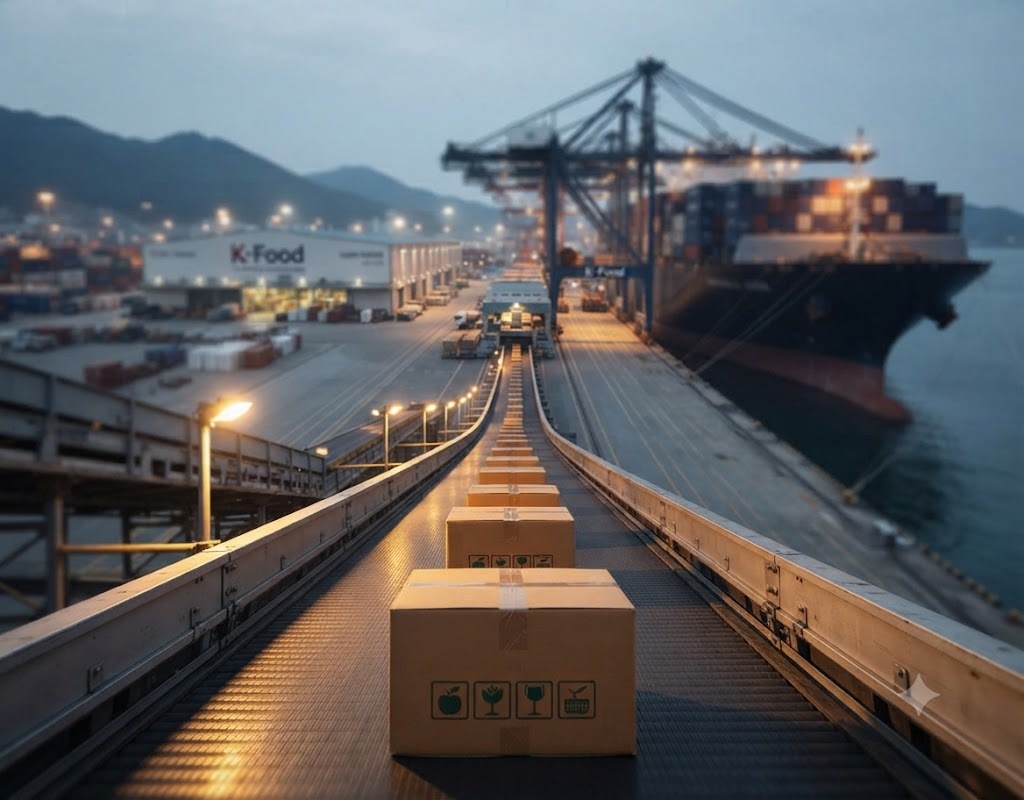
Gyeongbuk's transportation structure has already undergone physical changes in some sections as the period from 2024 to 2026 passed. In December 2024, the first phase of the Daegyeong Line (Gumi-Gyeongsan), the first metropolitan railway outside the capital region, opened, recording 5.12 million cumulative passengers in the first year after opening . By utilizing the existing Gyeongbu Line with a total length of 61.9 km, Gumi, Chilgok, Daegu, and Gyeongsan were linked into a single commuter zone, and in February 2026, Chilgok Buksam Station was additionally opened with a total project cost of 47.8 billion won . This is the clearest evidence that transportation investment has transitioned from planning to actual changes in living areas. ( Gyeongbuk Provincial Government )
Connectivity has actually improved along the East Coast as well. With the opening of the 30.92 km Pohang-Yeongdeok Expressway in November 2025 , with a total project cost of approximately 1.6 trillion won, the Pohang industrial zone has been directly connected to the Yeongdeok tourism and living zone. The next outcome is not the mere existence of the road, but how logistics, tourism, and commuting times change after the opening. ( Gyeongsangbuk-do Provincial Government )
On the other hand, the Daegu-Gyeongbuk Integrated New Airport, which will most significantly transform the spatial structure of Gyeongbuk, still faces considerable uncertainty regarding its timeline. The Ministry of Land, Infrastructure and Transport officially formalized plans to construct a passenger and cargo complex airport worth approximately 2.7 trillion won by announcing the master plan for the civilian airport in December 2025. However, on August 19, 2026, the process of hearing opinions from residents and stakeholders regarding the revised master plan for the civilian airport began again. The new airport should be viewed not as a finalized operational infrastructure, but as a Runtime Project in which design, financing, and project schedules are still in motion. ( Ministry of Land, Infrastructure and Transport )
Regarding the connecting railways, some are in the operational phase, while others are in the planning phase. For Phase 2 of the Gimcheon-Gumi Metropolitan Railway, project conditions have improved following the raising of the criteria for preliminary feasibility studies in 2026, increasing the likelihood of entering the basic planning phase. On the other hand, a significant number of routes proposed by Gyeongbuk Province—including the Daegu-Gyeongbuk New Airport Express Circular Railway, Pohang-New Airport, Gimcheon-Gumi-New Airport, Uiseong-Yeongdeok, and Sangju-New Airport—are currently in the planning or proposal stages, requiring inclusion in the 5th National Railway Network Construction Plan or subsequent procedures . ( Gyeongbuk Provincial Government )
Therefore, Gyeongbuk Transportation Readiness cannot be determined by a single score.
The operating network and the future network exist simultaneously.
- Daegyeong Line → Operation and Passenger Generation
- Pohang-Yeongdeok Expressway → Operation
- Gimcheon-Gumi Metropolitan Railway → Implementation Stage
- DGTX·New Airport Connecting Railway → Planning·Evaluation Stage
- New Airport → Master Plan Change in Progress
Ignoring this difference and classifying all SOCs equally as 'under expansion' leads to an overestimation of actual Readiness.
The key Golden Time for Gyeongbuk lies not in planning more airports, railways, and roads, but in whether it is possible to align different completion and industrial investment timings within the next two to three years to translate 30-minute and 60-minute access into actual changes in industrial and living areas .
The current assessment is Opportunity + Connectivity Timing Risk .
Gyeongbuk is a metropolitan province with 22 cities and counties spread across an area of 18,424 km². The industrial and living axes of the Pohang-Gyeongju East Coast region, the Gumi-Gimcheon Western manufacturing region, the Gyeongsan-Yeongcheon Southern region, and the Andong-Yeongju Northern region are separated from one another.
While Gyeongbuk’s railway infrastructure boasts 11 conventional railway lines and numerous stations, actual high-speed and metropolitan accessibility varies by region. Gumi and Gyeongsan are directly connected to the Daegu metropolitan area via the Daegyeong Line, whereas the northeastern county areas and the site of the planned new airport do not yet have the same level of metropolitan railway service. ( Gyeongbuk Provincial Government )
Therefore, the transportation gap in Gyeongbuk is not merely a difference in distance.
It is a time gap.
Even for the same 50km distance, the costs of commuting, schooling, medical care, and business access vary significantly between areas with and without metropolitan railways and expressways.
The Daegyeong Line is a prime example of distinguishing between planning and outcomes. In the year following its opening in December 2024, it recorded 5.12 million passengers, establishing a travel system that allows travel between Gumi and Daegu in approximately 30 minutes and between Gumi and Gyeongsan in about 50 minutes. This serves as evidence that the railway network has begun to transform actual living areas. ( Gyeongsangbuk-do Provincial Government )
On the other hand, the outcomes of the new airport cannot yet be evaluated. Although the master plan for the civil airport was announced in 2025, a public review process for the revised plan is underway again in August 2026. The economic effects of airport logistics, MRO, hinterland cities, and access railways must also be separated into forecasts and plans before actual airport operations begin.
The current structure must be classified as follows.
- Railway planning ≠ opening
- Activation ≠ Usage
- Increase in users ≠ Increase in local income
- Airport Master Plan ≠ Commencement of Construction
- Start of construction ≠ Opening of port
- Opening of a port ≠ Air logistics hub
- Construction of access roads ≠ industrial connection
The most important factor in Gyeongbuk's transportation readiness is the Network Conversion Rate rather than the Project Completion Rate .
The first change is the formation of a low-cost metropolitan living area utilizing existing railways . The Daegyeong Line was constructed as a metropolitan railway by utilizing the surplus capacity of the existing Gyeongbu Line, recording 5.12 million passengers in one year. This confirmed the feasibility of a model that reconfigures existing infrastructure into a metropolitan commuter network, rather than relying solely on the construction of new large-scale railways. ( Gyeongsangbuk-do Provincial Government )
The second direction is to expand the scope of the metropolitan railway network from a radius centered on Daegu to include Gimcheon and Cheongdo. Phase 2 of the Gimcheon-Gumi project was included in the 2024 Metropolitan Transportation Implementation Plan, and conditions for subsequent procedures have improved due to the upward revision of the threshold amount for the 2026 preliminary feasibility study. Requests are also being made for the additional inclusion of Phase 3 of the Gyeongsan-Cheongdo project and the Dongdaegu-Yeongcheon-Pohang metropolitan railway. ( Gyeongsangbuk-do Provincial Government )
The third point is that the new airport is being designed not merely as an aviation facility, but as a central node of the metropolitan transportation network . Gyeongbuk has proposed integrating the new airport express circular railway with existing lines such as the Jungang Line and Daegu Line, as well as multiple routes connecting Pohang, Gimcheon, Sangju, and Yeongdeok to the new airport. ( Gyeongbuk Provincial Government )
The fourth point is that national land policy itself is shifting toward expanding investment in regional metropolitan railways. The Ministry of Land, Infrastructure and Transport's 2026 work plan presented a direction to increase the proportion of investment in regional areas from the existing 21% to over 40% in the 5th Metropolitan Transport Implementation Plan and to promote regional metropolitan railways such as the DGTX. ( Ministry of Land, Infrastructure and Transport )
Gyeongbuk is therefore at a transitional stage where it can design a Time-based Mega-region in the SOC construction region.
Phase 1 of the Daegyeong Line is currently in the operational phase. Spanning 61.9 km from Gumi to Gyeongsan, it features a structure consisting of 5 existing stations and 3 upgraded or newly constructed stations, with the line extending to Buksam Station scheduled for additional opening in 2026. The fact that 5.12 million people used the line one year after opening confirmed the actual existence of demand for inter-regional commuting. ( Gyeongsangbuk-do Provincial Government )
The Gimcheon-Gumi Phase 2 is the next expansion axis. It utilizes the existing Gyeongbu Line, and conditions for implementation have improved as the total project cost threshold for preliminary feasibility studies was raised from 50 billion won to 100 billion won in March 2026. Since it is not yet a project scheduled for opening, it must undergo a feasibility review of the project plan and a basic plan. ( Gyeongsangbuk-do Provincial Government )
The new airport connectivity network is still in its early stages. In addition to the new airport express circular railway, Gyeongbuk has been requesting that the Pohang-New Airport, Gimcheon-Gumi-New Airport, Uiseong-Yeongdeok, and Sangju-New Airport routes be included in the 5th National Railway Network Plan. While the goal of "reducing access time to the new airport from anywhere in the province" exists, the actual project confirmation and completion rates vary by route. ( Gyeongbuk Provincial Government )
On the road sector, the Pohang-Yeongdeok Expressway opened in November 2025. This marks a transition from planning to operation regarding the improvement of accessibility to the northern East Coast; subsequently, connectivity speeds toward Uljin and Samcheok will become the next bottleneck in the expansion of the East Coast living area. ( Gyeongsangbuk-do Provincial Government )
The current policy portfolio is structured from utilizing existing networks to expanding metropolitan railways, a new airport hub, and connecting the East Coast and the West.
The remaining problem is to manage the time axis of each project as a single Network Runtime .
The spatial structure of Gyeongbuk differs from that of the Seoul Metropolitan Area. While the Seoul Metropolitan Area expands its regional railway network on top of an already high population density, Gyeongbuk faces a situation of population decline and the dispersion of industrial hubs, creating a structure where transportation networks must first establish new living zones .
The 5.12 million annual users of the Daegyeong Line are evidence that actual commuting and daily living demand can be generated even in non-metropolitan areas if high-frequency regional railways are provided. ( Gyeongsangbuk-do Provincial Government )
National policy is also moving in this direction. By 2026, the Ministry of Land, Infrastructure and Transport plans to expand the investment share in regional wide-area transportation to over 40% in the 5th Five-Year Plan and is strengthening the promotion of regional express railways in the form of x-TX. ( Ministry of Land, Infrastructure and Transport )
Gyeongbuk's weakness is that the completion times of its core projects differ.
The already operating Daegyeong Line, the Gimcheon-Gumi line in the expansion phase, the DGTX in the planning phase, the new airport undergoing master plan modifications, and the opened Pohang-Yeongdeok Expressway all exist simultaneously.
The current location is determined to be Network Expansion Opportunity / Timing Coordination Weakness .
Phase 1 of the Daegyeong Line is **61.9 km**.
The number of users one year after opening is 5.12 million . ( Gyeongsangbuk-do Provincial Government )
47.8 billion won was invested in Buksam Station . ( Gyeongbuk Provincial Government )
The Pohang-Yeongdeok Expressway is 30.92 km long , with a project cost of approximately 1.6 trillion won . ( Gyeongsangbuk-do Provincial Government )
The scale of the basic plan for the civil aviation section of the Daegu-Gyeongbuk Integrated New Airport is approximately 2.7 trillion won . ( Ministry of Land, Infrastructure and Transport )
The new airport express circular railway concept previously proposed by Gyeongbuk aims for a circular route centered around the new airport in approximately 70 minutes, with travel times of about 8 minutes from Uiseong to the new airport, 22 minutes from Seodaegu to the new airport, and 31 minutes from Yeongcheon to the new airport. These are planned target times and not actual operating times. ( Gyeongbuk Provincial Government )
When connecting numbers, the time axis becomes more important than the total investment amount.
From 2024 to 2026, the living area effects of the existing railway network appeared first, but the wide-area network to maximize the new airport's effects has not yet been completed.
If the new airport opens first and the connecting railway is delayed, or if the access railway is built first and the airport project is delayed, the network effect expected when they are completed simultaneously is weakened.
Therefore, the key indicator is not the amount of SOC investment, but the Project Synchronization Index .
The biggest gap is between the Node and the Network .
Even if a strong node like the new airport is established, the actual economic sphere of the metropolitan airport will be limited if railways and roads accessing it from Pohang, Gumi, Gimcheon, Andong, and Sangju are not connected in a timely manner.
The second point concerns the relationship between the Passenger Network and the Freight Network . While the Daegyeong Line is demonstrating tangible results in commuting and school travel, air cargo—one of the new airport's core economic effects—must be directly connected to the logistics timelines of industrial complexes, logistics centers, roads, and railways. Although the Civil Aviation Master Plan proposed a combined passenger and logistics function, actual air cargo routes and volumes are subject to verification after the airport opens. ( Ministry of Land, Infrastructure and Transport )
The third point is the relationship between Infrastructure and Land Use . Even if a station opens, if residential, industrial, commercial, and transfer connections are not established, it may remain a transit hub.
The fourth point concerns the relationship between construction projects and Time Outcome . If the focus of Gyeongbuk's SOC evaluation remains solely on project costs and completion rates, improvements in actual commuting times, business transportation times, and access to medical services will be overlooked.
The fifth point is the simultaneity of airport schedules and related projects . The fact that the revised Civil Aviation Master Plan for August 2026 is once again open for public review demonstrates the need for runtime management of the standard schedule for linked investments around the airport.
The core data of Gyeongbuk Transportation AX is not facilities, but Origin-Destination Time Data .
At least the following must be connected.
Residential areas, industrial complexes, universities, hospitals, tourist attractions, railway stations, airports, ports, and average travel time and peak times between each Node
Logistics costs, number of transfers, and reliability are required.
Currently, data for railway and road projects is abundant, but public Runtime data comparing access times by industrial and living purposes across 22 cities and counties using the same criteria is limited.
Therefore, Gyeongbuk must integrate SOC projects into a Transport Digital Twin .
A structure is needed in which investment priorities for connecting railways, hinterland industrial complexes, industrial logistics, and bus routes are automatically recalculated if the opening date of the new airport changes.
Initial evidence of resident outcomes is being confirmed on the Daegyeong Line. Within one year of opening, 5.12 million people used the line, and the commuting and school zones of Gumi, Chilgok, Daegu, and Gyeongsan began to shift into a single metropolitan living area. (Gyeongsangbuk -do Provincial Government )
The opening of Buksam Station in 2026 directly provided railway accessibility to residents of the Buksam area in Chilgok. This is an example where facility investment translated into improved accessibility for local residents. ( Gyeongsangbuk-do Provincial Government )
The Pohang-Yeongdeok Expressway has also begun to change travel times for residents and tourists, but sufficient post-opening data on changes in tourist, logistics, and commuter volumes is still being accumulated.
We cannot yet discuss the outcomes for residents and businesses at the new airport.
The economic effects of airport planning are currently mostly forecasts.
The actual determination must be based on air routes, cargo volume, corporate locations, tourists, travel time, and local employment after the opening of the port.
The transportation network in Gyeongbuk is currently improving rapidly in the southwest and parts of the East Coast.
Gumi, Chilgok, and Gyeongsan are directly connected to the Daegu area via the Daegyeong Line.
Accessibility to Pohang and Yeongdeok has improved due to the new expressway.
Gimcheon is pursuing inclusion in the Daegyeong Line living area through Phase 2 of the Gumi Metropolitan Railway. ( Gyeongsangbuk-do Provincial Government )
On the other hand, how quickly northern and northeastern regions such as Andong, Yeongju, Sangju, Yeongdeok, and Uljin will be connected to the new airport, the Daegu metropolitan area, and industrial hubs largely depends on the realization of planned projects.
Therefore, the spatial gap in Gyeongbuk needs to be redefined in the future not as regions with railways / regions without railways , but as regions that can reach a key hub within 60 minutes / regions that cannot .
The first timeline is the Daegyeong Line, which is already in operation. Now that actual demand of 5.12 million people per year has been confirmed, it is the time to verify the economic feasibility and impact on living areas of the Phase 2 and 3 expansions. (Gyeongsangbuk -do Provincial Government )
The second factor is the 5th Metropolitan Transport Implementation Plan 2026–2030 and the 5th National Railway Network Construction Plan. The Ministry of Land, Infrastructure and Transport has signaled an expansion of investment in regional metropolitan transport, and whether new projects such as DGTX are included will determine the long-term structure of Gyeongbuk's transportation network. ( Ministry of Land, Infrastructure and Transport )
The third issue is the new airport. Although the basic plan for civil aviation was announced in 2025, a hearing on the revised plan is currently underway for August 2026. There is a high possibility that the current decisions regarding the schedule, scale, and connectivity network will solidify the surrounding cities and industrial locations in the future.
The irreversibility of transportation occurs in land and business locations.
Land in the station area is developed before the railway is completed, and
As logistics companies select locations before the airport opens,
Roads and power are determined before the industrial complex is established.
If transportation, industry, housing, and tourism are not designed simultaneously within the next two to three years, economic activity may become stagnant elsewhere even after the infrastructure is completed.
12-1. Golden Time Application Case in Basic Local Governments ① — Gimcheon City
Although Gimcheon possesses the high-speed rail asset of KTX Gimcheon-Gumi Station, the western terminus of Phase 1 of the Daegyeong Line is currently Gumi. Phase 2 of the Gimcheon-Gumi Metropolitan Railway was included in the 2024 Metropolitan Transportation Implementation Plan, and conditions for its implementation have improved due to an increase in the threshold amount for the preliminary feasibility study in 2026. ( Gyeongsangbuk-do Provincial Government )
The Readiness GAP lies between having a high-speed rail station and a daily commuting network. Gimcheon's Golden Time is not to pursue the Phase 2 Metropolitan Railway as a simple extension project, but to connect the Innovation City, Gimcheon-Gumi Station, and Gumi Industrial Complex into a single commuting and corporate living zone, thereby transforming the KTX Node into a regional job network .
12-2. Golden Time Application Cases in Basic Local Governments ② — Uiseong-gun
Although Uiseong possesses a strong future node as the planned site for a new airport, as of 2026, the airport is not an operational facility, and the process for modifying the basic plan for the civil airport is underway. Therefore, current expectations regarding real estate, industry, and the hinterland city should not be regarded as confirmed economic outcomes.
The Readiness GAP is the prior connection of access networks and local industries rather than the airport itself. Uiseong's Golden Time is not to attract companies after the airport opens, but to preemptively capture the Local Value of the Airport Economy by simultaneously deploying logistics, food, agriculture, MRO, and service industries, along with roads, railways, and housing, during the process of finalizing the airport schedule .
The first loss is the time mismatch between airports and industries . If an airport or industrial complex is completed first and access networks follow, initial business locations and logistics flows may become stuck in other regions.
The second is the entrenchment of accessibility disparities in the northern region. If connections to the northern and East Coast regions are delayed while the southwestern metropolitan railway network expands rapidly, the regional AX disparities identified in No. 026 could be reproduced as travel time disparities.
The third factor is the loss of the new airport's hub function. If only aviation facilities exist and stable access within approximately one hour from Pohang, Gumi, Gimcheon, and Andong is not secured, the airport's actual hinterland market will shrink.
The fourth point is the premature entrenchment of station area development. If land development proceeds before actual commuting demand is verified, there is a possibility that demand and spatial structure will be misaligned.
The Daegyeong Line has already demonstrated that Gyeongbuk can expand its living area by changing the operation of the existing network without constructing all new railways.
If this model is extended toward Gimcheon, Cheongdo, Yeongcheon, and Pohang, the railway becomes not a means of transportation, but Regional Labour Market Infrastructure .
Connecting with the new airport creates the possibility of reorganizing accessibility to Gumi's semiconductor and defense industries, Gimcheon Innovation City, Andong's bio sector, Pohang's secondary battery and steel industries, and Gyeongju's tourism and nuclear power plants into a single network.
Performance should be judged by the number of people, businesses, and jobs newly brought into the 60-minute living zone, rather than the length of railway lines.
Changes to observe | Things to do with AX | Policy decision | Verification indicators |
| New airport schedule | Airport Runtime Twin | Readjustment of linked projects | Schedule error |
| railway business | Project Synchronization | Redistribution of priorities | Simultaneous completion rate |
| Daegyeongseon | AI analysis of OD and boarding/alighting | Phase 2 & 3 Operational Design | Users · Congestion |
| New airport access | 30·60 minute Isochrone analysis | First, select the connecting axis | Population within 60 minutes |
| industrial complex | Freight Time Map | Corporate Location Linkage | Airport/Port Transport Time |
| Station area | Demand forecasting AI | Prevention of overdevelopment | actual floating population |
| Bus and train | Multimodal Agent | Transfer optimization | Door-to-Door time |
| Medical and educational | Accessibility Gap Map | Support for vulnerable areas | Hospital/School Access Time |
| sightseeing | Visitor Flow Intelligence | Railway and Festival Linkage | Time of stay and consumption |
| SOC Outcome | Time-to-Economy Dashboard | Business evaluation conversion | Time↓ · Income·Employment↑ |
Mobility AX Runtime
SOC Planning → Construction/Opening → Changes in Access Time → Actual Mobility Volume → Commuting/Logistics/Tourism Flow → Corporate/Residential Location → Employment/Consumption → Regional Value Added → Network Reorganization
Opportunity + Connectivity Timing Risk
Gyeongbuk's transportation network is already yielding partial results.
The Daegyeong Line secured actual ridership of 5.12 million people one year after opening, and Buksam Station was added in 2026. ( Gyeongsangbuk-do Provincial Government )
On the road, the opening of the Pohang-Yeongdeok Expressway in 2025 has actually changed accessibility to the East Coast. ( Gyeongsangbuk-do Provincial Government )
Institutional conditions for the Gimcheon-Gumi metropolitan railway have also improved. ( Gyeongsangbuk-do Provincial Government )
National policy is also directed toward expanding investment in regional wide-area transportation from 2026 to 2030. ( Ministry of Land, Infrastructure and Transport )
However, regarding the new airport, the largest future node, the process of amending the civil airport master plan is still underway as of August 2026. A significant number of access railways also still require inclusion in the national railway network or follow-up procedures.
Therefore, the problem of Gyeongbuk is not the lack of a transportation network.
The question is whether the order of completion aligns with the speed of change in industry, population, and living areas.
Currently, Golden Time is determined by Opportunity + Connectivity Timing Risk .
- Final changes to the basic civil aviation plan for the Daegu-Gyeongbuk Integrated New Airport
- Civil airport construction start date
- Military Airport Relocation Funding and Project Schedule
- Changes in the target opening date of the new airport
- Whether the new airport access railway is reflected in the national plan
- DGTX Preliminary Feasibility Study Results
- Commencement and completion of the Gimcheon-Gumi Metropolitan Railway Master Plan
- Whether the Gyeongsan-Cheongdo metropolitan railway is reflected
- Whether the Dongdaegu-Yeongcheon-Pohang metropolitan railway is reflected
- Daegyeong Line annual users
- Number of passengers boarding and alighting at each station
- Congestion during rush hour
- Actual users of Buksam Station
- Daegyeong Line Passenger Residence/Workplace OD
- Gumi to Daegu/Gyeongsan Actual Door-to-Door Time
- Changes in Gimcheon-Gumi commute volume
- Pohang-Yeongdeok Expressway traffic volume
- Changes in tourism and logistics between Pohang and Yeongdeok
- Population within 30 minutes of the new airport
- Population with 60-minute access to the new airport
- Industrial Complex → Airport Cargo Transport Time
- Pohang/Gumi → New Airport Time
- Population with 60-minute access to major general hospitals
- Changes in businesses, employment, and land prices before and after the opening of SOC
- Changes in regional income and productivity compared to reduced travel time
Data GAP: Although Gyeongbuk has relatively abundant data on progress, project costs, and openings for railways, roads, and airports, there is no publicly available Mobility Outcome Runtime that consistently tracks the sequence of SOC opening → actual travel time → people and cargo flow → corporate and residential location → employment and income across 22 cities and counties.
Runtime Chain
Transportation Investment → Opening → Travel Time → Usage Patterns → Commuting, Logistics, and Tourism Zones → Corporate and Residential Locations → Employment and Consumption → Regional Value Added → Widening or Reduction of Disparities Between Cities and Counties
The operational evidence is clear. The Gumi-Gyeongsan section of the Daegyeong Line recorded a cumulative 5.12 million passengers one year after opening, and Buksam Station was additionally opened in 2026. The entire 30.92 km section of the Pohang-Yeongdeok Expressway was also opened in November 2025. Some of Gyeongbuk's SOC is already at a stage where it is changing actual travel patterns, rather than remaining merely a 'plan'. ( Gyeongbuk Provincial Government )
On the other hand, the new airport, which serves as the center of the future network, is not yet in the same state. Although the Ministry of Land, Infrastructure and Transport announced a master plan for a private airport worth approximately 2.7 trillion won in December 2025, a public review process for the revised plan is currently underway in August 2026. This is why the economic effects and related industries associated with the new airport cannot be processed using the currently defined outcomes. ( Ministry of Land, Infrastructure and Transport )
There are also significant differences in the stages of the metropolitan railway projects. While conditions for follow-up procedures have improved for the Gimcheon-Gumi route, the new airport express circular railway and multiple access routes are still at a stage requiring national planning and feasibility verification. Therefore, when evaluating the future connectivity of Gyeongbuk, the total length of planned routes or total project costs should not be added to the actual network capacity. (Gyeongbuk Provincial Government )
There is only one structural insight. Gyeongbuk's transportation competitiveness is determined not by the number of new airports, railways, and roads, but by how effectively the 'time' between different industrial hubs is synchronized and reduced. The use of the Daegyeong Line by 5.12 million people has already demonstrated that transportation networks can transform actual living areas; however, if the completion times of the new airport, railways, and industrial complexes are out of sync, it is difficult to extend the same effect to the entire metropolitan area.
Golden Time Thesis — The golden time for transportation in Gyeongsangbuk-do is not the time to announce more SOC plans. The key lies in whether, within the next two to three years, we can connect the living area expansion model of the Daegyeong Line—which has already proven its effectiveness—to Gimcheon, Cheongdo, Yeongcheon, and Pohang, and synchronize the schedule of the Daegu-Gyeongbuk Integrated New Airport—whose master plan is currently being readjusted—with the timelines for access railways, industrial complexes, and air logistics within a single runtime. Railways and airports cannot change their locations once they open, whereas the sites for businesses and residential areas are determined prior to opening. If this timing is missed, large-scale SOC may remain, but Gyeongbuk's industrial and living areas may maintain their existing fragmented structure. Conversely, if we simultaneously design airports, railways, and roads → 30- and 60-minute access zones → businesses, jobs, and living services, Gyeongbuk's vast spatial area can be transformed from a weakness in distance into an asset for a multi-centered economic zone.
Version | Reference Date/Revision Date | Major changes |
| v1.0 | 2026.08.28 | Based on Regional AX Golden Time Intelligence v3.2, the readiness of transportation, logistics, and living areas in Gyeongbuk was analyzed for the first time. It was cross-verified with the opening of the 61.9 km Daegyeong Line between Gumi and Gyeongsan and 5.12 million cumulative passengers in one year, the opening of Buksam Station (47.8 billion won) in 2026, changes in the implementation conditions for Phase 2 of the Gimcheon-Gumi Metropolitan Railway in 2026, the opening of the 30.92 km Pohang-Yeongdeok Expressway (approx. 1.6 trillion won), the Ministry of Land, Infrastructure and Transport's basic plan for the Daegu-Gyeongbuk Integrated New Airport (civil aviation, approximately 2.7 trillion won) in 2025 and the public inspection of the revised basic plan in August 2026, plans for the new airport express circular railway and access railways for Pohang, Gimcheon, Sangju, and Yeongdeok, and the direction of expanded investment in regional metropolitan transportation from 2026 to 2030. The Mobility AX Runtime of SOC → Access Time → Mobility Flow → Corporate/Residential Location → Employment/Consumption → Regional Value Added was presented and analyzed using Gimcheon and Uiseong as application cases, and the Golden Time was determined as Opportunity + Connectivity Timing Risk. |
