


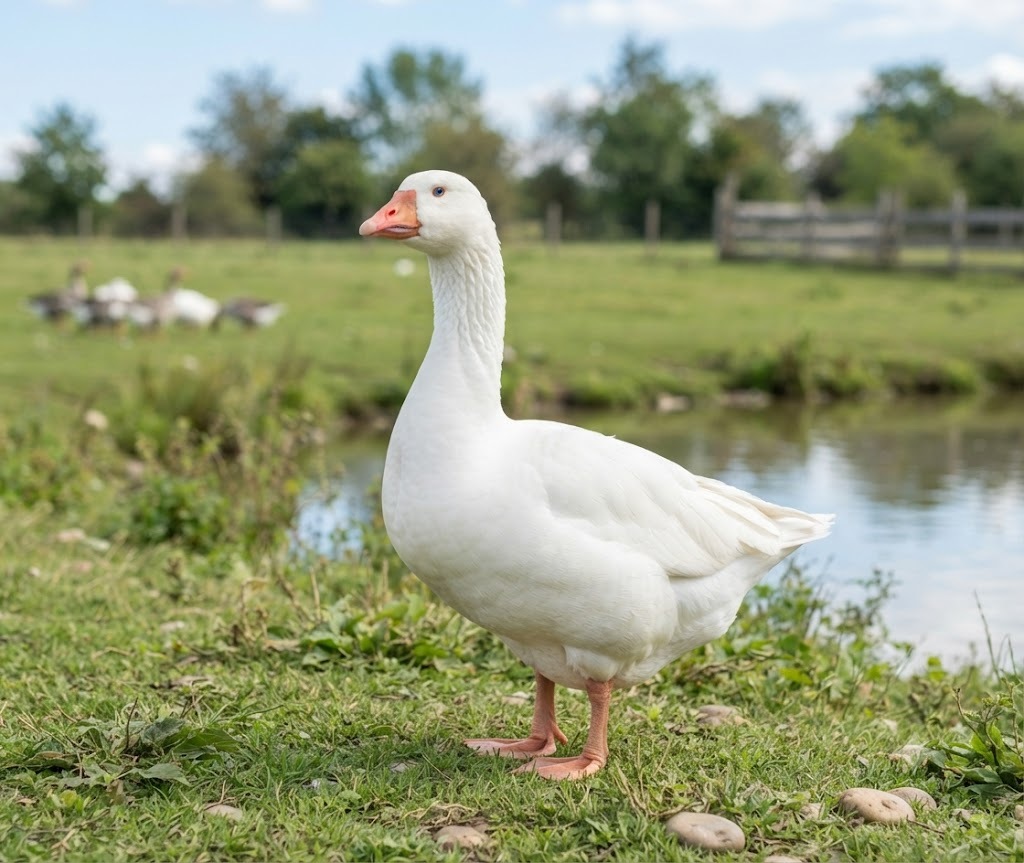
Ostriches are large poultry that produce meat, hides, feathers, and eggs globally. Although they do not constitute a large-scale mass market like chickens, the ability to yield various high-value products from a single animal has led to the development of specialized commercial livestock farming in some countries, including South Africa. The FAO also classifies ostriches as poultry and describes them, along with quail and pheasants, as species primarily raised in specialized, large-scale production systems. ( FAOHome )
In Korea, rather than expanding the scale of farming first, it is important to verify whether actual buyers for ostrich meat, hides, and eggs exist. MarketHub manages the entire supply chain— from breeding stock → eggs → hatching → chicks → raising → shipping → slaughter/processing → meat/hide/feathers → buyers— as a single entity.
Judgment axis | Key points |
| production purpose | Meat, eggs, hides, breeding |
| Main Products | Ostrich meat, leather, eggs, feathers |
| production core | Breeding, Hatching, Early Rearing, Feed, Growth |
| Major risks | Poultry diseases such as early mortality, nutrition, facilities, and HPAI |
| market | Specialty Meat, Leather, Crafts, Tourism |
| Korean access | Verification of small-scale production and imports after buyer confirmation |
| AX | Hatching, growth, feed, weight, and health data |
| RFQ | Breeding stock · Eggs · Live animals · Meat · Leather · Buyer |
| Final goal | Connecting the multi-product value of a single animal to stable transactions |
In the latest Nutrition Management Review published in 2025, the ostrich industry was evaluated as a livestock industry with diverse product values, including meat, hides, feathers, and oil. However, since productivity figures vary depending on breed and rearing environment, they are used as a benchmark rather than being applied directly to specific farms. ( AGRIS )
Ostriches are one of the largest birds in existence; although they cannot fly, they possess fast running speeds and a large physique. In industry, they are categorized for breeding, meat, and egg production, and after slaughter, not only the meat but also the hides and feathers become important commodities.
A characteristic of ostriches is that a single species yields various products with distinct characteristics. Since food companies focus on meat, leather companies on raw hide quality, and farms and experience facilities may require eggs or live animals, MarketHub manages each as a separate Product Entity.
division | Main purpose | major products |
| breeding stock | breeding | Fertilized egg · Ostrich chick |
| egg | Hatching, Food, Crafts | Ostrich egg |
| meat | Meat | Ostrich meat |
| leather | subject matter | Ostrich Leather |
| feathers | Fashion, Crafts, and Industry | Feathers |
| by-product | process | fat, bone, etc. |
FAO also identifies meat, hides, and feathers as the main products of the commercial ostrich industry. ( FAOHome )
In the case of ostriches, it is important to distinguish the production purpose first rather than simply the species name 'ostrich'. For breeding farms, egg production, fertilization rate, and hatching rate are key, while for meat farms, growth rate, feed costs, shipping weight, and carcass yield must be considered.
When considering leather production, skin damage and the management of rearing facilities can also affect product value. Therefore, it should not be assumed that a production method optimized solely for meat is also optimal for leather buyers.
Production type | Core Management | Final product |
| breeding | Spawning and fertilization rates | fertilized egg |
| hatching | Hatching rate · Newborn chicks | baby ostrich |
| upbringing | Feed, Growth, Mortality | Shipping shaft |
| meat | Body weight · carcass | Ostrich meat |
| leather | Skin condition/processing | raw hides/leather |
| egg | Size and condition | Edible and craft |
The basic structure is Breeding → Egg → Chick → Growing → Meat/Leather/Egg → Buyer .
One of the most challenging periods to manage on an ostrich farm is the rearing phase of young individuals following hatching. FAO data also explains that balanced nutrition and proper temperature control are crucial for young ostriches, and that management during the early growth period has a significant impact on productivity. ( FAO Home )
Feed requirements and composition vary according to age. The 2025 review also concludes that since nutritional requirements differ depending on the early growth, rearing, and breeding stages, a single feed formulation should be adjusted according to each stage rather than applied throughout the entire lifespan. ( AGRIS )
Management area | Things to see at a farm |
| breeding stock | Spawning, fertilization, reproduction |
| egg | Storage and Hatching Conditions |
| hatching | Hatching rate and early survival |
| feedstuff | Salary by Growth Stage |
| growth | Weight gain |
| health | Death, Injury, Disease |
| facilities | Exercise space, floor, fence |
| expense | Feed, Facilities, Labor |
Farmers should view actual productivity based on how many hatched chicks survive until the shipping stage, rather than simply hatching a large number of chicks.
Since ostriches are also managed internationally under the Poultry category, diseases such as avian influenza cannot be ignored. WOAH explains that HPAI can cause significant losses to the poultry industry and international trade, and continues to update the global H5 family virus situation for 2026. ( WOAH )
Just because it is specialized poultry does not mean that disease control measures can be lax. It is necessary to manage the entry of breeding stock, the movement of eggs and ostrich chicks, and potential contact with external vehicles, people, and wild birds, and to be able to trace which production lot the problem originated from if it occurs.
step | Key Management |
| breeding stock | Individual and breeding history |
| egg | Production Date · Parents · Egg Lot |
| hatching | Hatch Lot |
| upbringing | Body weight, feed, and death |
| Disinfection | Entry, Disinfection, Disease |
| shipment | Date · Object / Group |
| slaughter | Carcass Lot |
| process | Meat·Hide Lot |
The representative traceability structure is Breeder → Egg Lot → Hatch → Growing Group → Slaughter → Meat/Hide Lot → Buyer .
In Korea, ostriches cannot be considered a common livestock species like chickens or ducks. Therefore, the number of domestic farms, livestock, and slaughter volumes should not be estimated without basis, and the market should be assessed only within the scope where actual production, import, and consumption data can be verified.
From a business perspective, one can simultaneously monitor various markets such as specialty meats, leather, experiential tourism, and crafts. However, since a diverse product range does not guarantee sufficient buyers for every item, it is essential to separate and verify markets by product.
Participants | Things needed | RFQ |
| livestock farms | Breeding stock, eggs, feed, and sales channels | Producer |
| food companies | Special meat | Meat RFQ |
| food service companies | Standardized meat | Buyer |
| leather company | raw hides/leather | Material |
| craft companies | Eggs and feathers | Product |
| importing companies | overseas suppliers | Import |
| Tourist farm | Birthday celebrations and experiences | Service |
| local government | Business viability of specialty livestock | Pilot |
In particular, for new domestic livestock farming, it is reasonable to avoid large-scale investments before buyers and slaughter and processing infrastructure are verified .
The global trade of ostriches involves supply chains that vary by product form, such as live animals, fertilized eggs, meat, hides, and feathers. While production, slaughter, and processing are specialized in established commercial production regions like South Africa, quarantine and logistics become critical entry requirements for trade in new markets.
Poultry diseases such as HPAI can affect import and export conditions by country. Since WOAH has also revised trade-related avian influenza standards for 2026, actual RFQs do not rely on past import eligibility but reconfirm the latest quarantine conditions at the time of contract. ( WOAH )
Breeding stock → Fertilized eggs → Hatching → Rearing → Slaughtering → Meat/Hide → Import/Export → Buyer
Confirmation area | Main contents |
| Happy Birthday | Age, Gender, Health |
| fertilized egg | Parents, Modification, Quarantine |
| meat | Cuts · Refrigerated · Frozen |
| leather | Condition/Grade of the raw material |
| feathers | Quality and processing |
| Quarantine | Country/HPAI status |
| trade | HS · Customs · Country of Origin |
| Buyer | Quantity, Specifications, Delivery Date |
The HS Code must be checked again for live animals, meat, leather, and feathers respectively.
The Product Mix is important for ostriches because meat, leather, and feathers can be obtained simultaneously from a single animal. The FAO describes ostrich meat as red meat, noting that leather is used as a high-end fashion material and feathers are utilized for decorative and industrial purposes. ( FAO Home )
In PRP, the first consideration is whether buyers and selling prices actually exist for each by-product, rather than the advantage of "producing a large amount of product from a single animal." If only meat is sold and there are no buyers for hides or feathers, the overall economic viability could differ significantly from existing overseas models.
product | Main uses |
| fertilized egg | hatching |
| Ostrich egg | Food and Crafts |
| Ostrich meat | Food Service & Food |
| leather | Fashion and materials |
| feathers | Crafts, Fashion, Industry |
| province | Processed raw materials |
| bones, etc. | Crafts and Industry |
Key PRP questions include whether the hatching rate is stable, whether early mortality can be reduced, whether there are buyers to sell both meat and hides simultaneously, whether domestic slaughtering and processing are feasible, and whether it is competitive compared to imported products .
For Ostrich AX, it is more realistic to start by accurately linking production records rather than relying on advanced automated facilities. By recording egg production, fertilization rates, hatching rates, and offspring weight, feed, and mortality rates for each breeding stock, it is possible to compare which breeding combinations and rearing conditions yield the best productivity.
As the scale increases, automated weight monitoring, environmental sensors, and video analysis can be added. In particular, for ostriches moving in large enclosures, there is a possibility of using video or location data to supplementarily monitor activity levels, group behavior, and abnormal behavior.
Apply AX | farm effect |
| Breeding animal records | Comparison of breeding performance |
| Egg Lot | Fertilization and Hatching Management |
| Automatic weight | Growth confirmation |
| Historical records | Production cost analysis |
| environmental sensor | Temperature and rearing environment |
| Video AI | Checking for behavior and abnormalities |
| Product Lot | Meat and leather history |
| Buyer Matching | Sales channels by product |
The core structure is breeding data → hatching → growth → product yield → buyer evaluation → next breeding and rearing plan .
The risks in the ostrich industry can manifest more significantly in the market than in production technology. Even if issues such as chick mortality or hatching rates are resolved, expanding the farm scale becomes a management risk if there are no stable domestic buyers for meat and hides, nor are there slaughter and processing facilities.
Furthermore, due to the scarcity of data on specialty livestock, it is easy to apply past optimistic overseas examples directly to the current economic feasibility of Korea. The high productivity and profit models presented in outdated FAO data should also be used only as comparative benchmarks, not as finalized values for current domestic business plans. ( FAO Home )
problem | Data to verify |
| Hatching rate | Fertilized egg · Incubator |
| Early mortality | Temperature, Feed, Health |
| Growth deviation | Weight · Feed |
| feed costs | Salary and Price |
| facilities | Space and Safety |
| slaughter | Facilities, Distance, Standards |
| Leather sales channels | Buyer/Rating |
| Meat sales channels | Price and demand |
| Quarantine | Diseases · Country of Origin |
| Lack of market information | Transactions, Prices, and Demand |
The basic solution structure is Buyer investigation → Pilot rearing → Productivity verification → Slaughter and commercialization → Actual sales test → Decision on expansion .
An Ostrich RFQ does not refer solely to the sale of live animals. It allows for the creation of diverse cooperation requests, ranging from breeding stock, fertilized eggs, feed, and hatching partnerships to buyers for slaughter, meat processing, leather processing, crafts, and tourism.
However, rather than attempting to commercialize multiple products at once, it is safer to start with products for which a key buyer has been identified. For example, if a meat buyer has been secured first, leather and feathers can be verified sequentially as additional revenue sources.
RFQ Type | Collaboration Examples |
| breeding stock | Males and females for breeding |
| fertilized egg | For hatching |
| baby ostrich | Standing |
| feedstuff | Rearing and breeding |
| Happy Birthday | meat |
| Ostrich meat | Food & Dining |
| leather | Materials and Fashion |
| Eggs and feathers | Crafts and Tourism |
| Import and export | Livestock and Products |
| Pilot | Business viability of specialty livestock |
Production volume, price, and contract conditions are managed at the Verified/NDA stage.
Ostriches are a special livestock for which the RFQ (Request First) principle is particularly important . Since they are not widely consumed domestically, it is necessary to identify who will actually purchase the ostrich meat, hides, and eggs rather than starting from production.
MarketHub does not expand farms based on the assumption that there will be a market. Instead, it first verifies buyer specifications, quantities, and purchase prices, and then compares whether production or importing is the most competitive method accordingly.
① Find products/raw materials.
Need Products & Materials
Companies and institutions seeking necessary breeding stock, fertilized eggs, live animals, ostrich meat, hides, eggs, and feathers register their purchase demands. MarketHub reviews available producers and companies by verifying product type, quantity, country of origin, specifications, and quarantine conditions.
RFQ Registration → Supply Condition Review → Connecting Producers and Companies → AI Matching
Register
② We are looking for production and manufacturing partners.
Need Suppliers & Manufacturers
We seek necessary production and processing partners, such as ostrich farms, hatcheries, slaughterhouses, meat processing companies, and leather processing firms. We evaluate not only production capacity but also disease management, slaughtering, processing, and the feasibility of a sustainable supply chain.
RFQ Submission → Review of Production/Processing Capabilities → Partner Connection → AI Partner Matching
Register
③ We are looking for domestic and international buyers.
Need Buyers
Farmers and businesses seek new buyers in the food service, food, fashion, materials, crafts, and distribution sectors. We verify product specifications, quantities, prices, and delivery times to connect them with suitable suppliers.
RFQ Submission → Product & Supply Capability Review → Buyer Connection → AI Buyer Matching
Register
Contact : mail@markethub.org
Since the breeding population of ostriches is relatively limited, it is useful to manage breeding stock on an individual basis. On the other hand, during the post-hatching rearing stage, managing them in Hatch Lot or Group units can reduce the record-keeping burden on farms.
Since there are various products, it is also necessary to link how meat, hides, and feathers are separated within a single slaughter lot. Only by doing so can the profitability of the entire animal be calculated.
Dataset | Simply put |
| Master | Ostrich and product standards |
| Entity | Breeding stock, farms, processors, and buyers |
| Relationship | Egg, Hatching, Rearing, and Product Connection |
| Runtime | Changes in hatching, weight, feed, and price |
The representative structure is as follows.
Breeder → Egg Lot → Hatch Lot → Growing Group → Shipping → Slaughter Lot → Meat + Hide + Feather → Buyer
Afterward, by linking the sales data, the total production value per head and the actual profit can be calculated.
Compared to major domestic livestock species, the latest official production and market statistics for ostriches in Korea are limited. Therefore, unverified numbers of ostriches, market size, and profitability are not arbitrarily created and included; instead, actual domestic raw data is added as a separate Runtime once it is secured.
In this registration, production structures and disease risks were cross-referenced based on FAO data on ostrich production systems and products, FAO AGRIS's 2025 Nutrition Management Review, and WOAH's 2026 Avian Influenza data. However, past FAO economic figures are not directly used as the basis for current business feasibility in Korea. ( FAOHome )
Evidence | source |
| A | FAO · WOAH · Government · Official Statistics |
| B | Papers · Research Institutes |
| C | Verification Industry Data |
| D | Corporate and Market Data |
| E | Additional verification needed |
Key factual basis
- The FAO includes ostriches in the category of Poultry and describes them as poultry raised primarily in specialized commercial production systems. ( FAOHome )
- According to FAO data, the main products of commercial ostriches are meat, hides, and feathers, and eggs are also used for hatching and commercialization. ( FAOHome )
- The 2025 Nutrition Management Review concluded that nutritional requirements vary depending on the growth and breeding stages of ostriches, and that early rearing management is important for productivity. ( AGRIS )
- WOAH manages HPAI as a major infectious disease affecting the poultry industry, farm income, and international trade, and continues to update the international situation in 2026. ( WOAH )
- In 2026, WOAH revised the trade standards for avian influenza and international standards related to biosecurity. ( WOAH )
Version History
Version | Main contents | situation |
| v1.0 | First registration of production, hatching, multi-product, disease control, and RFQ structures | complete |
| v1.1 | Supplementing Official Data on Korea's Breeding, Slaughter, Import, and Prices | expected |
| v2.0 | Breeding Axis·Egg·Growth·Meat/Hide PRP Runtime Connection | expected |
| v3.0 | Producer · Slaughter · Processing · Buyer Verified Matching | expected |