


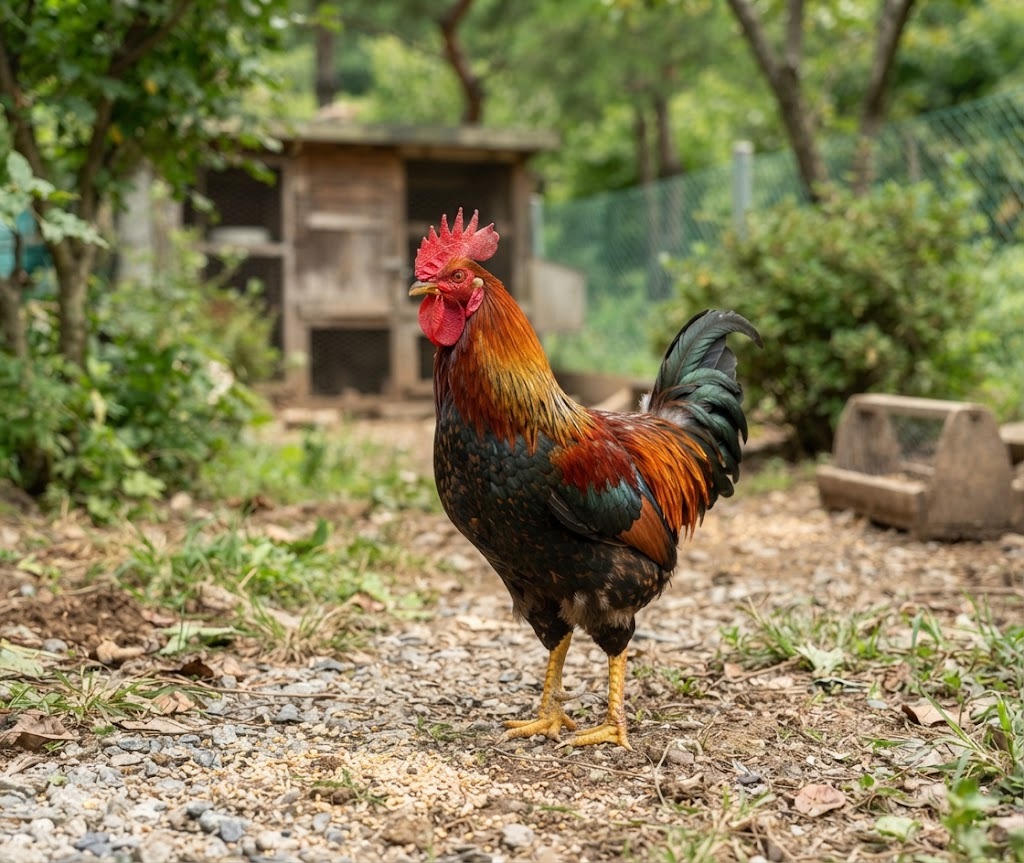
Chickens are the representative poultry with the fastest production cycle in the Korean livestock industry, and they possess completely different industrial structures depending on their production purpose, such as laying hens, broilers, breeders, and native chickens. Since the core functions of laying hens are egg production, broilers are chicken meat production, and breeders are the supply of chicks and hatching eggs, productivity standards and buyers differ even within the same 'chicken' species.
MarketHub does not view chicken simply as chicken meat or egg products. It connects the entire supply chain from breeder chickens → hatching eggs → hatching → chicks → feed and rearing → laying or fattening → disease and quarantine → eggs and chicken meat → processing and distribution → to the Buyer.
Judgment axis | Key points |
| Main types | Laying hens, broilers, breeding chickens, native chickens |
| production core | Hatching, rearing, feed, egg laying rate, weight gain, mortality |
| Major risks | Highly pathogenic avian influenza (HPAI) |
| Main Products | Eggs, chicken meat, hatching eggs, chicks |
| quality | Weight, Grade, Cracks, Meat Quality, Refrigerated, Frozen |
| market | Eggs, chicken, dining out, school meals, processed food |
| AX | Feed, Environment, Weight, Laying, and AI Quality Assessment |
| RFQ | Chicks · Hatching Eggs · Feed · Eggs · Chicken Meat · Buyer |
| Final goal | Reduction of production losses and establishment of a stable supply chain |
In 2026, the impact of highly pathogenic avian influenza was directly felt in the supply and demand of eggs and chicken. The Ministry of Agriculture, Food and Rural Affairs explained that as of June, the culling of laying hens reached 11.34 million, and daily egg production stood at 47.05 million, a 3.3% decrease from the previous year. ( Mafra )
Although chickens are a single livestock species, in the actual industry, they must be viewed separately as laying hens, broilers, breeders, and native chickens. According to the Livestock Trends Survey for the fourth quarter of 2025, there were approximately 81.63 million laying hens and 62.44 million broilers, and breeders are also managed as a separate production base. ( KOSIS )
Chickens produce more than just chicken meat and eggs. Hatching eggs, chicks, carcasses, meat parts, and edible by-products each become distinct Product Entities, and MarketHub links them under a single Chicken Master.
division | Main purpose | major products |
| laying hens | Egg production | edible eggs |
| broiler chicken | Meat production | chicken |
| breeding chickens | breeding | hatching eggs and chicks |
| native chicken | Meat and breeding | Livestock · Chicken |
| Samgye | Samgyetang, etc. | small chickens |
| by-product | Processing and Industry | Internal organs, feathers, etc. |
The basic structure is managed as Chicken → Production Type → Production Stage → Egg/Meat/Chick → Buyer .
In the case of chickens, it is practically important to distinguish the production purpose before the breed. For laying hens, egg production and laying rate are key; for broilers, weight gain rate and feed conversion ratio are important; and for breeders, fertilization rate, hatching rate, and chick quality are crucial.
Even for the same type of chicken, the feed, rearing period, facilities, and buyers all differ depending on the production purpose. Therefore, MarketHub first classifies production types—laying, meat, breeding, and native—and then connects them to the specific Breed/Line.
division | example | On-site management |
| livestock species | chicken | Chicken |
| Production type | Laying hens, broilers, and breeders | Farm purpose |
| Variety/Lineage | Commercial lineage · Native lineage | Genetics and Growth |
| production stage | Chicks, growing, laying, fattening | Step Management |
| product | Eggs, chicken, hatching eggs | Quality and Standards |
| Buyer | Food, dining out, hatching, distribution | Purchase conditions |
The basic structure is livestock type → production type → system → production stage → product → buyer .
Because chickens have a short production cycle, even small differences in management quickly translate into differences in performance. For broilers, feed efficiency, weight gain, and mortality rate are important, while for laying hens, egg laying rate, egg weight, feed intake, and production age are key.
For breeder chickens, fertilization and hatching rates are added to this. Since chick quality in the actual supply chain can affect the subsequent productivity of broiler and laying hen farms, the entire process from breeder chickens to hatching eggs, hatcheries, and chicks must be managed together.
Management area | Things to see at a farm |
| breeding chickens | Fertilization rate, laying, hatching eggs |
| hatching | Hatching rate and chick quality |
| feedstuff | Intake and feed prices |
| broiler chicken | Weight gain, FCR, and shipping age |
| laying hens | Laying rate and egg weight |
| health | Deaths, Diseases, Vaccines |
| environment | Temperature, humidity, and ventilation |
| expense | feed, energy, and labor costs |
The importance of breeding hens and hatching eggs was confirmed in the 2026 broiler supply and demand forecast. As a decrease in broiler supply was anticipated due to HPAI, the Ministry of Agriculture, Food and Rural Affairs supplemented the supply through measures such as importing broiler hatching eggs and extending the production age. ( Mafra )
In the chicken industry, it is difficult to separate quality from disease control. This is because an outbreak of highly pathogenic avian influenza can affect not only culling but also the entire supply of hatching eggs, chicks, chicken eggs, and chicken meat.
In particular, farms can be exposed to various risks such as external vehicles, people, feces, and wild birds, making biosecurity and movement management crucial. MarketHub connects farms, poultry houses, flocks, feed lots, and egg/meat lots to enable tracking in the event of an issue.
step | Key Management |
| Standing | Chicks · Hatchery · Lot |
| breeding | Feed, Environment, Weight |
| spawning | Egg Laying Rate · Egg Lot |
| Disinfection | HPAI·Vaccine·Disinfection |
| shipment | Farm, Vehicle, Job |
| Dogye | Conductor/Inspection |
| Selection | Egg Grades · Cracks |
| circulation | Packaging · Refrigeration · Buyer |
The government identified the culling of laying hens due to HPAI, wasting diseases, and reduced production as the primary causes of the egg price increase in 2026. Therefore, in chicken RFQs, diseases must be managed as a Supply Risk Runtime rather than merely as reference information. ( Mafra )
The chicken industry does not operate solely through farms. Breeder farms, hatcheries, feed companies, broiler farms, laying hen farms, slaughterhouses, egg collection centers, processing companies, restaurants, catering services, and distribution companies are all connected in a single vertically integrated supply chain.
In Korea, supply stability is particularly important because both chicken and eggs have established bulk, repeat purchase markets. Buyers consider not only price but also specifications, quality, delivery times, and the ability to maintain a consistent supply.
Participants | Things needed | Possibility of cooperation |
| chicken farm | Breeding stock, feed, and disease control | Breeding RFQ |
| hatchery | Hatching eggs and hatching rates | Chick Supply |
| broiler farm | Chicks, feed, and shipment | Production RFQ |
| laying hen farms | Chicks, feed, and sales channels | Egg RFQ |
| Poultry slaughterhouse | stable shipment | Processing |
| Egg collection | Quality and quantity | Egg Supply |
| Food & Dining | Standard and regular supply | Buyer RFQ |
| import and export companies | Volume and Quarantine | Trade RFQ |
In July 2026, the volume of voluntary grading by the Korea Animal Products Quality Evaluation Institute was 9,337,000 chickens and 131,344,000 eggs . By the same standard, chickens decreased by 6.1% and eggs increased by 2.2% compared to the same month of the previous year; it should be noted that these figures represent the grading volume, not the total production volume. ( Korea Animal Products Quality Evaluation Institute )
The chicken supply chain begins with breeding hens and hatching eggs, continuing through hatcheries, farms, slaughterhouses, and processing plants. Eggs have a different supply chain from chicken meat because they move from laying farms to sorting, packaging, collection, and distribution.
In international trade, live livestock, hatching eggs, fresh eggs, poultry, and processed products must be distinguished. Since quarantine conditions by country, region, and product may vary depending on the HPAI outbreak situation, the latest conditions must be reconfirmed based on the destination country and product type once an actual RFQ is received.
Chicken Supply Chain
Breeder → Hatching Egg → Hatching → Broiler Farm → Shipment → Slaughter → Processing → Buyer
Egg Supply Chain
Laying Hens → Egg Collection → Sorting/Grading → Packaging → Distribution → Buyer
Confirmation area | Main contents |
| fertilized eggs | Lineage, Modification, Quarantine |
| chick | Hatching, Health, and Quantity |
| egg | Size, Grade, Packaging |
| chicken | Carcass · Part · Refrigeration · Freezing |
| Quarantine | HPAI · National Conditions |
| trade | HS·Customs·FTA |
| distribution | Refrigeration, Freezing, Delivery Time |
| Buyer | Specifications, Quantity, Price |
The case of the government simultaneously pursuing the import of fresh eggs and broiler hatching eggs in 2026 demonstrates that hatching eggs, chicken eggs, and chicken meat are distinct Product RFQs yet are connected within a single supply chain . ( Mafra )
Chicken products do not end with just eggs and whole chickens. Chicken meat is categorized into breast, legs, wings, boneless meat, and raw materials for processing, while eggs also have distinct buyer markets for general consumption, liquid eggs, processing, and hatching eggs.
PRP is a process of verifying whether the chickens or eggs produced by a farm meet the specifications desired by the buyer. If the shipping weight of broilers or the egg size and breakage rate of laying hens do not meet the buyer's conditions, competitiveness in the market may be low even if productivity is high.
product | Main uses |
| fertilized eggs | hatching |
| chick | Broiler and laying hen production |
| egg | Retail, food service, and processing |
| Liquid egg | Food manufacturing |
| Whole chicken | Retail and Food Service |
| Partial meat | Food & Dining |
| processed meat | Convenience food · Ingredients |
| by-product | Feed and industrial materials |
Key PRP questions include whether the hatch rate can be increased, whether the broiler FCR can be lowered, whether slaughter weight variation can be reduced, whether the laying rate and breakage rate can be improved, and whether the specifications for eggs and meat cuts required by the buyer can be stably supplied .
Chickens are a livestock species where data at the house or flock level is more valuable than data from individual chickens. By continuously measuring feed intake, water consumption, temperature and humidity, body weight, mortality, and egg-laying rates, anomalies can be detected quickly.
The application of AI to egg quality is already underway. The Korea Animal Products Quality Evaluation Institute has pushed for the field trial application of quality evaluation equipment utilizing Vision AI by 2026 to analyze egg appearance and cracking, and to automatically sort eggs in real-time according to grading standards. ( Korea Animal Products Quality Evaluation Institute )
Apply AX | Farm and business effects |
| Food and water sensors | Early detection of abnormalities |
| Automatic weight | Broiler growth verification |
| environmental sensor | Temperature, humidity, and ventilation management |
| Spawning Runtime | Production volume forecast |
| Video AI | Check behavior and density |
| AI egg inspection | Automatic judgment of cracks and appearance |
| Shipment forecast | Improvement of provincial boundary planning |
| Buyer Matching | Connecting sales channels by standard |
The key is recording → anomaly detection → production volume forecasting → shipment and supply planning → connecting to the Buyer .
The poultry industry has a short production cycle, but supply shocks manifest quickly. If breeder hens or laying hens are culled due to HPAI, it can have a chain reaction affecting the supply of chicks, eggs, and chicken meat several months later.
Furthermore, internal farm issues and industrial structural problems coexist, including heatwaves, feed prices, stocking density, disease, and vertical integration contract conditions. Therefore, the Problem Bank must examine farm productivity and market supply and demand simultaneously.
problem | Data to verify |
| HPAI | Occurrence, Culling, Movement |
| chick shortage | Breeder chickens, hatching eggs, hatching |
| Decrease in egg laying rate | Age, disease, feed |
| FCR deterioration | Feed, weight gain, environment |
| Dead | Temperature, disease, density |
| Eggshell | Facility/Sorting |
| heatwave | Temperature, drinking water, and mortality |
| feed costs | Price and intake |
| Supply and demand fluctuations | Poultry and egg production |
| outlet | Specifications · Buyer |
The government's implementation of supply and demand supplementary measures in 2026, such as additional imports of fresh and broiler hatching eggs and tariff quotas, demonstrates that poultry farming issues could extend beyond individual farms to become a national supply chain problem. ( Mafra )
A chicken RFQ is not limited to farms selling chicken meat or eggs. It may also include requests to procure hatching eggs, chicks, and feed, or to find partners for poultry slaughter, egg sorting, processing, OEM, and regular supply.
In particular, since poultry farming is an industry with a high proportion of vertical integration, it is important to verify not only production capacity but also hatching, feed, slaughtering, processing, and distribution capabilities. Price, contract terms, and farm performance are managed at the Verified/NDA stage.
RFQ Type | Collaboration Examples |
| fertilized eggs | Meat, egg-laying, native |
| chick | Standing/Supply |
| feedstuff | Broilers, Laying Chickens, and Breeders |
| broiler chicken | Livestock and Shipment |
| egg | Supply by grade and size |
| chicken | Whole chicken · Chicken parts |
| process | OEM·ODM |
| Regular supply | School Meals, Dining Out, Food |
| Import and export | Hatching eggs, chicken eggs, and chicken meat |
| AX Pilot | Environment, Growth, Quality |
MarketHub connects not only the farm → processing → buyer but also the upstream supply chain from breeder/hatcher → farm via RFQ.
MarketHub Livestock Library does not stop at providing information about chickens and eggs. It is structured to connect farms, companies, and buyers with producers and companies capable of actual supply, after they first register the hatching eggs, chicks, feed, eggs, chicken meat, and processing conditions they need.
Since chickens have a short production cycle and rapid changes in supply and demand, RFQ information must also be managed as a runtime. In particular, it is important to quickly address upstream supply issues, such as shortages of hatching eggs and chicks.
① Find products/raw materials.
Need Products & Materials
Companies and institutions seeking necessary hatching eggs, chicks, chicken eggs, poultry, feed, and processed raw materials register their purchase demands. MarketHub reviews available producers and companies by verifying production type, specifications, quantity, region, and delivery conditions.
RFQ Registration → Supply Condition Review → Connecting Producers and Companies → AI Matching
Register
② We are looking for production and manufacturing partners.
Need Suppliers & Manufacturers
We are seeking necessary production and manufacturing partners, including breeder farms, hatcheries, broiler and laying hen farms, slaughterhouses, egg sorters, meat processors, and OEM and ODM companies. We review production capacity, disease prevention, quality, and the feasibility of a sustainable supply.
RFQ Submission → Production & Manufacturing Capability Review → Partner Connection → AI Partner Matching
Register
③ We are looking for domestic and international buyers.
Need Buyers
Farms and production companies seek new buyers, including food service, catering, restaurant, distribution, and import companies. We verify product specifications, quantity, quality, and delivery times to connect them with suitable buyers.
RFQ Submission → Product & Supply Capability Review → Buyer Connection → AI Buyer Matching
Register
Contact : mail@markethub.org
Due to the large population of chickens, managing every single chicken individually is not realistic. Except for areas requiring individual management, such as breeding stock, it is more efficient to manage data at the farm, coop, flock, and lot levels.
By connecting this data to hatching eggs, hatcheries, feed, slaughterhouses, and egg lots, it is possible to identify at which point in the supply chain productivity issues occurred, from the chick stage to the final product.
Dataset | Simply put |
| Master | Chicken Type and Product Standards |
| Entity | Farm · Chicken House · Flock · Company · Buyer |
| Relationship | Hatching eggs, feed, poultry slaughter, and products linkage |
| Runtime | Spawning, body weight, mortality, price, disease |
The representative structure is as follows.
Breeder → Hatching Egg → Hatchery → Chick Lot → Farm/Poultry House → Feed/Environment → Laying/Fattening → Egg/Chicken Lot → Buyer
Disease Runtime is separate:
HPAI Outbreak → Farm/Region → Culling/Movement Restrictions → Impact on Hatching Egg, Chicken Egg, and Chicken Meat Supply
Connect up to.
Because chickens are a livestock species subject to rapid fluctuations in population, production volume, disease, and prices, managing sources and reference dates is particularly important. This registered edition was compiled by first verifying 2026 supply and demand and HPAI data from the Ministry of Agriculture, Food and Rural Affairs, the National Livestock Trend Survey, and the July grading statistics from the Korea Animal Products Quality Evaluation Institute. ( KOSIS )
Furthermore, total production volume and graded volume, as well as current and projected values, are not mixed. For example, the figure of 9,337,000 chickens in July 2026 refers to the volume voluntarily graded by the Korea Animal Products Quality Evaluation Institute, not the total number of chickens slaughtered nationwide. (Korea Animal Products Quality Evaluation Institute )
Evidence | source |
| A | Government · Official Statistics · WOAH |
| B | Papers · Research Institutes |
| C | Association/Verification Industry Data |
| D | Corporate and Market Data |
| E | Additional verification needed |
Key factual basis
- Statistics Korea 4th Quarter 2025 Livestock Trends Survey — Laying hens approx. 81.63 million, broiler chickens approx. 62.44 million, and detailed structure of breeder stock. ( KOSIS )
- Ministry of Agriculture, Food and Rural Affairs, June 2026 — 11.34 million laying hens culled due to HPAI and other factors, daily egg production 47.05 million. ( Mafra )
- Ministry of Agriculture, Food and Rural Affairs May 2026 — Pushing for additional imports of 20 million fresh eggs and 9 million broiler hatching eggs. ( Mafra )
- Korea Animal Products Quality Evaluation Institute, July 2026 — 9,337,000 chickens voluntarily graded, 131,344,000 eggs. (Korea Animal Products Quality Evaluation Institute )
- Korea Animal Products Quality Evaluation Institute, July 2026 — Conducting field trials for automated egg appearance and crack detection assessment and sorting technology utilizing Vision AI. (Korea Animal Products Quality Evaluation Institute )
Version History
Version | Main contents | situation |
| v1.0 | First registration based on the latest 2026 data on laying hens, broilers, HPAI, supply and demand, and AX | complete |
| v1.1 | Price, Slaughter, Import/Export, and Quarantine Runtime Subdivision | expected |
| v2.0 | Breeder, Hatchery, Feed, Laying, Slaughterhouse PRP Connection | expected |
| v3.0 | Farms · Hatcheries · Processing Companies · Buyer Verified Matching | expected |