


Analysis Region: 16 districts and counties of Busan Metropolitan City
Core Areas: Autonomous ships, marine satellites, ocean observation, smart ship repair, maritime safety, marine robots, marine biotechnology, marine data
Agenda: Has Busan's marine and AI convergence business developed into an independent industry characterized by repeatable products, customers, contracts, revenue, and employment, moving beyond R&D, facilities, and demonstrations?
Golden Time Type: Ocean AI Convergence Opportunity + Commercialization Gap
Assessment Current Period: 2026–2029
Reference Date: August 28, 2026
Version: Regional AX Golden Time Intelligence v3.2 Enhanced Criteria
Final Assessment: Presence of technology, expansion of demonstrations, non-formation of independent industry
In June 2026, Busan launched BusanSat, the first ocean observation nanosatellite launched by a local government, and successfully established two-way communication with the ground. BusanSat observes fine dust levels and sea surface conditions in Busan Port, the West Sea of the Korean Peninsula, and the Pacific Ocean, operating a data collection, processing, and distribution system linked to the NASA network. This serves as evidence that Busan has entered the ranks of independent ocean data producers, shifting from a structure that relied solely on the central government and foreign satellites for ocean observation data. ( Busan Metropolitan City , Busan City SNS )
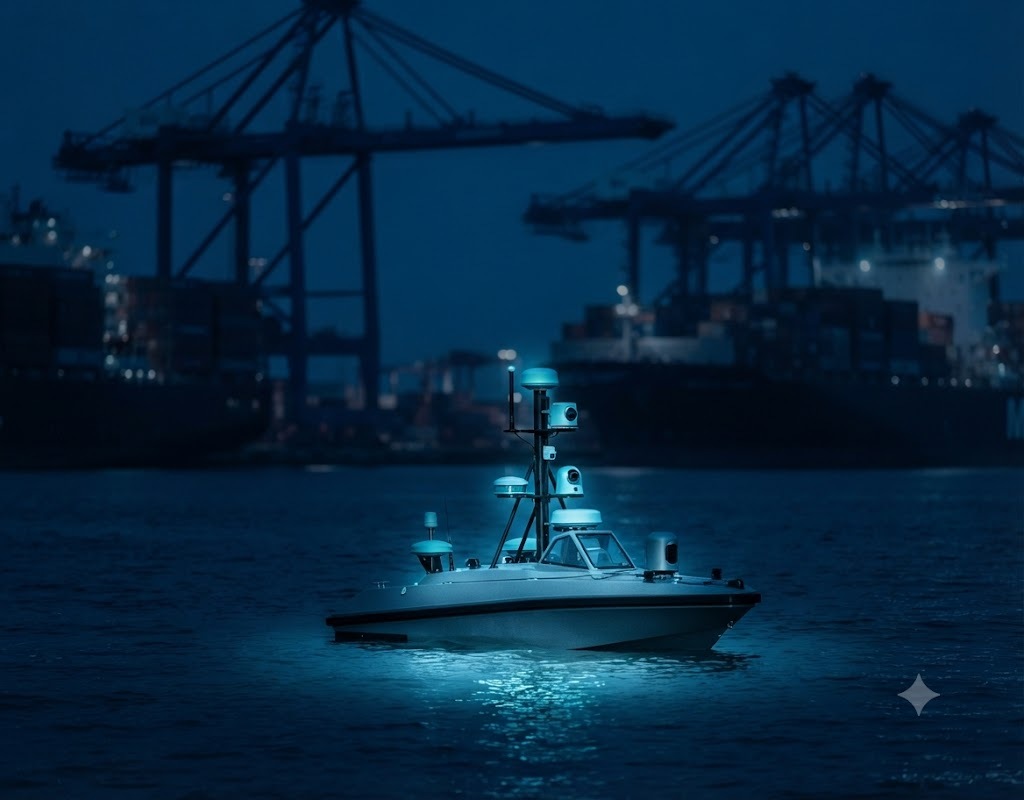
Autonomous ships have also shifted from the R&D stage to the data industry phase. The government has launched the Autonomous Ship AI Data Platform project, with a total budget of 34.606 billion KRW for the period 2026–2029 . The structure involves standardizing sensor, navigation, and engine data collected from actual seas to develop AI models for collision avoidance, route optimization, and fault prediction. While Busan possesses a marine industry cluster, actual seas, ports, and research institutions, the data rights and commercial service areas secured by Busan companies within this national data platform have not yet been confirmed. ( Ministry of Oceans and Fisheries )
In Yeongdo, the Smart Ship Repair Support Center opened in 2024, installing 69 units of 27 types of smart equipment, and supported digital transformation for 15 companies in 2025. The Busan Port Authority expanded demonstration and investment linkages for eco-friendly and AI-based maritime and port startups in 2026, and companies supported by "1876 Busan" recorded average increases of 78% in revenue, 26% in employees, and 48% in intellectual property rights in 2025. It is not that early-stage maritime AI companies and demonstration infrastructure are absent. ( Busan Metropolitan Council Business Plan , Busan Port Authority )
However, evidence linking corporate usage contracts for Busan Sat Data, revenue from Busan companies utilizing autonomous navigation AI models, recurring deliveries of smart ship repair technology, and industry-specific revenue and exports of marine AI companies has not been confirmed. While the combination of marine and AI exists in project names and technology demonstrations, it is not captured as a single industry classification or recurring market.
If Busan companies fail to secure initial customers and data rights while data standards and global certification systems for marine satellites, autonomous vessels, and smart ship repair are finalized between 2026 and 2029, industrial leadership will revert to offshore shipbuilding, platform, and satellite companies, even if R&D remains. Although Busan's marine AI exists as a technological group, it does not yet exist as an independent regional industry.
The launch of Busan Sat, the demonstration of autonomous ships, the operation of the Smart Ship Repair Support Center, and support for marine AI startups have all entered the implementation phase. Busan City solicited new research and development and demonstration projects for new marine industries in 2025, and expanded the scope of support to include smart port equipment and digital service infrastructure in 2026.
While technology and facilities are identified across multiple sectors, marine AI industry statistics combining the number of purchasing firms by product, private sales, recurring contracts, exports, and employment are not available. Individual businesses exist, but it is not determined whether they form the same supply chain and customer market.
Even if research projects and public demonstrations continue for two to three years, if repeat purchases by private customers are not formed, corporate revenue ends along with the termination of the project. Busan's marine AI exists as a portfolio of policy projects, but it has not yet formed as a self-sustaining market.
Busan is home to a concentration of facilities including Busan Port, Korea Maritime University, the Korea Institute of Ocean Science and Technology, the Korea Hydrographic and Oceanographic Agency, the Korean Register of Shipping, shipbuilding and repair companies, and sites that produce actual navigation, maintenance, and port data. With the launch of Busan Sat in 2026, assets that directly produce maritime, port, and atmospheric data have been added.
The unit of competition in marine AI has shifted from the number of research institutions to an industrial network connecting real-sea data, demonstration vessels, certification bodies, and purchasing companies. While Busan is advantageous for data production and field verification, there is no evidence that data from research institutions and companies has been combined into a single commercial learning environment.
If data access conditions by institution and model development rights for companies are separated, the effects of aggregation are limited to joint events and research agreements. If the national data platform and private ship platforms finalize separate standards between 2026 and 2029, the aggregation of institutions in Busan will not translate into industrial leadership.
Busan has concentrated physical assets for marine AI, but its industrial connectivity assets remain incomplete.
The government's AI data platform for autonomous ships is structured to collect sensor, navigation, and engine data and utilize it in collision avoidance, route optimization, and fault prediction models. Busan Saetdo also converts satellite observations into data for atmospheric environment, sea surface, and climate analysis. The assets input into the maritime industry have expanded from ships, ports, and equipment to data and AI models.
The sales cycle of products has also changed. While revenue from ships and equipment is generated at the time of construction and delivery, AI models generate recurring revenue from update, subscription, and prediction services during operation, maintenance, and observation periods. The industry's revenue focus is shifting from construction costs and equipment prices to data services covering the entire operation period.
Marine AI subscription revenue, software revenue per vessel, data license revenue, and model update contracts of Busan companies are not confirmed in industrial statistics. If major shipbuilding companies and global marine equipment manufacturers bundle and sell navigation software within two to three years, the entry space for independent solutions from Busan SMEs will shrink.
Busan's marine industry is shifting toward a data-based revenue structure, but the revenue structures of local companies do not support this shift.
The government will invest 30 billion won in state funds and 4.606 billion won in private capital into the autonomous ship AI data platform from 2026 to 2029. This project involves collecting and standardizing actual operational data for collision avoidance, route optimization, and fault prediction, and developing it into an AI model.
The Busan Metropolitan Council's 2026 work report highlighted a gap in autonomous navigation capabilities, noting that while large merchant vessels are advancing toward Level 3, small and medium-sized ships struggle to reach even basic autonomous operation stages. The autonomous navigation market is structured to be divided between large shipbuilding and shipping companies and regional small and medium-sized vessels. ( Busan Metropolitan Council )
The number of autonomous navigation systems applied to small and medium-sized vessels in Busan, commercial operating hours, insurance and classification society certifications, purchase contracts, and maintenance revenue are not confirmed. When International Maritime Organization standards and classification society certifications are finalized between 2026 and 2029, market entry costs for regional solutions without a certification history will skyrocket.
Busan's autonomous ship industry exists as a subject for national R&D and regional demonstration, but it is not considered a commercial market for Busan companies.
Busan SAT was successfully launched and established two-way communication in 2026, and will observe the atmosphere and sea surface of Busan Port, the West Sea, and the Pacific Ocean for about one year. It analyzes fine dust particles and sea surface conditions using polarization camera technology, and data operations linked with the NASA network have begun.
Busan has shifted from a user of external marine data to a producer of its own observation data. However, data production itself is separate from industrialization. Customer markets and revenue are formed when data is processed into products for ship navigation, port safety, aquaculture, insurance, climate risk, and pollution detection.
The number of local companies using Busan Sat data, API call volume, paid data contracts, developed commercial services, and revenue cannot be verified. If corporate utilization is not established within the observation period, the satellite will remain merely a means of producing research and administrative evidence, and the connection between subsequent satellite investment and industrial demand will weaken.
Busan Sat proved the start of marine data production but failed to prove the existence of the marine data industry.
The Smart Ship Repair Support Center, which opened in Yeongdo in 2024, is equipped with 69 units of 27 types of eco-friendly and smart equipment, and in 2025, it supported the shared use of equipment and the digital transformation of 15 companies. In 2024, Busan City selected 45 cases involving 33 small and medium-sized shipbuilding companies in Yeongdo as beneficiaries of support.
The ship repair industry is shifting from a labor-intensive sector that performed inspections, cleaning, parts replacement, painting, and performance diagnostics after a ship's arrival to one centered on 3D scanning, remote inspection, predictive maintenance, and digital work management. As AI determines the likelihood of failure and the timing of maintenance, ship repair transactions expand from post-repair to long-term ship management.
However, changes in process time, cost, safety, revenue, and overseas ship orders of supported companies, as well as AI-based ship management contracts, are not verified. If the use of shared equipment remains for 2 to 3 years, the center will remain merely an equipment support facility, and the companies' own data and revenue from recurring services will not be generated.
Busan Smart Ship Repair has secured facilities and participating companies, but the transition of the industrial revenue model has not been confirmed.
In Busan's smart logistics R&D, technologies such as port geofence safety management, unmanned forklifts, and integrated virtual reality monitoring were filed as patents. In 2026, there was also a case of a Busan port startup expanding overseas that developed an AI robot to inspect underwater structures instead of divers.
The maritime safety industry is shifting from post-accident recovery and manpower deployment to continuous diagnosis utilizing video, sensors, robots, and AI. The structure is such that as inspection data for ports, vessels, bridges, and underwater facilities accumulates, model accuracy improves and a market for repetitive periodic inspections is formed.
However, there is no combined evidence regarding the number of commercial deployments at Busan Port by technology, inspection contracts, insurance premium reductions, accident reductions, and overseas sales. If public demonstrations do not lead to standard inspection contracts within two to three years, AI safety technology will remain at the pilot equipment level, and the existing human inspection method will be maintained.
While product examples for Busan maritime safety AI exist, the repeat market and industry scale have not been confirmed.
Busan simultaneously possesses ocean observation satellites, real-sea environments for autonomous navigation, smart ship repair equipment, port testbeds, and classification societies and research institutions. The physical conditions for developing and verifying marine AI are concentrated at the highest level in the country.
However, an industry baseline integrating the list of marine AI companies, revenue by sector, data access rights, certification history, and post-demonstration contracts is not identified. Assets have been aggregated, but the transactional relationships between them are not measured.
If each institution accumulates its own data through projects from 2026 to 2029, companies will repeatedly develop the same technology according to each institution's specifications, and the speed of industrial expansion will slow down. Busan's level of readiness is strong in research and demonstration infrastructure, but its readiness for market formation is low.
The Smart Ship Repair Support Center selected 45 cases from 33 companies in 2024 and supported the digital transformation of 15 companies in 2025. 1876 Busan also supported 12 shipping and port startups in 2026, operating technology demonstrations and investment linkages.
However, the percentage of all marine, shipbuilding, and port companies in Busan that have actually applied AI to their processes and products has not been verified. The diffusion rate between the number of supported companies and the total number of companies in the industry is also not disclosed.
If support remains limited to a small number of companies for two to three years, the productivity gap between companies adopting AI and existing repair, ship supply, and marine service firms will translate into a transaction gap. While the spread of marine AI among companies is observed in the leading group, it has not been confirmed across the Busan marine industry as a whole.
Busan City solicited new R&D and demonstration projects for new marine industries in 2025 and included AI and digital-based new marine industries in its work plan for 2026 as well. The Busan Port Authority and the Busan Institute of Technology also jointly operated demonstration and investment linkages for eco-friendly and AI-based startups.
However, publicly available results tracking subsequent private investment, first buyers, repeat sales, exports, and Busan retention rates of companies that completed research projects are limited. The conversion rate between R&D expenses and corporate revenue has not been verified.
If dependence on public R&D is maintained over the next two to three years, corporate customers will be fixed to support organizations rather than shipping or shipbuilding companies. While marine AI R&D in Busan continues to expand, its expansion into the private market remains undecided.
12-1. Yeongdo-gu — The Combination of Ship Repair and AI
Yeongdo-gu is home to a concentration of small and medium-sized ship repair, ship repair, and marine supply companies, and the Smart Ship Repair Support Center operates 69 pieces of equipment of 27 different types and a foundation for shared use by companies. The Ship Repair Innovation Technology Center is also being established with a total project cost of approximately 24.5 billion won from 2022 to 2026.
However, the percentage of companies using shared equipment that possess their own AI maintenance products, prediction models, and remote services has not been confirmed. A gap remains between facility investment and local companies' acquisition of independent technology.
If ship maintenance data becomes concentrated in large equipment manufacturers and ship management platforms within two to three years, Yeongdo Enterprises will be unable to control diagnosis and customer contracts, even if they perform on-site work. Yeongdo Ship Repair has started using smart equipment, but it has not yet established itself as a smart maintenance industry.
12-2. Busan Sat — Separation of Data Production and the Enterprise Market
Busan SAT successfully launched and established communication in June 2026, and began directly collecting data on marine fine dust, sea level, and climate. A structure in which local governments produce independent marine observation data has become a reality.
However, Busan companies that use this data to sell services for navigation forecasting, pollution detection, aquaculture, disaster management, and insurance are not identified in the publicly disclosed performance results. Data operation and corporate commercialization remain at different stages.
If commercial users are not formed during the initial observation period of about one year, subsequent satellites will be designed primarily for administrative and research purposes, and the corporate market will be excluded from the determination of data specifications. Busan SAT is a scarce asset of Busan's marine AI, but it is not yet a market asset for local companies.
Busan is home to a concentration of universities and research institutions related to marine, shipbuilding, and ports, and is providing education and startup support for autonomous navigation, smart ports, and marine data. The application of AI has also expanded to job functions including navigation, engines, maintenance, observation, safety, and port operations.
However, the number of personnel trained to handle both marine domains and AI, local company employment rates, 3-year retention rates, wages, and project participation records are not verified. The connection between the curriculum and actual job demand is also not determined.
If commercial projects by local companies do not increase within two to three years, trained personnel will move to platforms, large shipbuilding companies, and research institutions in the capital area, and small and medium-sized enterprises in Busan will rely on external solutions. Although Busan has a strong marine talent base, the marine AI job market remains underdeveloped.
Busan SAT will conduct initial observations for about one year, and the autonomous ship AI data platform will be operated from 2026 to 2029. The commercialization results for the smart ship repair and port demonstration projects will also be determined during the same period. This is a phase where data, certification, and purchasing specifications for multiple technologies are formed simultaneously.
Evidence linking data rights, model ownership, international certifications, and first purchase agreements for Busan companies is still lacking. There is a gap between the speed of technology development and the speed of market entry.
If global shipbuilding, equipment, and satellite platforms secure data and classification society certifications first, latecomers will be responsible for compatible modules and subcontracted analysis rather than proprietary products. After 2029, accumulated operational data and certifications will act as barriers to entry.
Busan's irreversibility lies not in the inability to develop marine AI technology, but in the fact that the data and certification markets are established before the developed technology gains market share.
AX Response System | Connection Evidence | Judgment function | 2026–2029 Assessment Criteria |
| Ocean AI Industry Graph | Technology · Company · Data · Demonstration · Certification · Buyer | Determination of separation between business groups and actual industries | Number of supply chains with established recurring transactions |
| Busan Saet Data-to-Market Runtime | Observation · API · Company · Product · Customer · Revenue | Tracking the industrial transformation of satellite data | Revenue from paid user companies and services |
| Autonomous Ship Evidence Twin | Ships, sailing times, AI models, classification societies, insurance | Assessment of the commercial viability of autonomous navigation technology | Certified Vessels · Commercial Operating Hours |
| Smart Repair Lifecycle | Arrival · Inspection · Diagnosis · Maintenance · Re-entry | Verification of the transition from reactive repair to predictive maintenance | Long-term ship management contract amount |
| Ocean AI R&D Ledger | Budget, Patent, Demonstration, Investment, Delivery, Export | Tracking R&D market conversion rates | Private sales and repeat purchases by project |
| Marine Data Rights Director | Creation, processing, learning, ownership, distribution, revenue | Regional Data Sovereignty Decision | Busan corporate data and model rights rate |
| Marine AI Job Monitor | Education, Job, Recruitment, Wages, and Seniority | Connecting talent development with industrial demand | Local employment and 3-year retention rate |
| Golden Time Dashboard | Technology, Companies, Markets, Data, Talent | Calculation of New Industry Existence Grade | Research, demonstration, market, and industrial stages |
AX Response Assessment: Unless marine AI businesses are merely aggregated by technology sector and linked to company-specific products, data rights, certifications, purchase agreements, and recurring revenue, the existence of the new industry remains merely an estimation.
Current Assessment: Marine AI Technology Exists, Demonstration Expanded, Independent Industry Not Formed
2-Year Determination: The period in which the first commercial market for satellite, autonomous navigation, and ship repair data is determined.
3-Year Assessment: The stage where platform dependency becomes entrenched for local companies that failed to secure certification and accumulated data.
Firm Assessment: Leading firms and startups exist, but the revenue group of the entire industry is unidentified.
Market Assessment: Public R&D demand exists, but the private repeat purchase market is unassessed.
Determination of Irreversibility: Costs of re-entering as an independent provider skyrocket after losing data, authentication, and initial customers.
Overall Assessment: While marine AI technology exists in Busan, it is difficult to determine that a marine AI industry exists yet.
- Number and Survival Rate of Busan Marine AI Companies by Sector
- Marine AI Product and Service Sales by Company
- Conversion rate of public R&D expenditure to private sales
- 3-Year Survival and Growth Rate After Research Project Completion
- Registration, commercialization, and export rates of marine AI patents
- Busan Saet data collection volume and valid data ratio
- Busan Saet API User Companies, Organizations, and Call Volume
- Satellite data-based paid products and contract amounts
- Number of autonomous ships in Busan demonstration project
- Cumulative autonomous flight hours and number of accidents/interventions
- Number of local companies that have secured advance, insurance, and regulatory certifications
- Accuracy of collision avoidance, route optimization, and fault prediction models
- Access rate of Busan companies to the marine data platform
- Companies using smart ship repair equipment and repeat usage rate
- Changes in Process Time, Cost, and Revenue of Digitally Transformed Companies
- AI Predictive Maintenance and Long-term Ship Management Contract Amount
- Number of commercial deployments of marine robots and safety technologies at Busan Port
- Conversion rates of procurement, delivery, and export after the demonstration
- 1876 Busan Corporate Investment, Sales, Employment, and Local Retention Rate
- Regional employment rate of marine AI majors and education graduates
- Salaries and 3-Year Residency Rates by Marine AI Job
- Joint contract between global shipbuilding and shipping companies and Busan companies
- Ownership and profit sharing of data, models, and algorithms
- Private sales retention rate after termination of public support
Technological convergence is achieved by equipping ships with AI, launching satellites, and applying digital equipment to ship repair. However, if buyers remain limited to research institutions and public projects and no private revenue is generated for companies, that convergence remains merely a cost for research and demonstration rather than an industry.
A new industry is formed not the moment a new technology name is coined, but the moment multiple customers with the same problem repeatedly purchase the same product. Marine AI becomes an independent market when shipping companies subscribe to operational optimization, shipowners contract for predictive maintenance, insurers purchase risk data, and ports sign contracts for regular inspections of underwater robots.
Busan's current gap lies in the lack of first buyers and repeat contracts, rather than a lack of technology. If Busan SAT, autonomous navigation, and smart ship repair each end up as public projects, the technology will remain, but the industries will be fragmented.
The existence of Busan's marine AI is determined not by the number of convergence technologies, but by whether paying customers remain even after public demonstrations are completed.
Judgment point | Confirmed Evidence | Risk level | verdict |
| 2020~2023 | Expansion of R&D in New Marine Industries, Smart Logistics, Autonomous Navigation, and Marine Data Businesses | caution | Technology exploration and entry into demonstration |
| 2024 | Opening of Smart Ship Repair Support Center, Expansion of Marine Mobility Demonstration Base | Caution~Alert | Securing facility infrastructure, marketability unconfirmed |
| 2025 | Call for Proposals for New Marine Industry Projects, Support for 33 Ship Repair Companies Evidence | boundary | Increased corporate participation, non-determination of recurring sales |
| 2026 | Busan Saet Launch and Communication, Launch of Autonomous Navigation AI Data Platform | boundary | Independent data production, early industrialization |
| 2027~2028 | Verification of certification and commercialization of satellite, autonomous navigation, and maintenance data | Boundary~Critical | First Customer and Data Rights Branch |
| 2029 | Sections where national and global platform standards may become entrenched | Critically possible | Branching of independent industries and dependent technology groups confirmed |
