


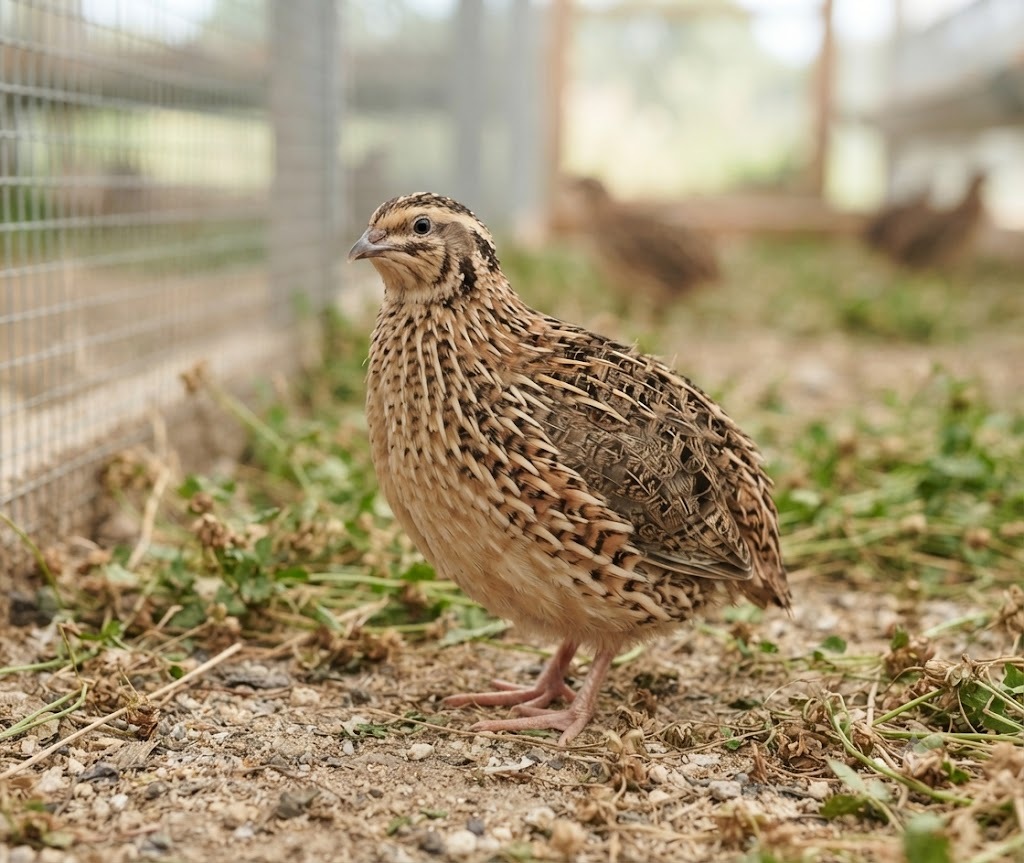
Although the quail industry is smaller in scale compared to chickens and ducks, it is a poultry species that forms markets for quail eggs, hatching eggs, and meat based on its rapid growth and laying cycle . Quail eggs account for a high proportion of domestic consumption, and a distinct supply chain has been established extending from the farm to sorting, packaging, processed foods, catering, dining out, and distribution.
MarketHub does not view quail as a simple quail egg product. It connects breeding stock → hatching eggs → hatching → chicks → rearing → laying/meat → sorting/processing → Buyer , and manages feed costs, laying rates, shell breakage, mortality, disease, and prices as productivity data.
Judgment axis | Key points |
| Main types | Egg laying, meat, and breeding stock |
| production core | Hatching, rearing, spawning, feed |
| Main Products | Quail eggs, hatching eggs, quail meat |
| Major risks | Disease, mortality, feed costs, supply and demand fluctuations |
| quality | Egg weight, crack, appearance, freshness |
| Major Buyers | Food, catering, dining out, distribution |
| AX | Environment, Feed, Drinking Water, Spawning, Video |
| RFQ | Hatching eggs, live livestock, eggs, meat, processed |
| Final goal | Productivity Improvement and Stable Buyer Connection |
In particular, since quail have small production units and large populations, productivity management at the Flock, House, and Lot levels is more realistic than individual management.
The most representative commercially raised quail is the Japanese quail (Coturnix japonica). They are classified for egg production, meat, and breeding, and in Korea, quail eggs are the most familiar product to consumers.
However, industrially, it is not limited to edible eggs. Since different transactions occur at each production stage—ranging from hatching eggs, quail chicks, and live meat to quail meat and processed products—they must be managed as separate Product Entities.
division | Main purpose | product |
| breeding stock | breeding | fertilized eggs |
| hatching | Standing | baby quail |
| for spawning | Egg production | Quail eggs |
| meat | meat | Livestock and Meat |
| Sorting and packaging | circulation | Packaged eggs |
| process | food | Boiled eggs and processed products |
The basic structure is managed as Quail → Production Type → Production Stage → Product → Buyer .
For quail, the production purpose must first be distinguished. For egg production, the timing of egg laying, laying rate, egg weight, and breakage rate are important, while for meat production, growth rate, feed efficiency, and shipping weight are the key indicators.
In breeding stock, not just the number of eggs laid, but also the fertilization rate, hatching rate, and the health and uniformity of the quail chicks are important. Therefore, it is difficult to make accurate comparisons if the productivity standards for laying hens are applied directly to breeding stock or meat quail.
category | Key Indicators | Final product |
| breeding stock | Fertilization rate and number of hatching eggs | fertilized eggs |
| hatching | Hatching rate | baby quail |
| for spawning | Laying rate and egg weight | edible eggs |
| meat | Weight gain · FCR | quail meat |
| For processing | Specifications and Yield | processed products |
MarketHub uses the production purpose → system → production stage → product specifications as its basic classification system.
Because quail have a rapid production cycle, even small differences in management practices can result in differences in productivity within a short period. In laying farms, feed intake, water consumption, lighting, temperature and humidity, and egg laying rates must be recorded together to make it easier to identify the causes.
Furthermore, even if the mortality rate appears low due to the large population, the actual loss can be significant when calculated in terms of the number of birds. It is important for farmers to monitor feed costs and the ratio of marketable, healthy eggs, rather than just recording the daily egg production.
Management area | Things to see at a farm |
| breeding stock | Fertilization and spawning |
| fertilized eggs | Storage and Quality |
| hatching | Hatching rate |
| feedstuff | Serving Amount · Unit Price |
| spawning | Laying rate and egg weight |
| health | Deaths and diseases |
| environment | Temperature, humidity, ventilation, lighting |
| expense | Feed, Energy, Labor |
In other words, it is practical to view farm income based on how many eggs are produced that can be sold for the cost of feed input, rather than simply how many eggs are laid .
Since quail are poultry, farms require biosecurity measures to prevent avian diseases and the introduction of external pathogens. In particular, the basic biosecurity system must include the movement of people, vehicles, feed, and equipment, as well as farm cleanliness and the management of carcasses.
At the product stage, cracking, contamination, weight, freshness, and packaging condition of quail eggs are critical. The production lot must be linked to the sorting and packaging lot so that the farm and production date of the eggs can be identified in the event of a problem.
step | Key Management |
| fertilized eggs | Production Date · Breeding Group |
| hatching | Hatchery · Lot |
| Standing | Quantity · Health |
| breeding | Feed and Environment |
| spawning | Production Volume · Egg Lot |
| Selection | Cracks, Contamination, Standards |
| process | Raw Material Lot · Process |
| circulation | Product · Buyer |
The representative traceability structure is Flock → Egg Lot → Sorting/Packing → Processing → Buyer .
The domestic quail industry is centered on the market for quail eggs and processed products rather than the market for general consumers purchasing live quail. In addition to retail, there is recurring B2B demand in sectors such as braised meat, side dishes, convenience foods, food manufacturing, and catering.
Therefore, producing farms need not only consider consumer prices but also verify how much of a product, in terms of size, packaging, and processing state, is required by food companies, catering, restaurant, and distribution companies.
Participants | Things needed | RFQ |
| livestock breeding farms | Breeding animals and feed | Breeding |
| hatchery | fertilized eggs | Hatchery |
| egg-laying farms | Quail chicks and feed | Production |
| Sorting and packaging | Wonran | Egg Supply |
| food companies | Quail eggs | Ingredient |
| food service companies | Regular volume | Supply |
| food service companies | Standardized products | Buyer |
| distribution company | Packaged products | Distribution |
MarketHub is particularly significant for its structure that connects repeat buyers, such as food manufacturers and catering companies, with producing farms .
The quail supply chain begins with breeding stock, hatching eggs, and hatching. On laying farms, the process continues with egg collection, sorting, packaging, and processing, while for meat, it follows a separate flow of shipping, slaughter, and processing.
In international trade, live livestock, hatching eggs, edible eggs, meat, and processed products must be distinguished. Since quarantine conditions may vary depending on poultry disease situations and the degree of product processing, the official conditions at the time of the transaction must be reconfirmed when an actual import/export RFQ is generated.
Quail egg supply chain
Breeding Livestock → Hatching Eggs → Hatching → Laying Farm → Egg Collection → Sorting & Packaging → Processing & Distribution → Buyer
Meat supply chain
Breeding stock → Hatching → Broiler farm → Shipment → Slaughter/Processing → Buyer
Confirmation area | Main contents |
| fertilized eggs | System, modification, quantity |
| Happy Birthday | Age and health |
| edible eggs | Standards and Packaging |
| meat | Conductor, Refrigeration, Freezing |
| Quarantine | Country of origin · Disease |
| trade | HS·Customs |
| distribution | Temperature · Delivery Time |
| Buyer | Quantity and specifications |
In actual transactions, the HS and quarantine standards for each product are checked separately.
While quail eggs can be sold raw, processing them into boiled eggs, peeled eggs, stews, or ingredients for convenience foods changes both the buyers and the product value. Therefore, it is necessary to consider not only production volume but also which processing method creates a stable market.
PRP links production costs with buyer requirements. Even if the laying rate is high, actual profitability may decrease if there are many unsellable eggs due to breakage or contamination, or if sorting and processing costs are high.
product | Main uses |
| fertilized eggs | hatching |
| edible eggs | Retail and food service |
| Life is egg | Food and Meals |
| Peeling | food processing |
| Braised products | Side Dishes · HMR |
| quail meat | Food & Dining |
| by-product | Feed and Industry |
Key PRP questions include the laying rate, the normal sales rate, the occurrence of breakage and contamination, egg sales relative to feed costs, whether value-added increases upon processing, and whether long-term contracts with buyers are possible.
For Quail AX, it is more realistic to start by automatically collecting data on feed, water, egg laying, mortality, and temperature and humidity that farmers check daily, rather than installing expensive automation facilities first.
As this data accumulates, changes in feed intake or the environment can be detected before egg production declines. Subsequently, by integrating video AI with automated sorting, the scope of analysis can be expanded to include behavioral abnormalities and egg quality.
Apply AX | Expected effects |
| environmental sensor | Temperature and humidity management |
| Feed measurement | Changes in intake |
| Negative measurement | Health abnormality detection |
| Spawning Runtime | Production volume forecast |
| Video AI | Cluster behavior analysis |
| Automatic sorting | Cracking and exterior management |
| Cost Analysis | production cost per unit |
| Buyer Matching | Planned production |
The key is not the sensor installation itself, but creating data that links production costs with marketable normal eggs .
The problems faced by quail farms cannot be explained solely by egg laying rates. Rising feed prices, mortality, shell breakage, disease, electricity costs, labor costs, and selling prices all work together to determine farm profits.
In particular, since the industry scale is smaller than that of chickens, changes in supply from specific production regions or farms could potentially affect market supply and demand. Therefore, production and price data must be checked simultaneously.
problem | Verification data |
| Decrease in egg laying rate | Age, Feed, Environment |
| Increased breakage | Facilities and collection |
| Increase in mortality | Disease and Environment |
| Rise in feed costs | feed price |
| Decrease in hatching rate | Hatching eggs and breeding stock |
| Size deviation | Jureung·Yeongyang |
| personnel expenses | Level of automation |
| Price fluctuations | Producer/Wholesale |
| Lack of sales channels | Buyer count |
| Supply fluctuations | Rearing and egg laying volume |
The Problem Bank operates in the order of: Phenomenon → Data Verification → Candidate Causes → On-site Verification → Improvement → Performance Comparison .
A quail RFQ does not refer solely to farmers selling quail eggs. It also includes procuring hatching eggs, quail chicks, and feed; finding partners for sorting, processing, and OEM production; and pursuing contract production with food companies or catering buyers.
Especially for small-scale items, confirming the specifications and quantities required by the buyer first and establishing a production plan can reduce risk, rather than seeking buyers after production.
RFQ Type | Collaboration Examples |
| fertilized eggs | For hatching |
| baby quail | Farmhouse stocking |
| feedstuff | For spawning and rearing |
| edible eggs | Raw eggs · Packaged eggs |
| process | Boiled eggs and peeled skin |
| OEM·ODM | processed products |
| meat | Food & Dining |
| Regular supply | School Meals and Food |
| Import and export | Hatching eggs and products |
| AX Pilot | Spawning and Environment |
Sensitive farm productivity, price, and contract conditions are managed at the Verified/NDA stage.
According to the MarketHub Livestock Library, it is crucial for quail to have a structure that verifies actual demand before production . In particular, connecting quail eggs to recurring B2B demand in sectors such as food manufacturing, catering, side dishes, and HMR can reduce sales uncertainty for farms.
Therefore, MarketHub does not stop at simply promoting products produced by farms, but connects the buyer's quantity, product type, packaging, and delivery time with the production stage.
① Find products/raw materials.
Need Products & Materials
Companies and institutions seeking hatching eggs, quail chicks, edible quail eggs, quail meat, and processed raw materials register their purchase demands. MarketHub reviews available producers and companies by verifying specifications, quantity, region, and delivery conditions.
RFQ Registration → Supply Condition Review → Connecting Producers and Companies → AI Matching
Register
② We are looking for production and manufacturing partners.
Need Suppliers & Manufacturers
We are seeking necessary partners, including livestock breeding farms, hatcheries, laying farms, sorting and packaging companies, food processing firms, and OEM and ODM companies. We evaluate not only production capacity but also quality, hygiene, and the feasibility of a sustainable supply.
RFQ Submission → Review of Production/Processing Capabilities → Partner Connection → AI Partner Matching
Register
③ We are looking for domestic and international buyers.
Need Buyers
Farms and processing companies seek new buyers, including food manufacturers, catering companies, restaurants, and distributors. We verify product specifications, processing methods, quantities, and delivery times to connect them with suitable suppliers.
RFQ Registration → Supply Capability Review → Buyer Connection → AI Buyer Matching
Register
Contact : mail@markethub.org
Due to the large population size of quails, it is more efficient for general laying farms to manage them at the flock, house, or lot level rather than by individual quail. Management is expanded to the individual level only when data for breeding stock or research is required.
By linking this data to hatching, hatching, feed, laying, sorting, and processing, it is possible to track at which production stage losses occurred.
Dataset | Simply put |
| Master | Quail Type and Product Standards |
| Entity | Farms · Flock · Companies · Buyers |
| Relationship | Hatching, production, processing, and trading |
| Runtime | Laying, Mortality, Feed, Price |
The representative structure is as follows.
Breeding Stock → Hatching Egg → Hatching → Stocking Lot → Chicken House/Flock → Feed/Environment → Laying → Egg Lot → Sorting/Processing → Buyer
If you connect the cost here:
Feed Costs + Energy + Labor + Mortality + Cracking → Normal Sales → Revenue → Farm Income
It can be analyzed up to.
Quail is a product for which the latest publicly available industry statistics are relatively limited compared to chickens and ducks. Therefore, as a principle, we do not arbitrarily estimate unconfirmed domestic breeding numbers, production volume, or market size, but instead register only items for which official statistics are available in the dataset.
Information on diseases, quarantine, and import/export must also be separated into data for all poultry and data specific to quail. During the actual RFQ stage, the transaction timing standards of relevant agencies, such as the Animal and Plant Quarantine Agency, the Ministry of Food and Drug Safety, and the Korea Customs Service, are re-verified for each product.
Evidence | source |
| A | Government · Official Statistics · WOAH |
| B | National research institutes and academic papers |
| C | Association/Verification Industry Data |
| D | Farm and company disclosure data |
| E | Additional verification needed |
Key factual basis
- In commercial quail, the Japanese quail (Coturnix japonica) is typically used.
- Quail are used for egg production, meat, breeding, and hatching egg production.
- The productivity of egg-laying quail is affected not only by the egg-laying rate but also by feed intake, environment, age, and health status.
- Since quail are also poultry, disease prevention and farm biosecurity are important.
- The domestic quail industry is connected to the food, catering, and processing markets, centered around quail eggs.
- The latest domestic industry size must be updated as a separate Runtime Dataset after verifying the survey scope and reference point of official statistics.
Version History
Version | Main contents | situation |
| v1.0 | Production, Spawning, Hatching, Processing, RFQ Basic Structure Registration | complete |
| v1.1 | Supplementing Official Statistics on Domestic Rearing, Production, and Prices | expected |
| v2.0 | Flock · Laying · Feed · Cracking · PRP Runtime Connection | expected |
| v3.0 | Farms, Processing Companies, School Meals, and Food Buyer Matching | expected |