


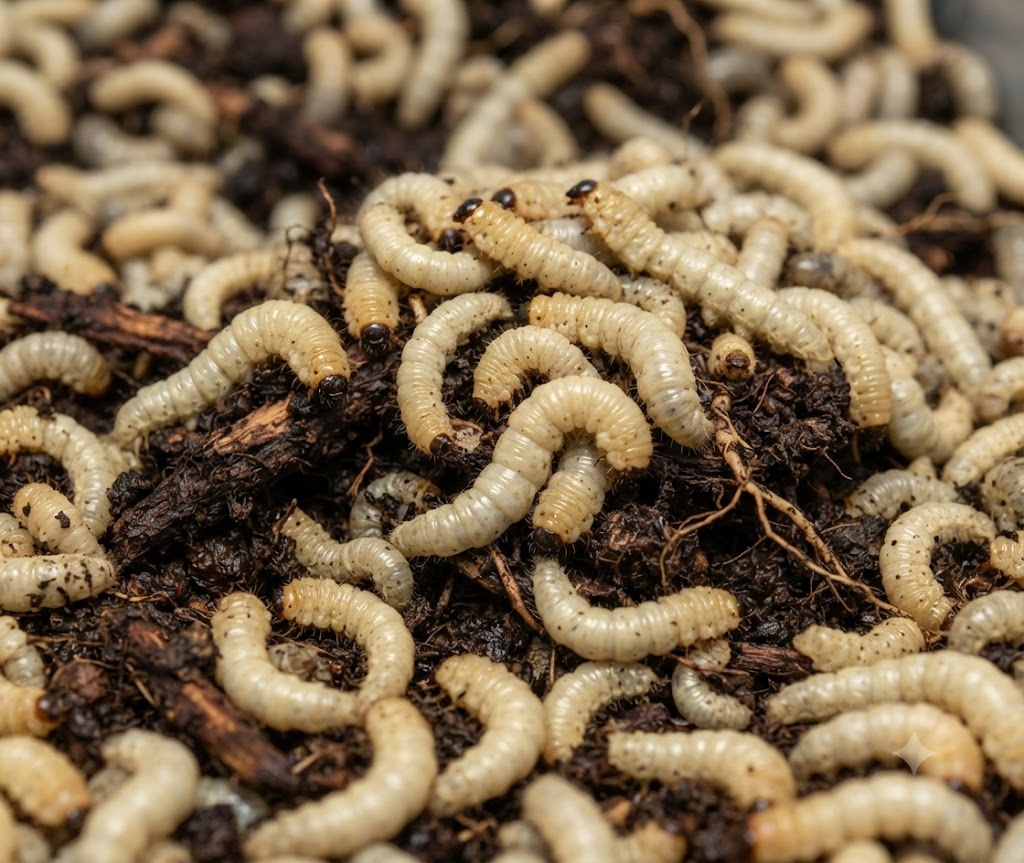
It is appropriate to view rhinoceros beetles as a complex industrial insect group involving rearing, distribution, education, experiential activities, feed, and material utilization, rather than considering them solely for the purpose of insect protein production like mealworms or crickets . Korea's Insect Industry Act explicitly designates rhinoceros beetles as subjects of the insect industry under the law and includes production, processing, and distribution businesses within its scope. ( Korea Law Information Center )
In particular, this RFQ does not generalize that all Rhinoceros beetles are edible. While data from the Ministry of Food and Drug Safety confirms instances where Rhinoceros beetle larvae have been added to the list of food ingredients, this is a legal recognition regarding specific species, parts, or growth stages, and does not automatically apply to the entire Rhinoceros Beetle Group. ( Ministry of Food and Drug Safety )
Judgment axis | Key points |
| Industry type | Rearing, Distribution, Education, Experience, Feed, Materials |
| Key Steps | Larva, pupa, adult |
| Main Products | Live animals, larvae, educational kits, feed, materials |
| edible | Separate legal verification by category and stage |
| production core | Parent insects, egg laying, larval growth, substrate, environment |
| Major risks | Confusion regarding misidentification, escape, hygiene, and legal use |
| AX | Batch · Temperament · Growth · Inventory · Sales Data |
| RFQ | Breeding insects, larvae, educational kits, feed, materials |
| Final goal | Transition from simple bio-sales to application-specific industrialization |
Therefore, MarketHub manages rhinoceros beetles in the order of Species Identification → Intended Use → Legal Status → Production → Product → Buyer .
Rhinoceros beetles are not a single species but a group concept that encompasses various insects of the Rhinoceros beetle kingdom. Therefore, for actual registration, the exact species name, scientific name, and growth stage must be registered as a separate entity under the higher classification of Rhinoceros Beetle Group.
Under the Korean insect industry system, the rhinoceros beetle has long been managed as a representative insect permitted for breeding and distribution. Past enforcement rules and decrees even separately specified standards for both adult and larval stages, confirming that an independent trading unit has been established for it as an industrial insect. ( Korea Law Information Center )
division | Main purpose | Product Entity |
| Jongchung | breeding | Breeding Adult |
| egg | multiplication | Egg Lot |
| larva | Possibility of rearing, feed, and food must be confirmed separately. | Larva |
| pupa | Growth and Research | Pupa |
| imago | Education, Experience, Distribution | Adult Beetle |
| breeding set | education | Education Kit |
| processed materials | Feed and materials | Processed Ingredient |
The basic structure is Group → Species → Life Stage → Intended Use → Product → Buyer .
When it comes to rhinoceros beetles, the first step is to differentiate between the species and its intended use. Even within the same rhinoceros beetle family, the production goals and management standards differ completely between adult beetles intended for educational or hands-on experiences and larvae being considered for animal feed or food ingredients.
In particular, edibility should not be determined on a group basis. Although the Ministry of Food and Drug Safety previously added rhinoceros beetle larvae to the list of food ingredients, this must adhere to the precise legally recognized scope of ingredients and should not be arbitrarily extended to other species or adult beetles. ( Ministry of Food and Drug Safety )
Production type | Key criteria | Major Buyers |
| breeding insect | Fertility and Health | Insect farm |
| For educational purposes | Form, activity, and safety | Schools and experience centers |
| for trial use | Ease of rearing and lifespan | Insect House · Farm |
| for animal feed | Nutrition, unit price, and legal permission | feed company |
| For materials | Composition and Processability | Raw materials and research companies |
| For food use | Recognition of species, stages, and food ingredients | food companies |
MarketHub classifies in the order of Species → Life Stage → Legal Use → Buyer Purpose .
In rhinoceros beetles, adults lay eggs, and the larvae hatched from the eggs grow for a long period in humus or fermented substrates before metamorphosing into pupae and then adults. Production farms must not simply focus on increasing the number of adults, but must also consider the egg-laying performance of breeding stock, larval survival rates, growth rates, and substrate costs together.
If the goal is larva production, substrate quality, moisture, temperature, and density are important, whereas if the goal is adult insects for educational or experiential purposes, managing appearance, vitality, emergence time, and lifespan is more critical. Therefore, the same rearing method should not be applied to all purposes.
Management area | Things to see at a farm |
| Jongchung | Mating and spawning |
| egg | Hatching rate |
| larva | Growth and uniformity |
| temperament | Fermentation state, moisture, cost |
| environment | Temperature and humidity |
| density | Number of individuals per rearing container |
| pupa | Dragon's Chamber · Metamorphosis |
| imago | Vitality, Size, Lifespan |
| expense | Temperament, Labor, Facilities |
Basic productivity is considered to be the stage of breeding stock → egg → larval survival → target size → pupa → adult or product yield .
For rhinoceros beetles, species identification, rearing facilities, escape prevention, substrate hygiene, and safety management tailored to specific uses are more important than livestock infectious diseases. Enforcement regulations concerning the insect industry have stipulated that the insects handled and facilities must be verified when reporting rearing, production, processing, or distribution, and that preventive measures, such as double entrances to prevent escape, may be required if necessary. ( Law Information Center )
When used as food or feed ingredients, the level of management must be higher than that for live distribution. Tracking must be performed on a lot-by-lot basis, including the species, the substrate used, the growth stage at which it was harvested, and the processing method.
step | Key Management |
| Jongchung | Species·Source |
| spawning | Egg Lot |
| larva | Rearing Batch |
| temperament | Substrate Lot |
| pupa | Growth condition |
| imago | Marketability and vitality |
| process | Processing, drying, powder |
| test | Safety standards by use |
| circulation | Product Lot · Buyer |
The typical structure is Species → Breeder → Egg Lot → Larval Batch → Substrate → Product/Adult → Buyer .
In Korea, the rhinoceros beetle has long been included within the regulatory framework as a representative industrial insect permitted for breeding and sale. The Insect Industry Act explicitly designates the rhinoceros beetle and encompasses not only production, processing, and distribution but also the understanding of insect ecology and the cultivation of emotional well-being as industrial purposes. This demonstrates that the rhinoceros beetle is an important item not only as feed or materials but also in the education and experience markets . ( Korea Law Information Center )
Therefore, unlike other industrial insects, MarketHub includes not only the B2B raw material market but also schools, science museums, insect experience centers, and educational kit companies as buyers.
Participants | Things needed | RFQ |
| Insect farm | Breeder, temperament, and market | Producer |
| Schools and educational companies | Larva, adult, kit | Education RFQ |
| Insect Pavilion & Experience Center | For bio-use and display | Experience |
| feed company | Permitted ingredients | Feed RFQ |
| food companies | Only legally permitted ingredients | Food RFQ |
| materials companies | Larvae, chitin-based materials, etc. | Material |
| Research Institute | Growth, Composition, Ecology | R&D |
| local government | Insect Festivals and Industrialization | Regional AX |
In other words, it is important to separate the Live Insect Market, Education Market, and Ingredient Market for rhinoceros beetles .
In the international trade of rhinoceros beetles, live specimens, feed, food, and processed materials must be distinguished. Import regulations for live insects may be strict by country due to concerns regarding ecosystem leakage or alien species, while food and feed products are subject to separate safety and raw material tolerance standards.
Therefore, just because a rhinoceros beetle species is available for trade overseas does not mean it can be automatically imported into the country. In the actual RFQ, the exact scientific name, whether it is a live specimen, and its final use must be verified first, and relevant quarantine, environmental, food, and feed standards must be re-verified.
Breeder → Egg-laying → Larva → Adult/Processing → Education·Feed·Material Buyer
Confirmation area | Main contents |
| Species | Accurate scientific name |
| Bio | Adults, larvae, and pupae |
| processed goods | Powder/material |
| use | Education, Feed, Food, Research |
| Quarantine | Biological import conditions |
| environment | Invasive species and escape management |
| trade | HS·Customs |
| Buyer | Specifications, Quantity, Delivery Date |
In actual international RFQs, Species + Life Stage + Product Form + Intended Use + Regulatory Status are mandatory checks.
For rhinoceros beetles, it is not appropriate to focus solely on protein sources, as is done with mealworms. Live specimens for educational or experiential purposes can generate higher added value, and specific larvae may have the potential to be utilized as raw materials for food, animal feed, or materials.
Therefore, in PRP, one must not only compare the price per kg of the product but also consider the individual selling price, rearing period, mortality rate, labor volume, educational kit composition ratio, raw material processing yield, and buyer repeat demand .
Product Entity | Main uses |
| Jongchung | breeding |
| larva | Education, feed, and food possibilities confirmed separately |
| pupa | Education and Research |
| imago | Education, Experience, Exhibition |
| breeding kit | educational products |
| Dry/Powder | Permitted feed, food, and materials |
| Chitin-based fractions | Materials Research |
The key PRP questions are whether selling adult insects or larvae is more advantageous, whether added value can be increased through educational kits, whether there are buyers for processed materials, and whether it meets the legal scope for food and feed use .
For rhinoceros beetles AX, the effects of managing inventory, growth stages, and shipping times may appear before automated rearing. Since the larval growth period is long and the timing of pupation and emergence can vary from individual to individual, recording the status of each batch makes it easier to establish sales plans.
Seasonality and event schedules are particularly important in the education and experience market. By predicting the quantity of adult insects to be secured in accordance with school field trip periods or insect festivals, more direct profit effects can be achieved than simple farm automation.
Apply AX | Expected effects |
| Species DB | Prevention of species misidentification |
| Batch Management | Check growth stage |
| environmental sensor | Temperature and humidity stability |
| Automatic weight | Comparison of larval growth |
| Fable prediction | Adult出発時 |
| Inventory Runtime | Available quantity |
| Education demand data | Season production plan |
| Buyer Matching | Sales by Use |
The key is to connect production data + inventory + seasonal demand .
The most common problem in the rhinoceros beetle industry is the gap between successful breeding and commercial sales. If the live animal market becomes saturated, price competition can intensify even with a large number of farms, and expanding into education, feed, and materials requires separate product planning and legal standards for each.
Furthermore, promoting all rhinoceros beetles as edible insects is dangerous. Legal recognition as a food ingredient must be verified based on the exact species, part used, and growth stage, and the use of unapproved species in food based solely on similar names should be avoided. ( Ministry of Food and Drug Safety )
problem | Verification data |
| Reduced spawning | Breeder insects and environment |
| Larval growth deviation | Temperament and density |
| Dead | Environment and temperament |
| Emergence deviation | Growth and temperature/humidity |
| Biomarket Saturation | Price and demand |
| Education market seasonality | Semester/Festival |
| Species confusion | Scientific name, photo, source |
| Confusion regarding edible standards | List of food ingredients |
| Processing and sales channels | Feed & Materials Buyer |
| Escape/Environmental Hazard | Facilities and Management |
The basic solution structure is: species identification → application selection → market demand verification → pilot → comparison of production, processing, and sales performance .
For RFQs regarding rhinoceros beetles, it is advisable to separate live animal trade from industrial raw material trade. Schools and experiential learning centers desire healthy adult beetles, larvae, and rearing kits, while feed and material companies require uniform, large-scale raw materials along with ingredient and safety data.
Therefore, MarketHub evaluates Supplier Capability by separating it into bio-production capability, educational commercialization capability, and material processing capability.
RFQ Type | Collaboration Examples |
| Jongchung | for breeding |
| larva | Rearing and Education |
| imago | Exhibitions and Experiences |
| Educational kit | School and Science Experience |
| feed ingredients | Legally Permissible Scope |
| food ingredients | Confirmation of recognition by category and level |
| subject matter | Chitin, proteins, etc. |
| process | Dry/Powder |
| Research cooperation | Growth and Functionality |
| AX Pilot | Production and Inventory Management |
Price, production volume by type, and Buyer conditions are managed at the Verified/NDA stage.
Rhinoceros beetles are items for which the intended use must be inquired about first during the RFQ request stage . This is because it is impossible to determine whether they are breeding stock, educational materials, larvae, adults, feed, or materials based on only 1,000 rhinoceros beetles.
In particular, MarketHub does not automatically approve requests for food use. Supplier matching must be performed after comparing the exact species, part, and growth stage with the food ingredient database .
① We are looking for biological products.
Need Live Insects & Products
Companies and institutions seeking breeding stock, larvae, adult insects, educational kits, and processing raw materials register their demand. MarketHub reviews available producers by verifying the Species, Life Stage, Application, Quantity, and Delivery Time.
RFQ Registration → Type/Use Verification → Supplier Connection → AI Matching
Register
② We are looking for production and processing partners.
Need Suppliers & Manufacturers
We are seeking necessary partners, including insect farms, educational kit companies, and drying, grinding, and material processing firms. We evaluate not only production scale but also capabilities in species identification, facilities, processing, and quality control.
RFQ Submission → Review of Production/Processing Capabilities → Partner Connection → AI Partner Matching
Register
③ We are looking for domestic and international buyers.
Need Buyers
Producing farms and companies seek new buyers, including schools, experience centers, science museums, feed suppliers, and material companies. After verifying the product's species, life stage, and legal use, they are connected with suitable purchasing outlets.
RFQ Registration → Product/Legal Use Review → Buyer Connection → AI Buyer Matching
Register
Contact : mail@markethub.org
In the rhinoceros beetle dataset, the Taxonomy Master is more important than for other industrial insects. This is because if a species is incorrectly registered due to similar common names, it can lead to incorrect identification of whether it is suitable for food, feed, or import.
Therefore, place the Species ID at the top, and link the growth stage, substrate, product, and use below it. It is also recommended to manage legally permitted status separately as a Runtime.
Dataset | Simply put |
| Master | Species, scientific name, growth stage, and use criteria |
| Entity | Farm · Batch · Education Company · Buyer |
| Relationship | Species → Growth → Product → Use |
| Runtime | Inventory, Price, Legal Permissibility |
The representative structure is as follows.
Rhinoceros Beetle Group → Species → Breeder → Egg Lot → Larval Batch → Pupa → Adult/Product → Buyer
Legal use is separate:
Species + Life Stage → Food Status / Feed Status / Education Status / Import Status
Connect to.
This structure is necessary to reduce errors in linking incorrect edible, feed, and trade information due to the common name "rhinoceros beetle ."
While the legal basis for rhinoceros beetles as industrial insects is clear, the scope of their edibility must be separated by species. The Insect Industry Act designates the rhinoceros beetle as a representative industrial insect and includes production, processing, and distribution businesses within the scope of the industry. ( Law Information Center )
On the other hand, regarding food ingredients, what the Ministry of Food and Drug Safety data confirms is the addition of rhinoceros beetle larvae to the list of food ingredients. Therefore, MarketHub stores this as Species/Stage-specific Food Status and does not interpret it broadly as an edible approval for the entire Rhinoceros Beetle Group. ( Ministry of Food and Drug Safety )
Evidence | source |
| A | Ministry of Food and Drug Safety, Ministry of Agriculture, Food and Rural Affairs, National Law Information Center |
| B | Rural Development Administration, research institutes, papers |
| C | Insect Industry Associations · Verified Industry Data |
| D | Farm, Business, and Education Market Data |
| E | Additional verification needed |
Key factual basis
- The Act on the Promotion and Support of the Insect Industry designates the rhinoceros beetle as a representative industrial insect and defines the production, processing, and distribution of insects as the scope of the industry. ( Law Information Center )
- In the past, the implementation standards for the insect industry included separate specifications for adult and larval stages of the rhinoceros beetle, and there are instances where they were managed as independent product units. ( Korea Law Information Center )
- The Ministry of Food and Drug Safety has added rhinoceros beetle larvae, which were previously recognized as a temporary food ingredient, to the list of food ingredients to allow general business operators to use them. ( Ministry of Food and Drug Safety )
- Since this food ingredient recognition must be applied based on the exact species and ingredient range rather than the entire Rhinoceros Beetle Group, the latest food ingredient database must be re-checked in the actual RFQ.
- Reporting and necessary escape prevention and management measures may be applied to insect rearing, production, processing, and distribution facilities. ( Law Information Center )
Version History
Version | Main contents | situation |
| v1.0 | First Registration of Structure for Edible Standards by Insect Industry, Feed, Education, Materials, and Species | complete |
| v1.1 | Enhancement of domestic data on farms, distribution, education, and prices by category | expected |
| v2.0 | Species·Life Stage·Legal Status·PRP Runtime Connection | expected |
| v3.0 | Farms·Education·Feed·Materials Buyer Verified Matching | expected |