


Analysis Area: Ulsan Metropolitan City
Core Areas: Buk-gu, Dong-gu, Nam-gu, Ulju-gun
Agenda: AX Readiness, Diffusion, and Profit Gaps Between Large Corporations and Local Suppliers
Golden Time Type: Supply-chain AX Polarization Risk
Reference Date: 2026.08.28
Version: Regional AX Golden Time Intelligence v3.2
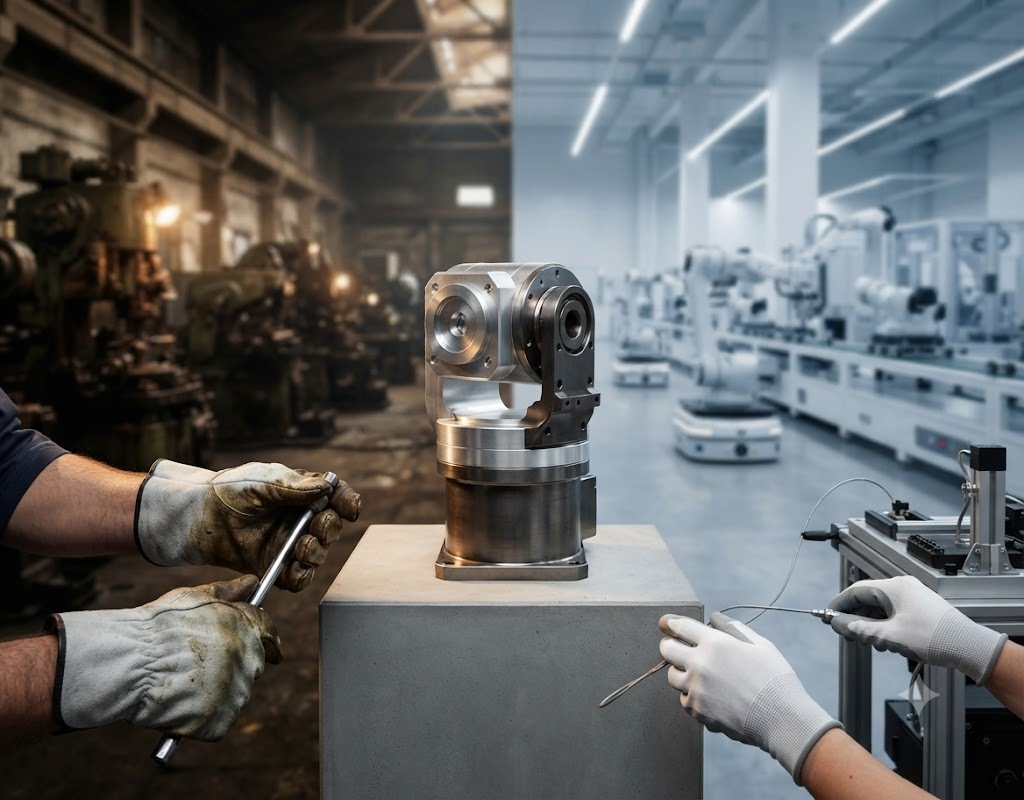
Hyundai Motor is expanding its software-defined factories that combine AI, robots, and digital twins, while HD Hyundai is pursuing FOS with the goal of improving shipyard productivity by 30% and shortening construction periods by 30% by 2030. Although the unit of competition in Ulsan's manufacturing industry has shifted from individual facilities to a data and AI operating system for the entire factory, the AI adoption rates and process data connectivity levels of suppliers are not disclosed at the regional level. If prime contractors' delivery standards shift to real-time quality, carbon, and delivery data between 2026 and 2028, suppliers unable to adapt will withdraw from business relationships regardless of their production capacity. The AX gap in Ulsan has gone beyond a technological gap and entered a stage where it determines the survival of the supply chain.
The government expanded the Industrial AX budget for 2026 from 565.1 billion won in 2025 to 1.1347 trillion won, and also increased the AI Factory budget from 158.2 billion won to 220 billion won. Although the focus of manufacturing policy has shifted from the deployment of smart factories to the expansion of autonomous manufacturing AI, there were only 26 autonomous manufacturing AI factories nationwide as of 2024. If deployment continues to be centered on leading companies over the next two to three years, a gap will remain between the budget expansion and actual adoption by local partner companies. While national AX investment has accelerated, on-site expansion at partner companies is still in its early stages.
In its 2025 Manufacturing AI Strategy, the Ministry of SMEs and Startups presented a goal of establishing 12,000 AI-centric smart factories to achieve a 10% AI adoption rate among small and medium-sized manufacturing companies. The policy objective itself reveals the current low level of AI utilization in the manufacturing sector, and the adoption rate calculated separately for Ulsan-based partner companies has not been verified. If the number of adopting companies remains a minority of the total even between 2026 and 2028, the gap between the AI transition speed of prime contractors and the average transition speed of the supply chain will widen further. Consequently, AI adoption in the manufacturing sector is assessed as being in the initial diffusion stage rather than the mass adoption stage.
Large corporations possess proprietary data and AI personnel that connect design, procurement, production, logistics, products, and management. While partner companies exchange order and quality information through the prime contractor's system, their level of independent data storage, analysis, and model operation is not disclosed. If prime contractor AI is applied to partner selection and unit price/delivery evaluation within two to three years, companies lacking data production capabilities will be subject to evaluation but will be barred from accessing the evaluation models. It is highly likely that large corporations will act as the operators of AX, while the majority of partner companies will remain merely providers of AX data.
Ulsan’s automotive, shipbuilding, and petrochemical production operates under a structure where large conglomerate factories and multi-tiered subcontractors share processes, delivery, maintenance, and logistics. While the competitiveness of finished products depends on the delivery times and quality of the entire supply chain, AI investment is initially driven by prime contractors where capital, data, and manpower are concentrated. The AX levels at each subcontractor stage and the locations of bottleneck companies are not disclosed. If lower-level subcontractor networks are not connected by 2028, internal productivity growth within large conglomerates will be limited by the volatility of external procurement. The actual unit of Ulsan’s manufacturing AX is not the large conglomerate factory but the multi-tiered supply chain, and the current measurement unit is narrower than that.
The revenue of partner companies is linked to changes in the prime contractor's production volume, vehicle types, ship types, and maintenance plans. There is no public evidence regarding how productivity gains generated from AX investments are distributed to partner companies—whether through unit price, volume, or long-term contracts. If profits are concentrated with the prime contractor for two to three years while investment costs are borne by partner companies, the risk of failure to recoup investment increases for companies transitioning to AX. The AX gap in Ulsan may widen due to the distribution structure of productivity gains rather than technology ownership.
Hyundai Motor is integrating production facilities, logistics robots, quality inspection, and digital twins, and expanding its SDV and electrification production systems. Although automotive competition has shifted from assembly quality to the integration of software, batteries, and electronic control data, software sales and electrification conversion rates for regional internal combustion engine parts suppliers remain unconfirmed. If the parts configuration for new models becomes fixed between 2026 and 2028, the transition opportunities for existing parts suppliers will be delayed until the next platform. The AX (Automotive Advanced Technology) phase for finished vehicles is in an acceleration stage, whereas the AX (Automotive Advanced Technology) phase for the existing parts supply chain is a stage where the survival of individual companies is at stake.
Electric vehicles and SDVs are accompanied by a reduction in the number of parts and an increase in the proportion of electronics and software. While demand for mechanical parts supplied by existing partners is declining and standards for data submission, traceability, and cybersecurity have risen, there is no integrated indicator to assess the readiness of Ulsan parts suppliers. If the reduction in parts overlaps with digital certification costs within two to three years, both revenue and investment capacity will shrink, starting with micro-enterprises. The gap for automotive suppliers encompasses not only factory automation but also the risk of the supplied items themselves becoming obsolete.
HD Hyundai is promoting FOS, which includes AI design, digital twins, robots, and master craftsman agents. Although shipbuilding production has shifted from on-site coordination by skilled workers to data-driven prediction and autonomous operation, there is no confirmed track record of independent AI operations by subcontractors in block, piping, welding, and painting. If only the prime contractor's processes are intelligentized by 2028, quality variations resulting from subcontractors' manual work will remain a bottleneck in the overall construction period. The AX portfolios of major shipbuilding companies are comprehensive, whereas the AX of regional cooperation networks is partially connected.
The shipbuilding industry is supplementing its production workforce through the expansion of foreign labor and localized training. Although the workforce structure has shifted to multinational work teams, the percentage of subcontractors operating work standards, video, and quality data in a multilingual digital system remains unconfirmed. If the departure of skilled workers coincides with workforce turnover over a period of two to three years, risks regarding rework, safety, and delivery time increase first for companies lacking a digital knowledge base. The AX gap among shipbuilding subcontractors is a result of the combination of labor shortages and the failure to replicate skills.
Large petrochemical companies in Ulsan have long operated distributed control systems, process optimization, and predictive maintenance technologies. Although Process AX has advanced to a stage integrating yield, energy, and maintenance, the scope of data connectivity for subcontractors involved in maintenance, inspection, logistics, and environmental management remains undisclosed. As facility reductions and business restructuring proceed between 2026 and 2028, subcontractors dependent on the prime contractor's system will simultaneously face a reduction in client base and a failure to recoup their AX investments. The gap for petrochemical subcontractors lies not in the adoption of technology, but in the lack of data visibility regarding the prime contractor's restructuring.
Competitive standards for chemical products have expanded from price and quality to include carbon footprints and raw material traceability. While large corporations have the capacity to build carbon information at the product level, the verification of the entire supply chain cannot be completed unless emission data from transportation, maintenance, and waste treatment companies is integrated. If client verification standards are tightened within two to three years, suppliers without data will be classified as supply chain risks regardless of their actual emissions. The carbon data gap is transitioning from environmental assessment into a disparity in trading qualification.
The smart factory deployment project has expanded production management, equipment connectivity, and quality data collection to small and medium-sized manufacturing sites. However, manufacturing AI presupposes the quality of collected data, accumulation periods, and process standardization, and autonomous prediction cannot be formed solely through equipment connectivity. The actual utilization rate of Ulsan smart factories and the AI model operation rate are not separated in publicly available data. If basic digitalization and AI operations are counted as the same achievement for the period 2026–2028, the gap in the field disappears from the statistics. Smart factory implementation records are evidence of AX preparation, but they are not evidence of AX operation.
The Ministry of SMEs and Startups proposed an 85% smart factory utilization rate and the expansion of AI smart factories for the 2026 Smart Manufacturing Innovation Project. Although policy standards have shifted from the number of implementations to utilization rates and AI performance, the non-operational systems, data loss, and dependence on supplier maintenance for Ulsan companies remain unconfirmed. If system utilization remains low for two to three years, additional AI investment amplifies errors in existing data. For Ulsan partner company AX, the leading gap lies in the actual usage level of the existing smart factory rather than the AI model.
Large corporations possess design, production, quality, and customer data for finished vehicles, ships, and chemical products across their entire lifecycles. While it is common for suppliers to possess only the data for the processes they are responsible for or to input it into the prime contractor's system without securing the right to reuse it, data rights per contract are not disclosed. If an AI trained on the prime contractor's data for two to three years replaces production decision-making, suppliers lose the learning foundation needed to build their own models. The core of the Ulsan AX gap lies in access to industrial data, rather than the volume of servers held.
Prime contractors can select the optimal supplier by comparing quality and delivery data from multiple subcontractors. Individual subcontractors, however, lack access to the comparative data and demand forecasts held by prime contractors and rely on past orders for facility investment and workforce allocation. If information asymmetry persists until 2028, the accuracy of prime contractor forecasts will increase, while the risks associated with inventory and idle facilities for subcontractors will grow. It has been confirmed that supply chain AI has the potential to exacerbate bargaining power asymmetry rather than facilitate joint optimization.
Large conglomerates in Ulsan are pursuing AI design, digital twins, robotics, and predictive maintenance across the automotive, shipbuilding, and petrochemical industries. While the scope of technology application has expanded to cover all aspects of corporate activity, the AI adoption rates, utilization rates, and investment scales of partner companies are not verified by regional statistics. If this gap is not measured within two to three years, it will be impossible to determine whether the targets for support align with supply chain bottlenecks. The readiness level of large conglomerates is classified as "advanced," whereas that of partner companies is "partially digitized" or "AX unconfirmed."
A 10% AI adoption rate among small and medium-sized manufacturing companies has been set as a future policy goal, and there were 26 autonomous manufacturing AI factories nationwide in 2024. While this indicates that the current infrastructure is centered on a few leading companies, the distribution of Ulsan's partner companies by industry and size is not disclosed. If AI adoption remains concentrated among top-tier partners by 2028, the readiness level of the lower-tier network will remain unchanged. The average readiness level of the supply chain is assessed to be significantly lower than that of leading large corporations.
Applications of AI and robots by large corporations are observed in production, inspection, logistics, and design. While application has expanded beyond individual processes to factory operating systems, the extent to which the same technology has spread to partner factories remains unconfirmed. If diffusion continues only within prime contractor factories for two to three years, differences in supply chain processing speeds will create delivery bottlenecks. Although internal diffusion within large corporations has progressed, diffusion between companies remains unconfirmed.
The government set a target of over 500 autonomous manufacturing AI factories by 2030, but as of 2024, there were only 26. There is a scale gap of approximately 19 times between the expansion target and the current infrastructure, and the allocated and selected volume for Ulsan has not been confirmed. Since the next two to three years will be the initial expansion phase for achieving the goal, the gap for companies excluded from leading projects will widen first. While the expansion of AI factories has begun, it has not yet reached a stage where it encompasses the entire Ulsan cooperation network.
Large corporations possess dedicated AI organizations and collaboration networks with external technology firms, universities, and global platform companies. While a survey by the National Information Society Agency (NIA) confirmed that SMEs struggle with acquiring the latest technologies, hiring specialized personnel, and integrating them into the manufacturing domain, the number of dedicated AI personnel at partner companies in Ulsan is not disclosed. If this hiring gap persists for two to three years, the speed of model improvement and fault response will differ even when adopting the same solution. The workforce gap in Ulsan stems from the presence of an organization capable of continuously operating AI, rather than from implementation costs.
On-site knowledge at partner companies is concentrated among CEOs, plant managers, and skilled workers. Although workforce aging and the expansion of foreign labor are progressing, the percentage of companies that have accumulated work knowledge into data, rules, and models remains unconfirmed. If the loss of skilled workers outpaces the formation of AX organizations by 2028, the source knowledge required for digitization will be lost first. The AX time risk for partner companies is structured such that a shortage of AI talent and the extinction of manufacturing knowledge occur simultaneously.
Large corporations possess the scale and data to achieve integrated cost reductions in productivity, quality, inventory, and energy through AI. While suppliers bear the implementation costs, instances where productivity gains are reflected in unit prices, volumes, or contract periods are not confirmed at the regional level. If a profit-sharing structure is not established for two to three years, the economic feasibility of AX investment varies between prime contractors and suppliers. Consequently, the supply chain diffusion of AX profits is assessed as being at a lower stage than the diffusion of technology.
While support for smart factories and manufacturing AI reduces some implementation costs, maintenance, data refinement, and model update costs are recurring. There is a lack of publicly available data regarding independent operation rates and payback periods after support ends. As system replacement and subscription costs accumulate between 2026 and 2028, low-margin suppliers will be forced to choose to shut down operations or become dependent on external suppliers. Supplier AX is vulnerable in terms of revenue structures that can cover recurring costs, rather than the initial adoption.
The automotive SDV and electrification, shipbuilding FOS, and petrochemical business restructuring are all included in the schedule to change supply chain configurations between 2026 and 2028. Although prime contractors' product and process transitions precede those of subcontractors' investments and personnel transitions, the response periods for each company are not disclosed. Once the restructuring of vehicle types, ship types, and facilities is finalized, there will be insufficient time for new supplier certification and investment recovery. The "golden time" for Ulsan subcontractors ends not at the completion of the prime contractor's AX, but before the supply chain is re-selected.
Although the government's AX budget has been expanded, support for AI factories and advancement is concentrated on a select few companies following a screening and selection process. If top companies are repeatedly selected over two to three years, data and performance data accumulate back at these leading firms, and the gap for non-adopting companies widens exponentially. After the project ends, latecomer companies must start from a higher technological level. The time risk associated with AX support lies in the fact that the period of non-selection itself accumulates as a competitive gap.
The accuracy of AI models improves as production, defect, and maintenance data accumulates. If large corporations and leading suppliers establish a data circulation first, latecomer companies bear the burden of a training data gap spanning several years, in addition to the cost of equipment adoption. If data accumulation does not begin by 2028, it will be difficult to catch up with the model performance of leading companies through capital investment alone. The manufacturing AI gap is an irreversible risk driven by data accumulation that widens over time.
The prime contractor's digital supply chain evaluates quality, delivery time, carbon emissions, and security in real-time and incorporates these results into supplier selection. Once a company drops out of the supply chain, it loses the capacity to invest in AX due to declining revenue and fails to accumulate the data necessary for re-certification. If a departure occurs within two to three years, the technology gap and the transaction gap reinforce each other. A partner company's AX failure is not merely a failure to adopt the system; it possesses an irreversibility that results in its permanent exit from the supply chain.
AX axis | 2026~2028 Executioner | Judgment indicators |
| Supply Chain AX | Prime Contractor – 1st, 2nd, and 3rd Tier Subcontractors Data Thread | Consolidated company ratio · Delivery time deviation |
| Process AX | Joint model of defects, operation, maintenance, and energy | Defect rate · Unplanned stoppage · Cost |
| Data AX | Rules for Partner Data Usage and Return Finalized | Reusable data ratio |
| Smart Factory AX | Re-evaluation of facility utilization and data quality | Actual operating rate, missing data rate, AI operation rate |
| Manpower AX | Field Skill – AI Operator Combined Job | Dedicated personnel · Number of internal improvements |
| Transaction AX | Linking AX performance to unit price, volume, and contract period | Long-term contract rate and performance sharing amount |
| Risk AX | Supply Chain Stage AX Breakdown Early Warning | High-risk firms and transaction suspension rates |
Compression judgment: The turning point of Ulsan Supply Chain AX is whether partner companies can go beyond the level of providing data to the prime contractor's AI and simultaneously secure data reuse rights, independent operational capabilities, and productivity benefits.
AX of large companies in Ulsan is assessed to be in the advanced stage in terms of investment, data, personnel, and field application , while AX of local partner companies is assessed to be in the initial and unidentified stage, excluding basic digitalization and some leading companies .
The current gap is not merely a difference in technological levels. It is an asymmetric structure where large corporations act as the entities predicting and evaluating the supply chain, while partner companies provide their own data but lack access to comparative information and demand forecasting.
If this gap persists until 2028, Ulsan is highly likely to lose the added value and number of companies in its regional cooperation ecosystem instead of securing the AX competitiveness of large corporate factories.
Golden Time Judgment: Enterprise AX Acceleration + Supply-chain Polarization Risk
Evaluation axis | large corporations | Partner companies | GAP determination |
| Data accumulation | 92 | 39 | very large |
| AI and robot application | 88 | 42 | very large |
| Smart Factory Utilization | 90 | 55 | greatness |
| AI specialists | 91 | 32 | very large |
| Investment sustainability | 89 | 38 | very large |
| Supply Chain Information Access | 94 | 29 | Critical |
| Productivity profit attribution | 87 | 36 | very large |
| Operating a proprietary model | 90 | 31 | Critical |
| 2~3 years of responsiveness | 83 | 40 | very large |
| synthesis | 89 | 38 | 51-point gap · risk |
Evidence Sources
- Ministry of Trade, Industry and Energy, 2026 Industrial AX·AI Factory Budget and Construction Goals
- Ministry of SMEs and Startups, AI-based Smart Manufacturing Innovation 3.0 Strategy
- Ministry of SMEs and Startups, 2026 Smart Manufacturing Innovation Support Project
- NIA Analyzes Current Status and Challenges of AI Utilization in Companies
- NIA, Measures to Utilize Physical AI to Strengthen Domestic Manufacturing Competitiveness
- Smart Factory Business Management System
- HD Hyundai Establishes Future Shipyard FOS
- Ministry of Trade, Industry and Energy, Industrial Complex AX Subcommittee and M.AX Cluster
Structural Insight — As large corporation AX succeeds, the independence of its suppliers may weaken.
AI in large corporations learns price, quality, delivery, and defect data from multiple suppliers simultaneously. As data accumulates, prime contractors predict the entire supply chain more accurately and replace suppliers more quickly. In contrast, suppliers possess only their own data or cannot independently utilize even the data they input into the prime contractor's system.
In this asymmetry, a partner's digital connectivity does not equate to AX capability. Companies connected to the prime contractor's platform participate in data generation but cannot participate in model ownership, comparative information, or decision-making. This creates a paradox where dependence on the prime contractor rises as the degree of connectivity increases.
If the prime contractor's AI increases productivity, it becomes economically advantageous to operate a delivery system with fewer suppliers and a more accurate delivery system. If AX support from partner companies does not lead to independent competitiveness, the AI functions as a mechanism to select only excellent companies rather than growing the entire supply chain.
Therefore, the structural risk in Ulsan lies not only in partner companies adopting AI late. A greater risk is the entrenchment of a structure where partner companies provide more data as they participate in AX, but their predictive power and bargaining power do not increase.
Version | Reference date | Reflection details |
| v3.2 | 2026.08.28 | Separate assessment of AX readiness levels for large corporations and partner companies |
| v3.2 | 2026.08.28 | Reflecting the national AI factory and AI diffusion goals for SMEs |
| v3.2 | 2026.08.28 | Chapters 9–14: Preparation, Diffusion, Return, Time Risk, and Irreversibility Determination |
| v3.2 | 2026.08.28 | Reflecting data access rights, profit sharing, and supply chain exit risks |
