


Analysis Region: Gyeongsangbuk-
do Key Regions: Pohang, Gyeongju, Uljin, Gumi, and the East Coast Energy Axis and Southwestern High-tech Industrial Zone
Agenda: Can Gyeongbuk, equipped with a large-scale nuclear power generation base, connect new electricity demands—such as those from the Gumi semiconductor, Pohang steel, secondary battery, and AI data centers—within the region through stable, low-carbon, and competitive power generation?
Golden Time Type: Opportunity + Grid Integration Risk
Reference Date: August 28, 2026
Version: Regional AX Golden Time Intelligence v3.2
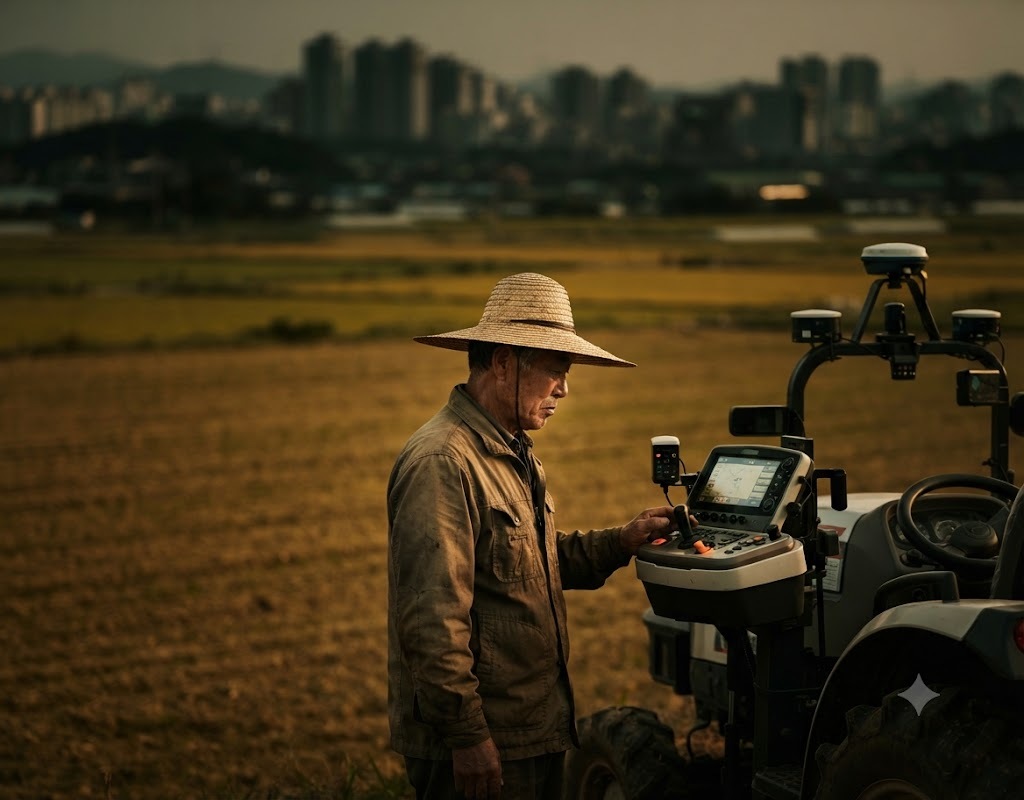
Gyeongbuk is one of the regions with the strongest nuclear power generation infrastructure in South Korea. According to Korea Hydro & Nuclear Power (KHNP), the installed capacity of Uljin Hanul and Shin Hanul is projected to reach 8,700 MW by the end of 2025, with a projected power generation of approximately 68.4 TWh . Gyeongju Wolseong and Shin Wolseong have an installed capacity of 4,100 MW and a projected power generation of approximately 27.9 TWh . Combining the two headquarters, there is approximately 12.8 GW of nuclear power capacity within Gyeongbuk. ( KHNP )
However, the fact that there are many power plants is not the same as the ability to supply the electricity required for high-tech industries in a timely manner. Electricity requires not only the volume of generation but also the simultaneous operation of the entire chain: generation → grid → substation → demand center → price/quality → supply contract. Despite Gyeongbuk producing a large amount of electricity, the 500kV HVDC project, which transmits power from the East Coast to the Seoul metropolitan area, continues to be modified and extended. In the 2025 announcement, the project period for some sections was extended from June 2026 to June 2027 , and changes to the implementation plan continued in 2026. ( Gangwon Special Self-Governing Province )
Conversely, electricity demand within the region is rapidly escalating. Based on the latest plan as of August 2026, the Pohang AI-dedicated Data Center is being pursued with a total project cost of 600 billion KRW, a power receiving capacity of 40 MW, and an IT load of 32 MW; the goal is to complete power securing and licensing, and begin commercial operation in the first half of 2028. Since the project cost and schedule have changed from the 550 billion KRW and October 2027 operation plan announced in May, the August plan must be used as the basis for the latest Runtime. ( Gyeongsangbuk-do Provincial Government )
Pohang was finally designated as a Distributed Energy Specialized Region in December 2025. It has secured the institutional foundation to demonstrate a local-production, local-consumption power system. The government has also newly allocated 119.6 billion won for fostering the AI-based distributed power grid industry and 10 billion won for AI support in Distributed Energy Specialized Regions for 2026. ( Gyeongsangbuk-do Provincial Government )
The industrial utilization of nuclear power has entered a new phase. In April 2026, North Gyeongsang Province, Pohang City, Gyeongju City, and four local universities signed an agreement to attract the first i-SMR unit to Gyeongju. They also agreed to jointly research plans to supply nuclear power to the Pohang Hydrogen Reduction Steel Mill and to conduct research on SMR-based hydrogen production. Since the attraction of the first SMR unit, commercial operation, and steel supply contracts have not yet been finalized, this should be classified as a strategic and attraction phase. ( North Gyeongsang Provincial Government )
Gyeongbuk's energy readiness is therefore two-sided.
Generation Readiness is very high.
However, Grid Readiness, Local Consumption Readiness, and Industrial Power Contract Readiness are still in the transition phase.
The current structure is determined as follows.
- Possession of nuclear power plants ≠ Securing power for high-tech industries
- Power generation ≠ Local industry usage
- Designation of a Distributed Energy Special Zone ≠ Electricity Cost Reduction
- SMR Attraction Agreement ≠ Commercial Power Supply
- Securing power for AI data centers ≠ Responding to total future AI power demand
- Transmission network construction ≠ Timely system completion
Gyeongbuk's Golden Time lies not only in adding power generation facilities but also in connecting existing nuclear power plants, distributed energy, AI data centers, industrial complexes, and transmission networks into a single Energy-to-Industry Runtime over the next two to three years.
The current assessment is Opportunity + Grid Integration Risk .
A large-scale nuclear power generation infrastructure already exists on the East Coast of North Gyeongsang Province. The Uljin Hanul and Shin Hanul complexes have a capacity of 8.7 GW, while the Gyeongju Wolseong and Shin Wolseong complexes have a capacity of 4.1 GW. The Hanul Headquarters is projected to generate 68.4 TWh by 2025, and the Wolseong Headquarters also recorded 27.9 TWh. ( Korea Hydro & Nuclear Power )
The locations of this power generation base and industrial demand do not coincide. Uljin and Gyeongju are centered on nuclear power plants, while Pohang is home to steel, secondary batteries, and AI data centers, and Gumi is concentrated with semiconductor, electronics, and defense industries. The multi-nuclear industrial structure of Gyeongbuk, identified in No. 025, manifests in the power sector as a spatial separation between Generation Nodes and Demand Nodes .
North Gyeongsang Province also presented a direction to integrate Pohang, Gyeongju, Yeongdeok, and Uljin into a single energy axis within the 2026 Mega-Tech Alliance City for Five Major High-Tech Industries, connecting it with the AI, semiconductor, and future mobility industrial axes. ( North Gyeongsang Provincial Government )
The energy problem in Gyeongbuk is shifting from a shortage of electricity production to the speed of physical and institutional connections to industrial demand centers .
The combined nuclear power plant capacity of Uljin Hanul and Shin Hanul, along with Gyeongju Wolseong and Shin Wolseong, is approximately 12.8 GW. However, the presence of power plants in a region does not automatically mean that the electricity is supplied directly to local businesses or that they can utilize it at lower prices. The power grid, market systems, and direct trading and distributed energy schemes come into play. ( Korea Hydro & Nuclear Power )
The designation of Pohang as a Distributed Energy Specialized Zone is an institutional experiment designed to transform this structure. The specialized zone can connect local production and consumption and demonstrate new distributed power models. However, as we are currently in the designation and project design stages , actual outcomes regarding improvements in corporate electricity rates, power procurement stability, and the use of renewable and zero-carbon electricity must be verified separately. ( Gyeongsangbuk-do Provincial Government )
The Pohang AI Data Center has completed securing power. This serves as evidence that the Grid Readiness of an individual large-scale project has entered the actual execution phase. However, a distinction must be made between securing power for a single 40MW project and responding to the additional power demand of Gyeongbuk's entire industry, which includes future expansions of multiple data centers, AI factories, hydrogen reduction steelmaking, and secondary batteries. ( Gyeongbuk Provincial Government )
Current assessments indicate that while Project-level Power Readiness has begun to be confirmed, Regional Industrial Power Readiness is a Data Gap.
The first structural change is that the value of electricity is shifting from generation volume to locational competitiveness . Securing power was directly presented as a core business condition for the Pohang AI Data Center, and the completion of licensing and power acquisition was confirmed as execution conditions for the investment project in the latest announcement in August 2026. ( Gyeongsangbuk-do Provincial Government )
The second point is the shift in the power grid structure from a centralized transmission system to one that runs in parallel with a distributed energy model based on local production and consumption . The designation of Pohang as a Distributed Energy Specialized Zone signals that the existing Grid Logic, which sends large-scale power generated on the East Coast to the Seoul metropolitan area, and the Local Energy Logic, which allows local industries to utilize the power directly, have begun to operate simultaneously. ( Gyeongsangbuk-do Provincial Government )
The third point is the expansion of the role of nuclear power plants from base load power generation to integration with industrial processes, hydrogen, and SMRs . Gyeongbuk is linking the Gyeongju i-SMR with the Pohang Hydrogen-Reduced Steelworks to utilize nuclear power for steel decarbonization and is even considering SMR-based hydrogen production. ( Gyeongbuk Provincial Government )
The fourth point is that AI is simultaneously entering the market as both a power consumer and a power operation technology. The government has allocated 119.6 billion won for fostering the AI-based distributed power grid industry by 2026, and Gyeongbuk is participating in a 11 billion won R&D demonstration project from 2026 to 2029 to track and manage data center carbon emissions using AI and data. ( Ministry of Trade, Industry and Energy )
Therefore, Gyeongbuk's energy transition is shifting from the power generation industry to a complex system of Energy + Grid + AI + Industrial Process .
The Pohang AI Data Center is the most concrete implementation example of Gyeongbuk's industrial power transition. Based on the latest plans, it is a GPU-based, liquid-cooled center with a receiving capacity of 40 MW and an IT load of 32 MW; power securing and licensing have been completed. The goal is to begin commercial operation in the first half of 2028. ( Gyeongbuk Provincial Government )
The Pohang Distributed Energy Specialized Zone is an institutional testbed for directly connecting distributed power to local industries. Following the enforcement of the Special Act on Distributed Energy in June 2024, Pohang was finally designated after undergoing the initial designation process in 2025, and it will demonstrate a locally produced, small-scale clean power system. ( Gyeongsangbuk-do Sericulture and Insect Business Center )
In the nuclear power sector, the bid to host the first i-SMR unit in Gyeongju and its linkage with the Pohang steel industry are being pursued. North Gyeongsang Province, Pohang, Gyeongju, POSTECH, Handong University, Dongguk University WISE, and Wideok University have established a joint cooperation framework for 2026. ( North Gyeongsang Provincial Government )
At the national level, 8.1 billion won in new funding will be allocated in 2026 for R&D aimed at localizing SMR manufacturing technology, and the construction of a testing and inspection support center will begin. While the policy environment for Gyeongbuk to shift towards becoming a hub for SMR demonstration and industrialization is strengthening, the actual site for the initial unit and its commercial viability are not yet confirmed outcomes. ( Ministry of Trade, Industry and Energy )
In terms of data center operational technology, two data centers operated by the Gyeongbuk IT Convergence Industry Technology Institute will be utilized as demonstration spaces for carbon tracking and reduction technologies worth 11 billion won from 2026 to 2029. As AI power consumption increases, a runtime has begun to form that simultaneously manages computing volume, power usage, carbon, and efficiency. ( Gyeongbuk Provincial Government )
Gyeongbuk’s comparative advantage lies in the fact that large-scale, carbon-free power generation facilities and actual manufacturing demand exist within the same metropolitan area. Regions possessing a 12.8GW nuclear power base along with demand for steel, secondary batteries, semiconductors, and AI computing are limited even within Korea. ( Korea Hydro & Nuclear Power )
On the other hand, the strength of being a large-scale power generation region manifests simultaneously with transmission constraints. The East Coast-Capital Region HVDC is a key national power grid designed to supply electricity generated on the East Coast to the capital region, but its schedule is undergoing repeated adjustments due to changes in construction processes and licensing. A change to the implementation plan was officially announced again in 2026. ( Gangwon Special Self-Governing Province )
Korea Electric Power Corporation (KEPCO ) has also treated the expansion of East Coast power transmission to the metropolitan area as a key grid issue and has pointed out system bottlenecks between power production and demand regions.
Gyeongbuk's competitive strategy should focus on converting its locational asset as a power generation region into attracting industrial investment and local electricity consumption, rather than producing more electricity .
The current location is determined to be Generation Leader / Grid & Local Value Capture Transition .
The combined capacity of Uljin Hanul and Shin Hanul is 8,700 MW .
The power generation in 2025 is approximately 68.4 TWh . ( Korea Hydro & Nuclear Power )
The installed capacity of Gyeongju Wolseong and Sinwolseong is 4,100 MW .
The power generation in 2025 is approximately 27.9 TWh . ( Korea Hydro & Nuclear Power )
The combined installed capacity of the two nuclear power plant complexes is approximately 12.8 GW .
The Pohang AI Data Center has a power receiving capacity of 40 MW and an IT load of 32 MW . ( Gyeongsangbuk-do Provincial Government )
The AI data center carbon tracking and reduction demonstration project is 11 billion won and runs from April 2026 to December 2029. ( Gyeongsangbuk-do Provincial Government )
The government's new budget for fostering the AI-based distributed power grid industry in 2026 is 119.6 billion won , and support for specialized regions is 10 billion won . ( Ministry of Trade, Industry and Energy )
Looking only at the absolute size of the numbers, a 40MW data center represents a small demand compared to the nuclear power plant facilities in Gyeongbuk.
However, if power readiness is determined based solely on this comparison, an error occurs.
Power bottlenecks occur at specific points in time, specific substations, specific industrial complexes, specific voltages, or additional connection capacity, rather than in total power generation.
Therefore, the focus of Gyeongbuk Energy Intelligence in the future should shift from the total power generation to the available capacity per node .
The biggest gap is between Generation and Grid .
Although Gyeongbuk has large-scale power generation facilities, the schedule for the East Coast-Capital Region HVDC project has been repeatedly changed. If the time axes of power generation facilities and the transmission network do not align, issues such as generation constraints and additional transmission investment arise. ( Gangwon Special Self-Governing Province )
The second point concerns the relationship between the Grid and Local Industry . Nuclear power plants are concentrated in Uljin and Gyeongju, while high-tech industries are located in Pohang and Gumi. Even if regional power generation is high, if the substation, distribution, and connection capacities of industrial complexes are insufficient, this does not translate into locational competitiveness for new factories and data centers.
The third factor is the gap between Energy Abundance and Energy Price Advantage . While the Pohang Distributed Energy Specialized Zone can test this gap, there is still a lack of outcome data regarding the actual effects of corporate electricity costs, PPAs, direct transactions, and zero-carbon power certification. ( Gyeongsangbuk-do Provincial Government )
The fourth point lies between SMR Vision and Commercial Readiness . While attracting the Gyeongju i-SMR and linking it with hydrogen reduction steelmaking holds significant strategic importance, it requires a long period for the initial unit's site selection, regulatory compliance, construction, and commercial operation. Short-term industrial power issues cannot be resolved solely through future SMR plans.
The fifth point concerns the balance between AI power demand and energy efficiency . As data centers expand, if GPU utilization, PUE, liquid cooling efficiency, and power carbon intensity are not managed together, the growth of the AI industry and the energy burden will increase simultaneously.
Gyeongbuk's industrial energy AX must integrate at least four types of data.
Supply Data
Power sources · Power generation · Generation costs · Zero-carbon electricity
Grid Data
Substations · Transmission Lines · Connection Capacity · Congestion · Timing of New Interconnection
Demand Data
Industrial complexes · Factories · Data centers · Facility expansion · Peak demand
Outcome Data
Electricity costs · Power outages · Carbon · Production volume · Investment attraction · New employment
Currently, while public evidence is strong for power generation and individual business plans, it is difficult to connect future power demand by industrial complex and remaining grid capacity by node into a single public runtime.
Therefore, Gyeongbuk needs an Industrial Energy Digital Twin .
As soon as future investment plans are received, a preliminary simulation must be performed covering power demand → connection feasibility → substation and transmission investment → procurement of zero-carbon power → business launch timing.
In Pohang, power policies have begun to translate into actual investments. The AI data center has secured its power supply, and the Distributed Energy Specialized Zone has been finally designated. ( Gyeongsangbuk-do Provincial Government )
However, the tangible results reaching local businesses must be verified in the future.
The outcomes are whether corporate electricity rates have decreased, power grid connection periods have shortened, whether procuring RE100 and carbon-free power has become easier, whether the attraction of new data centers and factories has increased, and whether distributed power trading has actually occurred.
Residents in areas where nuclear power plants are located also cannot determine industrial Local Value Capture solely based on support for surrounding regions. It is necessary to separately track how much of the nuclear assets in Gyeongju and Uljin are converted into specialized companies, talent, R&D, SMR supply chains, and local income.
The current assessment is that energy assets exist in the region, but local economic conversion is still partial.
The power landscape of Gyeongbuk is divided into the East Coast development axis and the western and southern industrial demand axis.
Uljin is a large-scale nuclear power generation hub.
In Gyeongju, nuclear power and SMR research intersect with future mobility.
In Pohang, steel, secondary batteries, AI data centers, and distributed energy demonstrations are being conducted simultaneously.
Gumi is a region with a large-scale industrial power demand for semiconductors, electronics, and defense.
Therefore, Gyeongbuk's energy policy should be viewed as a single wide-area network connecting Uljin Generation → Gyeongju Nuclear/SMR R&D → Pohang Industrial Energy Testbed → Gumi High-tech Demand, rather than independent plans for each city and county.
If the power grid lags behind this industrial axis, industrial locations may shift along with the power.
This spatial irreversibility is a key risk for the next 2 to 3 years.
The first timeline is the Pohang AI Data Center. Based on the latest plans, it aims for commercial operation in the first half of 2028, and power supply has already been secured. ( Gyeongsangbuk-do Provincial Government )
The second timeline is the Distributed Energy Specialized Region. Following final designation at the end of 2025, new government funding for AI-based distributed power grid support will be injected starting in 2026. ( Gyeongsangbuk-do Provincial Government )
The third is the linkage between Gyeongju i-SMR and Pohang Hydrogen Reduction Steel. Joint regional bidding and research cooperation began in 2026. ( Gyeongsangbuk-do Provincial Government )
The fourth point is the transmission network. The East Coast-Capital Region HVDC project demonstrates that continued changes to the project period and implementation plan could delay the timely construction of the grid compared to industrial and power generation plans. ( Gangwon Special Self-Governing Province )
If we fail to jointly design industrial investment outlooks, power demand, grid connection, distributed power, and carbon-free power within the next two to three years, it is highly likely that the structure of expanding the power grid belatedly after industrial facilities are finalized will be repeated.
The irreversibility of the power grid lies in the long construction period.
Investment decisions for semiconductor factories are made quickly, but large-scale substation and transmission facilities cannot be built at the same speed.
12-1. Golden Time Application Case in Basic Local Governments ① — Pohang City
Pohang is a rare industrial energy demonstration zone in Korea where steel, secondary batteries, a 40MW AI data center, and a distributed energy specialized zone overlap simultaneously. The AI data center has completed power procurement with the goal of commencing operations in the first half of 2028, while the distributed energy special zone has secured the institutional foundation to connect locally generated electricity to local industries. ( Gyeongsangbuk-do Provincial Government )
The Readiness GAP lies in whether these assets end up as separate, independent businesses. The demand forecasting for steel, batteries, and data centers → distributed power → AI power management → zero-carbon power procurement → carbon and electricity cost outcomes must be connected into a single Industrial Energy Runtime. Pohang's Golden Time is to convert the distributed energy specialized zone into an actual industrial power market before the data center begins operations in 2028 .
12-2. Golden Time Application Cases in Basic Local Governments ② — Gyeongju City
Gyeongju simultaneously possesses the 4.1GW Wolseong and Sinwolseong nuclear power plant facilities, the King Munmu Research Institute, and a strategy to attract the first i-SMR unit. In the 2026 agreement between Pohang, Gyeongju, and four universities, a plan to link SMRs with the power generation from Pohang's hydrogen-reduced steelworks and hydrogen production was established as an official task. ( Korea Hydro & Nuclear Power )
The Readiness GAP refers to the speed of transition from a nuclear power city to a Nuclear Industrial City . Rather than focusing on power generation, local companies must be connected with SMR design, testing, materials, components, manpower, and industrial demand. Gyeongju's Golden Time is to convert nuclear power plant operational assets into SMR industrial capabilities within the next two to three years, regardless of the outcome of attracting the first unit .
The first loss is losing power-consuming industries in regions with power . Even if Gyeongbuk possesses large-scale carbon-free power sources, if it fails to establish grid, pricing, and direct trading structures, data centers and high-tech industries that consume a lot of electricity may choose other regions.
The second is Grid Lock-in. If industrial site planning and power grid planning proceed separately, new substations and transmission lines may become reactive measures, potentially delaying the start of business operations.
The third factor is the loss of local value capture by nuclear power plants. Although Uljin and Gyeongju have high power generation capacity, if they are not connected to AI, SMR, hydrogen, and steel, high-value-added services and research functions may relocate outside the region.
The fourth factor is the demonstration period for the Pohang Distributed Energy Special Zone. If economic viability and corporate participation are not proven within the initial few years, there is a risk that the special regulatory provisions will remain merely an administrative experiment rather than an industrial innovation.
Gyeongbuk can convert electricity into an asset for attracting new industries.
By connecting nuclear power, carbon-free power, distributed energy special zones, AI data centers, steel and secondary batteries, semiconductors, and SMRs, you can move from an Energy-rich Region to an Energy-Intensive Advanced Industry Region .
In Pohang, AI and power generation can be demonstrated simultaneously; in Gyeongju, the SMR and nuclear power industries can be advanced; in Uljin, large-scale power generation infrastructure can be connected to the nuclear power supply network; and in Gumi, stable power demand for advanced manufacturing can be secured.
Performance should be judged not by the amount of power generated, but by how much high-tech industrial value added 1 MWh of electricity is converted into in the region .
Changes to observe | Things to do with AX | Policy decision | Verification indicators |
| Industrial investment | 3~10 Year Power Demand Forecast | upfront investment in the power grid | Expected-Actual Demand Error |
| Power generation facilities | Real-time Supply Map | Linked to industrial demand | Regional carbon-free power |
| Substation and transmission | Grid Digital Twin | Preemptive investment in bottlenecks | Available MW |
| New factory | Power Connection Agent | Preliminary location assessment | Connection period |
| Pohang distributed energy | AI Energy Management | Whether special provisions spread | Trading volume and electricity costs |
| AI Data Center | Load·PUE Runtime | Strengthening efficiency standards | PUE·MW·Carbon |
| Steel and Battery | Process Energy Forecast | Industry-specific supply design | MWh/production unit |
| Gyeongju SMR | Commercial Milestone Tracking | R&D and Supply Chain Investment | Demonstration and contract phase |
| Uljin Nuclear Power Plant | Local Value Map | Company-Talent Linkage | Local procurement and employment |
| Wide-area industrial power | Energy-to-Industry Dashboard | Adjusting investment priorities | Electricity → Value Added |
Energy AX Runtime
Power Source → Grid Capacity → Future Demand by Industry → Connection Feasibility → Procurement of Distributed/Carbon-Free Power → Actual Usage → Electricity Costs/Carbon → Production/Investment → Regional Value Added → Grid Reinvestment
Opportunity + Grid Integration Risk
Gyeongbuk's Generation Readiness is very high.
Combining the 8.7GW of Hanul and Shin Hanul and the 4.1GW of Wolseong and Shin Wolseong, approximately 12.8GW of nuclear power facilities are located in Gyeongbuk. The combined power generation of the two headquarters is projected to reach about 96 TWh by 2025. ( Korea Hydro & Nuclear Power )
Industrial power demand has also entered the actual implementation phase.
The Pohang AI Data Center has secured a power supply capacity of 40 MW and aims to begin commercial operation in the first half of 2028. ( Gyeongsangbuk-do Provincial Government )
System Readiness is also being formed.
Pohang has been designated as a specialized region for distributed energy, and the government has newly allocated a budget for 2026 to support AI-based distributed power grids and specialized regions. ( Gyeongsangbuk-do Provincial Government )
The transition of nuclear power into a future industry has also begun.
The linkage between Gyeongju i-SMR and Pohang hydrogen reduction steelmaking and hydrogen production is being officially pursued. ( Gyeongsangbuk-do Provincial Government )
However, Grid Risk remains.
Schedule changes are repeatedly occurring in the East Coast-Capital Region HVDC project, and there is no system to automatically synchronize the time axes of power plants, industrial complexes, data centers, and substations. ( Gangwon Special Self-Governing Province )
Therefore, the problem for Gyeongbuk is not a dichotomy of whether or not there is a power shortage.
The key is whether the necessary power arrives at the required location, at the required time, at the required price, and under carbon conditions .
Currently, Golden Time is determined by Opportunity + Grid Integration Risk .
- Gyeongbuk installed capacity by power source
- Actual power generation by power source in Gyeongbuk
- Hanul/Shin Hanul usage rate
- Wolseong and Sinwolseong utilization rates
- Electricity sales volume by 22 cities and counties
- Industrial electricity consumption
- Gumi Industrial Complex Maximum Power Demand
- Pohang Steel and Secondary Battery Power Demand
- Pohang AI Data Center Actual Load
- Data Center PUE
- Power consumption relative to GPU utilization
- New Data Center Connection Application MW
- Electricity demand for planned investments in new high-tech industries
- New connection capacity per substation
- Average time required for system connection
- East Coast HVDC Completion Rate
- Transmission constraint duration and generation constraint amount
- Actual trading volume of distributed energy in Pohang
- Number of participating companies in distributed energy
- Changes in electricity costs for companies in specialized regions
- Proportion of zero-carbon electricity usage
- Gyeongju i-SMR Major Milestones
- SMR-related supply contract with local companies
- Employment of local talent for nuclear power plants and SMRs
- Change in industrial value added relative to power input
Data GAP: While Gyeongbuk possesses evidence regarding power generation facilities, individual large-scale investments, distributed energy, and SMR policies, it lacks public Industrial Energy Intelligence that allows verification of the entire process—from future power demand by industry → connection capacity per grid node → procurement of carbon-free and distributed power → actual electricity costs → investment and production outcomes—within a single wide-area runtime.
Runtime Chain
Generation → Grid → Available Connection Capacity → Industrial Demand → Power Contract → Actual Usage → Cost/Carbon → Productivity → Investment Attraction → Regional Value Added → Power Grid Redesign
Gyeongbuk has a strong energy supply infrastructure. It is home to approximately 12.8 GW of nuclear power facilities, comprising 8.7 GW at Hanul and Shin-Hanul and 4.1 GW at Wolseong and Shin-Wolseong; the combined power generation of these two plants is projected to reach about 96 TWh by 2025. It is difficult to classify Gyeongbuk as a region lacking in power production infrastructure. ( Korea Hydro & Nuclear Power )
Industrial demand is already becoming a reality. The Pohang AI Data Center has secured a power reception capacity of 40 MW, and Pohang has been designated as a specialized region for distributed energy. By 2026, the power interconnection between the Gyeongju i-SMR and the Pohang Hydrogen Reduction Steel Mill has been officially added to the agenda. ( Gyeongsangbuk-do Provincial Government )
On the other hand, changes to the project schedule for the East Coast-Capital Region HVDC continue to be confirmed within the national power grid. This serves as evidence that even with large-scale power generation facilities, if the grid is not expanded at the same pace, the spatial mismatch between generation and consumption can become a bottleneck. ( Gangwon Special Self-Governing Province )
There is only one structural insight. The energy asset that will determine Gyeongbuk's future industrial competitiveness is not the amount of nuclear power generated itself, but 'how quickly local industries can utilize that electricity.' The economic structures of a region that produces and transmits electricity externally are completely different from those of a region where AI, semiconductor, steel, and battery companies are attracted because of the power supply.
Golden Time Thesis — The "golden time" for Gyeongsangbuk-do's energy is not merely about confirming the fact that it possesses more nuclear power plants. The key lies in whether, within the next two to three years, the future power demand generated by the approximately 12.8GW nuclear power base in Uljin and Gyeongju, the Pohang Distributed Energy Specialized Zone and 40MW AI Data Center, Gyeongju SMR, Pohang's steel and secondary battery industries, and Gumi's semiconductor industry can be connected through a chain of generation → grid → industrial demand → carbon-free and distributed power → production → regional added value. Since power grids take longer to construct than factories, responding only after industrial investment has been decided is too late. If Gyeongsangbuk-do designs the grid and industries simultaneously now, it can transition from a "region that produces electricity" to a "region where future industries are attracted because of power." Conversely, if the speed of connection is missed, the paradox of experiencing power bottlenecks in high-tech industries despite possessing large-scale power generation assets could become entrenched.
Version | Reference Date/Revision Date | Major changes |
| v1.0 | 2026.08.28 | Based on Regional AX Golden Time Intelligence v3.2, the industrial power and energy readiness of Gyeongbuk was analyzed for the first time. It was cross-verified with the following: Hanul and Shin Hanul facilities (8.7 GW, 2025 power generation of approximately 68.4 TWh), Wolseong and Shin Wolseong facilities (4.1 GW, 2025 power generation of approximately 27.9 TWh), the latest plans for the Pohang AI Data Center (600 billion KRW, power reception of 40 MW, IT Load of 32 MW, commercial operation in the first half of 2028), the final designation of Pohang as a Distributed Energy Specialized Area, the government's 2026 funding of 119.6 billion KRW for an AI-based distributed power grid and 10 billion KRW for specialized area support, 11 billion KRW for data center carbon tracking demonstration, the attraction of the first i-SMR unit in Gyeongju and its linkage with Pohang's hydrogen reduction steelmaking and hydrogen production, and changes to the project period for the East Coast-Capital Region 500kV HVDC. The Energy AX Runtime of Generation → Grid → Industrial Demand → Distributed/Carbon-free Power → Production → Local Value Capture was presented, and Pohang and Gyeongju were analyzed as application cases, and the Golden Time was determined to be Opportunity + Grid Integration Risk. |
