


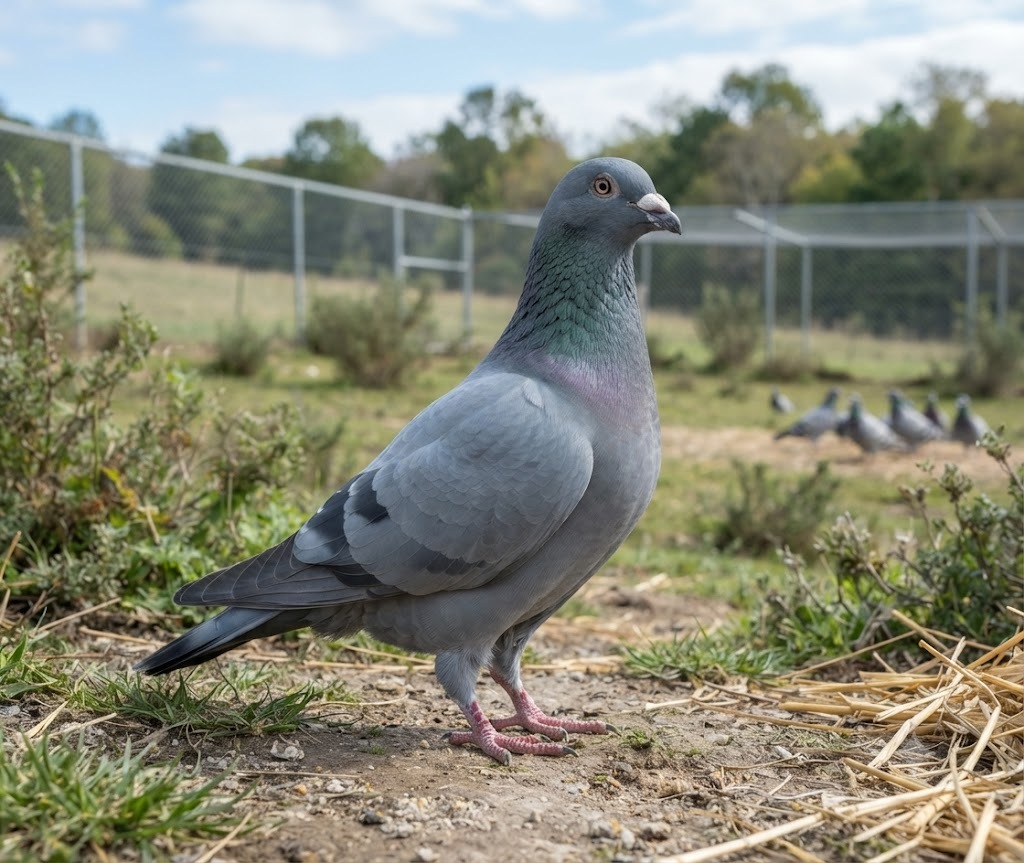
Although pigeons have a strong image as companion, racing, and ornamental animals, livestock RFQs must separate these categories and focus on meat pigeons and breeding stock . The USDA Poultry Industry Manual also separately explains that pigeons can be raised for the production of squab for food. ( APHIS )
The core product of meat pigeons is generally the squab , which is a young pigeon . MarketHub manages the entire production and supply chain from breeding stock → laying/hatching eggs → hatching → brooding → squab → slaughter/processing → Buyer as a single unit, and racing, ornamental, and pet pigeons are excluded from the commercial meat production system of this RFQ.
Judgment axis | Key points |
| Production type | Meat and breeding |
| core products | Squab · Breeding chuk |
| production core | Breeding, laying eggs, hatching, brooding |
| Major risks | Disease, early mortality, and breeding performance |
| quality | Shipping age, weight, and carcass condition |
| market | Specialty Meat · Dining Out · Food |
| AX | Breeding, hatching, brooding, and survival data |
| RFQ | Breeding stock · Live meat · Squab meat |
| Final goal | Stable breeding and actual buyer connection |
In Korea, rather than approaching mass production like with chickens and ducks, it is appropriate to first verify the actual demand for edible pigeons and the feasibility of slaughtering and processing .
Although pigeons are raised for various purposes in many parts of the world, the MarketHub Livestock RFQ classifies them primarily for meat production and breeding. FAO data also confirms production systems in which young pigeons, known as squabs, grow rapidly and are utilized for food in some regions. ( FAOHome )
Therefore, registering only the name "pigeon" makes Buyer Matching difficult. Product specifications and transaction conditions must be managed separately depending on whether the animal is a breeding stock, a live animal being raised, or a slaughtered squab.
division | Main purpose | product |
| breeding stock | breeding | Squab |
| spawning and hatching | multiplication | young pigeon |
| brooding chicks | growth | Meat Squab |
| meat | Meat | Happy Birthday |
| slaughter | food | conductor |
| process | Food Service & Food | Refrigerated and frozen meat |
The basic structure is Pigeon → Breeding → Squab Production → Meat Product → Buyer .
Pigeons can vary significantly depending on their intended use, such as meat, racing, combat, or ornamental. Since this RFQ targets only meat and breeding, criteria for evaluating racing ability or appearance are excluded from the productivity evaluation.
In the meat industry, the reproductive performance of parent breeders and the growth and market performance of the squab are important. In fact, commercial squab studies published by the FAO also showed significant differences in slaughter body weight and body conformation depending on the mating combination, confirming that the breeding line itself is a productivity variable. ( FAOHome )
Production type | Core Management | Final use |
| breeding stock | reproductive ability | Breeding |
| breeding pairs | spawning and hatching | Squab production |
| meat | Growth and survival | Meat |
| conductor | Weight and quality | Food Service & Food |
| processed meat | Standards and hygiene | Food Industry |
MarketHub views Breeding Pair → Squab → Meat as the core production units.
The production method of meat pigeons differs from that of chickens. Pigeons generally lay a small number of eggs at a time, and because parents raise their young squabs directly, the productivity and brooding ability of the breeding pair directly affect the overall farm production. FAO data generally states that they lay two eggs and have an incubation period of approximately 16 to 17 days. ( FAOHome )
Therefore, it is useful for farms to record egg-laying, hatching, and chick-rearing performance by breeding pair rather than the total number of animals raised. Feed and environmental management must also take into account the reproductive performance of the parent breeders as well as the growth and survival of the young.
Management area | Things to see at a farm |
| breeding stock | Breeding pairs · Health |
| spawning | Knowing period |
| hatching | Hatching results |
| brooding chicks | Growth and survival |
| feedstuff | Intake/Cost |
| health | Disease and death |
| environment | Temperature, humidity, and hygiene |
| shipment | Age and weight |
It is practical to view core productivity as the number of marketable squabs produced by a breeding pair over a certain period .
Pigeons also require disease control management against avian diseases. In particular, farms that come into contact with external pigeons or wild birds, or where there is a high volume of live animal movement, must manage the entry and exit of breeding facilities, equipment, vehicles, and people, taking into account the possibility of pathogen introduction.
WOAH recommends avoiding contact with wild birds, maintaining hygiene of facilities and equipment, and reporting suspected deaths to prevent avian influenza, and further revised international AI standards and biosecurity standards in 2026. ( WOAH )
step | Key Management |
| breeding stock | Individual and breeding history |
| spawning | Pair·Egg record |
| hatching | Hatch record |
| brooding chicks | Growth and death |
| Disinfection | External birds and entry |
| shipment | Age/Weight |
| slaughter | Carcass Lot |
| circulation | Product Lot · Buyer |
In particular, the USDA points out that the long-distance migration of race and homing pigeons can be a problem in disease control situations. It is important to separate outside pigeons from production flocks on meat production farms. ( APHIS )
In Korea, meat pigeons cannot be regarded as a major livestock species with an established general consumer market, unlike chickens or ducks. Therefore, rather than arbitrarily presenting unverified nationwide figures for breeding numbers, production volume, and market size, it is necessary to first investigate actual production farms, legal slaughter and food distribution channels, and buyer demand .
In assessing business feasibility, one must distinguish between the fact that squab is used as a food ingredient overseas and the claim of domestic market potential. The key is whether there are actual repeat buyers in the food service and food industries within the country.
Participants | Things needed | RFQ |
| breeding farms | Breeding animals and feed | Breeding |
| Beef farms | Breeding pairs · Sales channels | Production |
| slaughter and processing | Stable volume | Processing |
| food service companies | Standardized meat | Buyer |
| food companies | raw meat | Ingredient |
| distribution company | Refrigerated and frozen meat | Distribution |
| importing companies | Overseas Supplier | Import |
| Local governments and agencies | Business feasibility data | Pilot |
Therefore, domestically, it is safe to verify in the order of Buyer → Food and Slaughter Requirements → Production Economics → Farm Expansion .
It should not be assumed that pigeons are treated exactly the same as general poultry in international trade. The U.S. USDA’s 2026 import guidelines also specify separate requirements for Columbiformes, meaning pigeons and pigeon-like birds, so it is necessary to check the quarantine standards of each destination country. ( Animal and Plant Protection Inspection Service )
Therefore, live animals, breeding stock, and meat must be separated to verify quarantine, food hygiene, and HS Codes. In particular, since AI outbreaks can affect the international movement conditions of live animals and poultry products, this must be re-verified at the time of contract signing.
Breeding Stock → Breeding → Squab → Rearing → Slaughter → Refrigeration/Frozen Storage → Import/Export → Buyer
Confirmation area | Main contents |
| breeding stock | Age, Health, System |
| Happy Birthday | Purpose and quantity |
| meat | Conductor, Refrigeration, Freezing |
| Quarantine | Country of origin/Disease status |
| food | Slaughter and hygiene standards |
| trade | HS · Customs · Country of Origin |
| distribution | Cold Chain |
| Buyer | Specifications, Quantity, Delivery Date |
In the actual RFQ, Origin + Product Form + Veterinary Requirement + Food Requirement + HS are reconfirmed based on the time of transaction.
The core product of meat pigeons is squab, which is young pigeons used for meat. Food yield data provided by the FAO also links pigeons to the squab category, confirming that it is treated separately as a meat product. ( FAOHome )
However, when considering squab production in Korea, economic feasibility should not be calculated based solely on overseas sales prices. It is necessary to factor in breeding productivity, feed, mortality, slaughter, cold chain distribution costs, and the actual purchase price by domestic buyers.
product | Main uses |
| breeding stock | breeding |
| Squab livestock | meat |
| Conductor | Food Service & Food |
| refrigerated meat | Premium dining |
| frozen meat | Distribution and Food |
| processed meat | Additional market verification |
The key PRP questions are: what is the production yield per breeding pair, what is the ratio of marketable squab, what is the production cost per head, is legal slaughter and distribution possible, and at what price will the buyer make repeat purchases ?
In Pigeon AX, it is more effective to digitize productivity at the breeding pair level rather than tracking the entire population in a complex manner . By recording egg laying, hatching, brooding, mortality, and shipment for each pair, it is possible to distinguish between high-productivity breeding stock and those with recurring problems.
Subsequently, the addition of environmental sensors, automatic feeding systems, and video AI enables the auxiliary analysis of flock behavior and environmental changes. However, for specialized livestock species, securing basic production data is more important than investing in equipment.
Apply AX | Expected effects |
| Breeding Pair DB | Comparison of breeding performance |
| Egg/Hatch records | Hatching management |
| Squab records | Growth and survival |
| feed data | Production cost calculation |
| environmental sensor | Temperature and humidity management |
| Video AI | Check for behavioral abnormalities |
| Shipment Runtime | Production volume forecast |
| Buyer Matching | Planned production |
The core flow is breeding pair → squab production → sellable individuals → production costs → buyer → actual profit .
The greatest risk in the meat pigeon industry may not simply be a lack of rearing technology. This is because even if production is successful, business viability is difficult to achieve without securing domestic slaughter and distribution conditions and repeat buyers.
Disease control is also important. Since WOAH emphasizes the possibility of farm-to-farm transmission of avian influenza not only through infected birds but also through contaminated equipment, vehicles, and footwear, even small specialty poultry farms must have basic biosecurity in place. ( WOAH )
problem | Verification data |
| Reduced spawning | Breeding pairs · Antelopes |
| Hatching reduction | Breeding stock · Egg |
| Squab death | Environment and Health |
| Growth deviation | Parents and Feed |
| disease | Dead birds · Extermination of birds |
| feed costs | Input per Pair |
| slaughter | Facilities and costs |
| market | Buyer · Purchase Volume |
| price | Production costs and purchase prices |
| Expansion of supply | Repeat orders |
The Problem Bank registers not only production problems but also market, regulatory, slaughter, and distribution problems .
It is advisable to clearly separate breeding stock RFQs and meat squab RFQs for pigeons . This is because the requirements of farms seeking breeding stock and food service companies purchasing meat are completely different.
Additionally, slaughtering and processing companies may be required between the producer and the buyer. Therefore, MarketHub does not merely match farms but designs a single cooperative structure extending from production to slaughter, processing, and the buyer when necessary.
RFQ Type | Collaboration Examples |
| breeding stock | Meat breeding pairs |
| feedstuff | Breeding and brooding |
| Squab | Livestock for meat |
| slaughter | Outsourcing |
| Refrigerated and frozen meat | Food Service & Food |
| process | OEM |
| Regular supply | Food Service & Food |
| Import and export | Breeding stock and meat |
| AX Pilot | Reproduction and productivity |
Race, ornamental, and companion pigeons are separated from this Livestock RFQ.
Since pigeons are not a livestock species consumed in large quantities domestically, RFQ (Request First) is a very important factor for this item. Rather than expanding farms first, you must first identify the buyers who will actually purchase meat squab, as well as the purchase specifications, monthly demand, and price.
It is also reasonable for breeding farms to manage breeding pairs based on the actual demand for marketable squab, rather than securing a large number of breeding stock.
① Find products/raw materials.
Need Products & Materials
Companies and institutions seeking meat breeding stock, live squab, chilled or frozen pigeon meat, etc., register their purchase demands. MarketHub reviews available producers and companies by verifying requirements related to usage, specifications, quantity, region, and delivery time.
RFQ Registration → Supply Condition Review → Connecting Producers and Companies → AI Matching
Register
② We are looking for production and manufacturing partners.
Need Suppliers & Manufacturers
We are seeking necessary partners, including meat pigeon breeding farms, rearing farms, slaughterhouses, processing companies, and OEM firms. We evaluate not only production capacity but also hygiene, disease control, processing, and the feasibility of a sustainable supply.
RFQ Submission → Review of Production/Processing Capabilities → Partner Connection → AI Partner Matching
Register
③ We are looking for domestic and international buyers.
Need Buyers
Production farms and processing companies seek new buyers, including foodservice, food, and distribution firms. We verify product type, weight, quantity, price, and delivery time to connect them with suitable suppliers.
RFQ Registration → Supply Capability Review → Buyer Connection → AI Buyer Matching
Register
Contact : mail@markethub.org
Unlike other large-scale poultry, breeding pairs are important entities for pigeons . By linking egg laying, hatching, brooding, and sales performance by breeding pair, it is possible to identify which pairs actually contribute to farm revenue.
Squab manages lots by linking parent pairs with production dates, and subsequently connects them to slaughter and product lots. This allows for simultaneous improvement in productivity analysis and food traceability.
Dataset | Simply put |
| Master | Pigeon and Product Standards |
| Entity | Breeding Stock · Pair · Farm · Buyer |
| Relationship | Breeding, brooding, slaughter, and trade |
| Runtime | Spawning, Hatching, Mortality, Price |
The representative structure is as follows.
Male + Female → Breeding Pair → Egg/Hatch → Squab → Meat Lot → Buyer
Economic feasibility is:
Number of breeding pairs → Squab production → Survival → Shipment → Production cost per head → Selling price → Profit per pair
Calculate as.
Pigeons are a special commodity in major domestic livestock statistics where it is difficult to consistently secure detailed production and price data, unlike with chickens and pigs. Therefore, unverified domestic breeding numbers, market size, and squab prices are not arbitrarily recorded; instead, the dataset is updated when actual official and field data are secured.
This entry was cross-validated based on FAO's Pigeon Biological & Production Data, USDA APHIS's Pigeon/Squab Industry & Movement Data, and WOAH's latest Avian Influenza & Biosecurity Standards. ( FAOHome )
Evidence | source |
| A | Government · FAO · WOAH · Official Data |
| B | Academic Papers · Research Institutes |
| C | Association/Verification Industry Data |
| D | Farm, Business, and Transaction Data |
| E | Additional verification needed |
Key factual basis
- The USDA Poultry Industry Manual states that pigeons may be raised for squab meat production. ( APHIS )
- According to FAO data, pigeons generally lay two eggs at a time, and young squabs grow rapidly on crop milk produced by their parents. ( FAOHome )
- Commercial Squab studies published by the FAO have identified differences in slaughter weight and body conformation depending on the cross combination, demonstrating that breeding lines can influence productivity. ( FAOHome )
- The USDA manages pigeons and doves, specifically Columbiformes, under separate quarantine requirements for international movement. ( Animal and Plant Protection Inspection Service )
- WOAH recommends avoiding contact with wild birds, controlling movement, maintaining facility and equipment hygiene, and early reporting to prevent HPAI. ( WOAH )
- WOAH revised international trade standards related to AI in 2026 and adopted new Biosecurity standards. ( WOAH )
Version History
Version | Main contents | situation |
| v1.0 | First Registration of Meat, Breeding, and Squab Supply Chains | complete |
| v1.1 | Reinforcement of field data on breeding, slaughter, distribution, and pricing in Korea | expected |
| v2.0 | Breeding Pair·Squab·Meat PRP Runtime 연결 | 예정 |
| v3.0 | 농가·도축·식품·외식 Buyer Verified Matching | 예정 |